PoK internet shutdown since June 5 violates international human rights law
Synopsis
Since 5 June 2026, Pakistan has maintained a blanket internet blackout in PoK to suppress protests led by the JAAC — a shutdown that researchers say violates the ICCPR and UDHR. With the HRCP documenting police brutality, electoral rigging allegations, and a near-complete erasure of civic space, the crisis is the most serious confrontation between PoK's population and the Pakistani state in decades.
Key Takeaways
Pakistan imposed an indefinite internet shutdown in Pakistan-occupied Kashmir (PoK) from 5 June 2026 , coinciding with mass protests by the Joint Awami Action Committee (JAAC) .
The shutdown reportedly violates Article 21 of the ICCPR (right to peaceful assembly) and the Universal Declaration of Human Rights (UDHR) .
Legal researcher Mohammad Zayaan Asmi in Opinio Juris found Pakistan's shutdown process is a 'checkbox exercise' in which the NCMC rarely challenges military directives.
The Human Rights Commission of Pakistan (HRCP) documented disproportionate use of force, arrests of activists and journalists, and restrictions on healthcare access in its report 'Civic Spaces under Strain.' Shutdown orders are never made public, making legal challenge by affected citizens effectively impossible, according to the report.
Pakistan-occupied Kashmir (PoK) has been under an indefinite, blanket internet shutdown since 5 June 2026 — the day mass protests erupted demanding electoral reforms and broader socio-political changes — in what rights researchers and digital advocacy groups say constitutes a clear violation of the country's international human rights obligations. A detailed report has found that the shutdown contravenes Article 21 of the International Covenant on Civil and Political Rights (ICCPR), which guarantees the right to peaceful assembly.
The Protests That Triggered the Shutdown
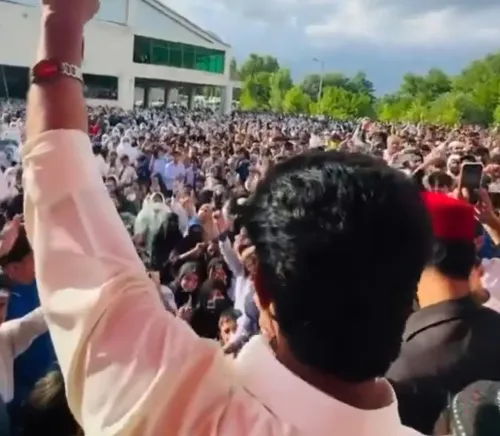
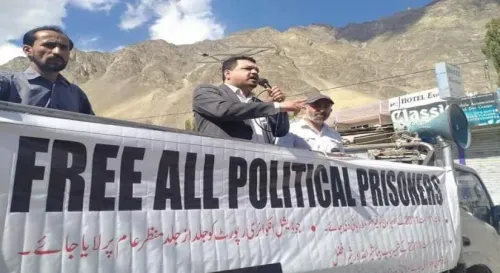
The unrest in PoK represents the most significant confrontation between the local population and the Pakistani state in decades. Demonstrations led by the Joint Awami Action Committee (JAAC) began over surging electricity tariffs and the rising cost of essential commodities, but rapidly evolved into a broader movement demanding political reforms, greater accountability, and representative governance.
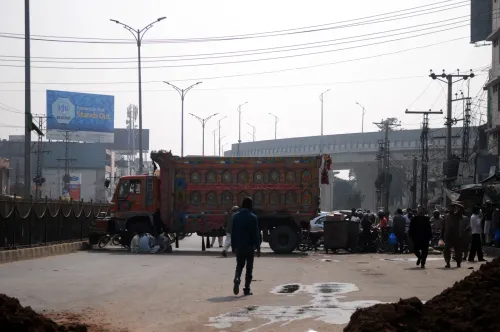
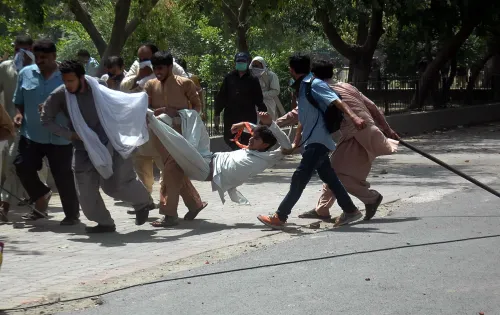
The state response included deadly violence, prolonged internet and mobile service suspensions, restrictions on freedom of movement, and, according to the Human Rights Commission of Pakistan (HRCP), the disproportionate use of force. Allegations of large-scale electoral rigging during elections held amid the blackout have compounded public anger.
How Pakistan's Internet Shutdown Architecture Works
According to legal researcher Mohammad Zayaan Asmi, writing in Opinio Juris, shutdown orders are typically issued by the army or police agencies to the National Crisis Management Cell (NCMC), housed within the Interior Ministry. The NCMC reviews the order and, if approved, forwards it to the Pakistan Telecommunication Authority (PTA) — a regulatory body whose role is limited to implementation. The PTA then compels Internet Service Providers (ISPs) to comply, under threat of punitive consequences.
Other Interior Ministry bodies, including the National Counter Terrorism Authority (NACTA), also retain the power to issue shutdown directives. Empirical evidence cited in the report indicates that the NCMC rarely challenges directives received from the military, making the process, in Asmi's words, 'a checkbox exercise based on a mechanical process.'
Why This Violates International Obligations
Digital rights groups argue that Pakistan's conduct breaches both the Universal Declaration of Human Rights (UDHR) and the ICCPR by curtailing freedom of expression and the right to peaceful assembly. The report notes that shutdown orders are never placed in the public domain, making legal challenges by affected citizens effectively impossible.
'The lack of legal infrastructure in Pakistan has resulted in internet shutdowns becoming an ad-hoc and arbitrary exercise of authority without a clear legal mandate,' the report stated. Asmi further observed that, earlier this year, the blackout 'allowed the State to prevent mobilisation and conduct elections with allegations of large-scale rigging' — underscoring how the mechanism functions as a tool of political control rather than a proportionate security measure.
HRCP's Findings on Civic Space
Last month, the Human Rights Commission of Pakistan (HRCP) released its fact-finding report titled 'Civic Spaces under Strain' in PoK, attributing the unrest to longstanding political and socioeconomic grievances, institutional distrust, governance deficits, and an increasingly confrontational state response.
The HRCP said the prolonged internet and mobile shutdowns, curbs on movement, disruption of access to essential commodities and healthcare, arrests of activists and journalists, and the invocation of anti-terrorism and other detention provisions had collectively 'narrowed civic space' in the region. It concluded that 'the resort to coercive measures in place of sustained dialogue appears to have deepened polarisation and eroded public trust.'
The Commission stressed that rights implications extended well beyond elections, encompassing the rights to life, liberty, and security; freedom of expression; peaceful assembly and association; freedom of movement; access to information; and participation in public affairs.
What Needs to Change
Asmi's analysis argues that structural reforms to Pakistan's domestic legal framework are essential — not merely procedural fixes, but substantive changes to ensure that internet shutdowns are imposed through a transparent, legally grounded process subject to independent judicial oversight. How Islamabad responds to this mounting international and domestic scrutiny will determine whether the shutdown in PoK remains an isolated crisis or a flashpoint with wider regional consequences.
Point of View
By the HRCP's own account, a structural tool of political management that has been used to suppress mobilisation and conduct elections under a blackout. The fact that shutdown orders are never published and are rarely challenged by the civilian bureaucracy reveals a legal architecture designed for impunity, not proportionality. What makes this particularly significant from an Indian strategic perspective is that it strips Pakistan of any credible moral standing on the broader Kashmir narrative. Islamabad cannot credibly invoke international law on one side of the LoC while systematically dismantling it on the other.
NationPress
16 Sept 2026
Frequently Asked Questions
Why has Pakistan shut down the internet in PoK?
Pakistani authorities imposed the internet shutdown in Pakistan-occupied Kashmir on 5 June 2026, the day large-scale protests erupted led by the Joint Awami Action Committee (JAAC). The protests began over rising electricity tariffs and commodity prices but expanded into demands for political reforms and electoral accountability. Rights researchers say the shutdown was used to prevent protest mobilisation and to conduct elections amid allegations of large-scale rigging.
Which international laws does the PoK internet shutdown violate?
According to digital rights groups and legal researchers, the blanket shutdown violates Article 21 of the International Covenant on Civil and Political Rights (ICCPR), which guarantees the right to peaceful assembly, as well as the Universal Declaration of Human Rights (UDHR), which protects freedom of expression. Pakistan is a signatory to the ICCPR.
How does Pakistan's internet shutdown process work?
Shutdown orders are typically issued by the army or police to the National Crisis Management Cell (NCMC) within the Interior Ministry. The NCMC forwards approved orders to the Pakistan Telecommunication Authority (PTA), which then directs Internet Service Providers (ISPs) to comply under threat of punishment. The NCMC rarely challenges military directives, and orders are never published, making legal challenge nearly impossible.
What did the Human Rights Commission of Pakistan find?
The HRCP's fact-finding report 'Civic Spaces under Strain' found that unrest in PoK stemmed from longstanding political and socioeconomic grievances, institutional distrust, and an increasingly confrontational state response. It documented disproportionate use of force, arrests of journalists and activists, restrictions on movement, and disruption of healthcare access, concluding that coercive measures had deepened polarisation and eroded public trust.
What reforms are being called for?
Legal researcher Mohammad Zayaan Asmi, writing in Opinio Juris, has called for structural reforms to Pakistan's domestic legal framework governing internet shutdowns — including transparent procedures, a clear legal mandate, and independent judicial oversight — so that shutdowns cannot be imposed arbitrarily by security agencies without public accountability.