Has India Secured a Tariff Advantage in the US Trade Agreement?
Synopsis
India's recent trade agreement with the US marks a pivotal moment, offering significant tariff relief and bolstered market access. This framework is set to reshape India's competitive landscape in the US, enhancing its trade position and opening doors for diverse Indian sectors. Discover the implications of this historic framework!
Key Takeaways
India achieves tariff relief in the US market.
18% reciprocal tariff rate enhances competitiveness.
Framework opens doors for key Indian sectors .
Focus on digital trade commitments.
Pathway to a comprehensive Bilateral Trade Agreement.
Washington, Feb 7 (NationPress) India has achieved tariff relief, enhanced market access, and a fortified competitive position in the United States through a newly announced interim trade framework by the governments of Washington and New Delhi.
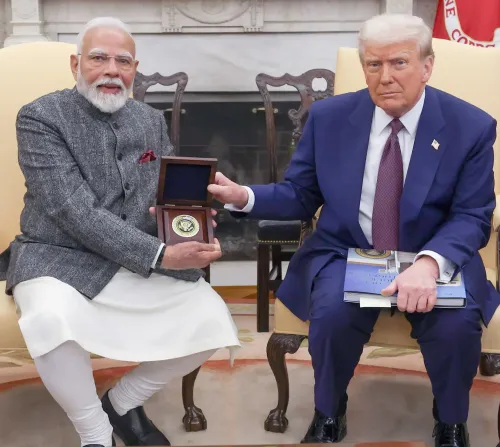
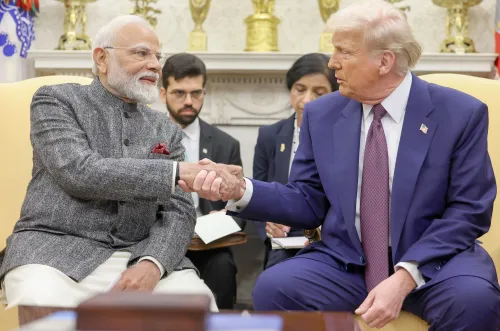
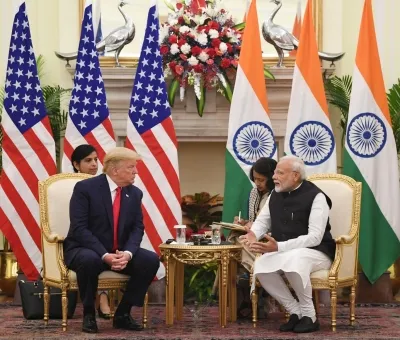
The two nations have confirmed a framework for an Interim Agreement on "reciprocal and mutually beneficial trade." This development keeps the discussions progressing towards a comprehensive US-India Bilateral Trade Agreement, which was initiated by President Donald Trump and Prime Minister Narendra Modi last February.
Both parties hailed this framework as a historic milestone. It aims for balanced trade and tangible outcomes. For India, the advantages focus primarily on tariffs, specified sector access, and the removal of long-standing trade obstacles.
Under this arrangement, the United States will enforce a reciprocal tariff rate of 18 percent on various Indian goods. This list encompasses textiles and apparel, leather and footwear, plastics and rubber, organic chemicals, home décor, artisanal products, and certain machinery.
This standardized rate offers India a competitive edge over several neighboring countries and the broader region. Many of these exporters encounter higher barriers or less predictable access to the US market.
The 18 percent rate also diminishes the disparity with Europe, which faces a 15 percent tariff. The reduced difference enhances the pricing position of Indian products, benefiting exporters in textiles, apparel, leather items, chemicals, and engineering goods. Additionally, it reinforces India’s position against regional competitors focused on cost.
The framework further paves the way for the removal of tariffs on a variety of Indian goods, contingent on the successful finalization of the Interim Agreement. This includes generic pharmaceuticals, gems and diamonds, and aircraft components—sectors where India maintains a significant global share coupled with high demand in the US.
Washington will also eliminate tariffs on specific Indian aircraft and parts, which were previously imposed under national security measures concerning aluminum, steel, and copper imports.
India will benefit from a preferential tariff rate quota on automotive components, which fall under US national security tariffs on automobiles and auto parts.
India’s pharmaceutical sector looks poised for further advancements. The outcomes related to generic drugs and pharmaceutical ingredients will hinge on a US Section 232 inquiry. These products represent a crucial export from India to the US healthcare sector, as stated in the joint declaration.
Beyond tariffs, both nations have agreed to facilitate preferential market access in sectors of mutual interest and establish rules of origin. The goal is to ensure that benefits predominantly favor the United States and India.
The framework also addresses non-tariff barriers that have historically hindered trade. India has pledged to tackle barriers affecting US medical devices and to abolish restrictive import licensing that delays market entry for US information and communication technology products.
India committed to a decision within six months of the agreement's enactment regarding the acceptance of US or international standards in specified sectors, including testing requirements. Similar commitments apply to long-standing barriers related to US food and agricultural products.
The two nations will engage in discussions on standards and compliance assessments, aiming to simplify compliance and clarify regulations. The framework allows either country to modify commitments should agreed tariff levels fluctuate.
India has also outlined a broader commercial strategy, indicating its intention to purchase $500 billion worth of US energy products, aircraft and parts, precious metals, technology products, and cooking coal over the upcoming five years.
Trade in technology products is expected to surge, particularly in graphics processing units used in data centers. The two countries have also agreed to broaden their joint technology cooperation.
This framework incorporates commitments regarding digital trade. Both nations affirmed their intention to address discriminatory or burdensome practices and to pave the way for ambitious digital trade regulations as part of the comprehensive agreement.
Point of View
I believe this trade framework is a significant step forward for India. It demonstrates a commitment to strengthening economic ties with the United States while addressing long-standing trade barriers. This agreement not only benefits India's exporters but also enhances our competitive position on the global stage. The focus on balanced trade and preferential access underscores the importance of collaboration in an interconnected world.
NationPress
23 Oct 2026
Frequently Asked Questions
What does the new trade framework entail?
The new trade framework entails tariff relief, better market access, and a stronger competitive position for India in the US market, focusing on sectors like textiles, pharmaceuticals, and technology.
How will Indian goods benefit from this agreement?
Indian goods will benefit from a reciprocal tariff rate of 18% on a range of products, enhancing their competitive edge in the US market.
What are the expected outcomes of this trade agreement?
The expected outcomes include improved trade relations, increased exports from India, and the paving of the way for a comprehensive Bilateral Trade Agreement with the US.
What sectors are most impacted by this framework?
Key sectors impacted by this framework include textiles, pharmaceuticals, automotive parts, and technology products.
Are there any commitments regarding digital trade?
Yes, both nations have committed to addressing discriminatory practices in digital trade and establishing ambitious rules as part of the comprehensive agreement.