India emerges as global bridge-builder and balancer, BRICS chair 2026
Synopsis
As global institutions weaken and great-power rivalry intensifies, a South African think-tank chair argues India is uniquely positioned to reshape the international order — leveraging its NAM heritage, Quad membership, and 2026 BRICS chairmanship to bridge the North-South divide without surrendering strategic autonomy.
Key Takeaways
India has been described as a quintessential bridge-builder and balancer in contemporary global affairs, according to an opinion piece in the Sunday Independent .
Phapano Phasha of The Centre for Alternative Political and Economic Thought argues India's strategic autonomy , rooted in its Non-Aligned Movement heritage, allows it to engage multiple blocs without formal alliances.
India is a member of the Quad but has resisted converting it into a formal military alliance, preserving diplomatic flexibility.
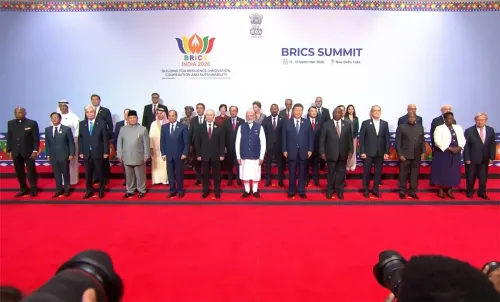
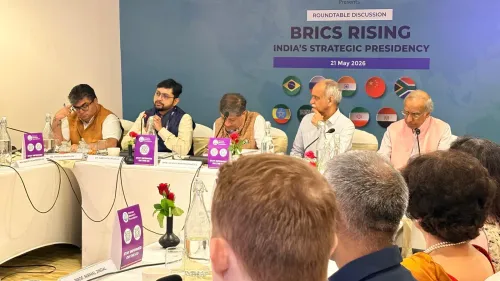
India holds the BRICS chairmanship in 2026 under the theme 'Building for Resilience, Innovation, Cooperation and Sustainability' .
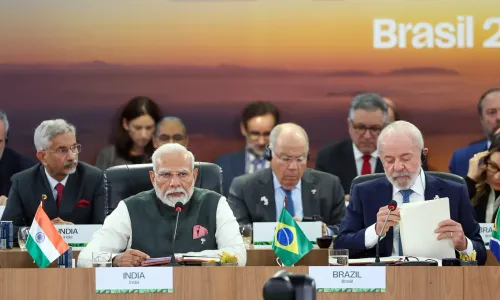
PM Modi articulated the BRICS theme at the 17th BRICS Summit in Rio de Janeiro in 2025 .
India's bridging role is seen as especially significant for South Africa and the African continent in their push for a more equitable multipolar order.
India has emerged as a quintessential bridge-builder and balancer in contemporary global affairs, with the capability to reshape the weakening international order toward fairer global governance, according to an opinion piece published in the South Africa-based newspaper Sunday Independent. The assessment comes as India holds the BRICS chairmanship in 2026, reinforcing its growing centrality in multilateral diplomacy.
Strategic Autonomy at the Core
Phapano Phasha, Chairperson of The Centre for Alternative Political and Economic Thought, argues that India has preserved strategic flexibility by engaging multiple global platforms without locking itself into formal alliances. 'India has emerged as a quintessential bridge-builder and balancer in contemporary global affairs. It maintains strategic autonomy, a policy rooted in its Non-Aligned Movement (NAM) heritage, by engaging multiple platforms without formal alliances,' Phasha wrote.
This approach, he contends, allows India to simultaneously advance its national interests, champion the Global South, and remain a reliable partner for Western nations including the United States, United Kingdom, European Union, and Nordic countries.
India's Role in the Quad
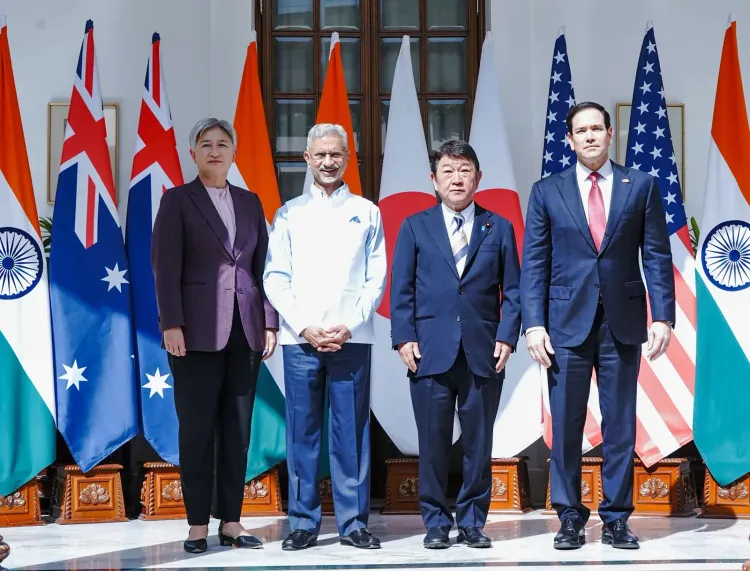
India is a member of the Quadrilateral Security Dialogue (Quad), alongside the United States, Japan, and Australia. Phasha notes that India has deliberately resisted converting the Quad into a formal military alliance, thereby preserving its diplomatic flexibility. Through the Quad, India functions as a stabiliser in an increasingly multipolar world — balancing relationships with the US, Russia, China, and European powers while amplifying the voice of the Global South.
Bridge Between North and South
India's unique economic scale and global presence allow it to function as a bridge between the developed North and the developing South. By deepening ties with developing nations and supporting South-South cooperation, India has assumed a leadership role among emerging economies. Phasha argues that the current weakening of global institutions has created a rare opening for India to steer multilateral conversations toward equitable governance and the rule of law — a tradition rooted in its Non-Aligned Movement legacy.
'This bridging role is particularly significant for South Africa and the broader African continent, as it aligns with shared aspirations for a more equitable, multipolar order strengthened by platforms such as BRICS, where India assumed the chairmanship in 2026,' Phasha wrote.
India's BRICS Chairmanship 2026
India holds the BRICS chair in 2026 under the theme 'Building for Resilience, Innovation, Cooperation and Sustainability' — a framework described as reflecting a people-centric and humanity-first approach. The theme was articulated by Prime Minister Narendra Modi at the 17th BRICS Summit held in Rio de Janeiro in 2025. The chairmanship positions India to translate its bridging role into concrete multilateral outcomes at a moment when global institutional frameworks are under strain.
As geopolitical fault lines deepen between major powers, India's ability to maintain dialogue across competing blocs will be closely watched through the remainder of its BRICS tenure.
Point of View
Or whether it remains a posture that satisfies no bloc fully. The NAM parallel is instructive: non-alignment kept India relevant but rarely decisive. The question now is whether India's scale and economic weight can convert influence into agenda-setting power.
NationPress
23 Oct 2026
Frequently Asked Questions
Why is India described as a bridge-builder in global affairs?
India is described as a bridge-builder because it engages multiple global platforms — including the Quad, BRICS, and G20 — without committing to formal alliances, allowing it to maintain ties with the West, Russia, China, and developing nations simultaneously. This approach is rooted in India's Non-Aligned Movement heritage and is seen as giving it unique diplomatic leverage.
What is India's role in the Quad?
India is one of four members of the Quadrilateral Security Dialogue (Quad), alongside the United States, Japan, and Australia. India has reportedly resisted converting the Quad into a formal military alliance, preserving its strategic flexibility while still participating in the grouping's security and governance agenda.
What is India's BRICS chairmanship theme for 2026?
India holds the BRICS chairmanship in 2026 under the theme 'Building for Resilience, Innovation, Cooperation and Sustainability.' The theme reflects a people-centric approach articulated by Prime Minister Narendra Modi at the 17th BRICS Summit in Rio de Janeiro in 2025.
How does India's bridging role benefit the Global South?
India supports South-South cooperation and maintains deep ties with developing nations, positioning itself as a voice for the Global South in multilateral forums. According to the Sunday Independent opinion piece, this role is particularly significant for Africa, as it aligns with the continent's aspirations for a more equitable, multipolar international order.
What is the significance of India's strategic autonomy?
Strategic autonomy allows India to engage with competing global powers — the US, Russia, China, and European nations — without being bound by any single alliance. This flexibility, analysts argue, enables India to advance its national interests while also acting as a mediator and stabiliser in an increasingly fragmented world order.