India, Japan condemn cross-border terrorism, demand action on LeT, JeM at 2+2 talks
Synopsis
At the fourth India-Japan 2+2 ministerial meeting in Tokyo, both nations named LeT, JeM, Al Qaeda, and ISIS by name in a joint counter-terrorism call — a pointed diplomatic signal — while also backing each other for permanent UNSC seats and deepening Quad, cyber, and undersea-cable cooperation across the Indo-Pacific.
Key Takeaways
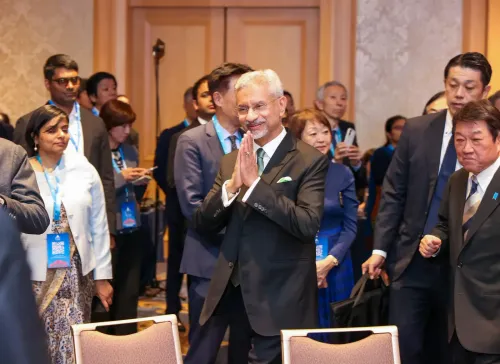
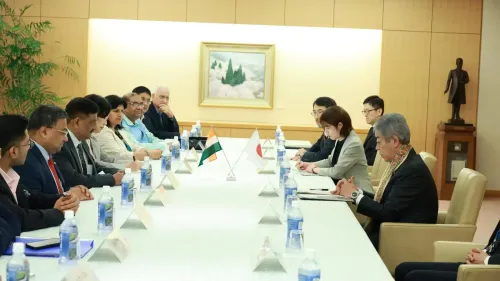
India and Japan held their fourth 2+2 Foreign and Defence Ministerial Meeting in Tokyo on 19 November 2026 .
The joint statement explicitly named Al Qaeda , ISIS/Daesh , Lashkar-e-Tayyiba (LeT) , and Jaish-e-Mohammad (JeM) for concerted counter-terrorism action.
Both nations expressed mutual support for each other's bids for a permanent seat in a reformed UNSC , as well as non-permanent seats for 2028–29 and 2033–34 .
The two sides agreed to renew the Memorandum of Cooperation in Cybersecurity and advance cooperation on AI-enabled cybersecurity and undersea cable networks.
Ministers reaffirmed commitment to the Quad , welcomed the first India-Japan-Philippines Trilateral 1.5 Dialogue , and stressed opposing unilateral changes to the status quo.
India and Japan on Thursday, 19 November 2026, jointly and unequivocally condemned terrorism and violent extremism in all its forms, including cross-border terrorism, and called for concerted international action against all United Nations-listed terrorist groups. The declaration came at the conclusion of the fourth India-Japan 2+2 Foreign and Defence Ministerial Meeting held in Tokyo, marking one of the most detailed counter-terrorism commitments the two nations have issued together.
Key Declarations from the Joint Statement
The joint statement issued after the meeting explicitly named Al Qaeda, ISIS/Daesh, Lashkar-e-Tayyiba (LeT), and Jaish-e-Mohammad (JeM) — along with their proxies — as targets for resolute multilateral action. The two sides called for rooting out terrorist safe havens, eliminating terrorist financing channels and their nexus with transnational crime, and halting the cross-border movement of terrorists. The naming of LeT and JeM is particularly significant in the South Asian context, given their deep links to Pakistan-based networks and their documented role in attacks on Indian soil.
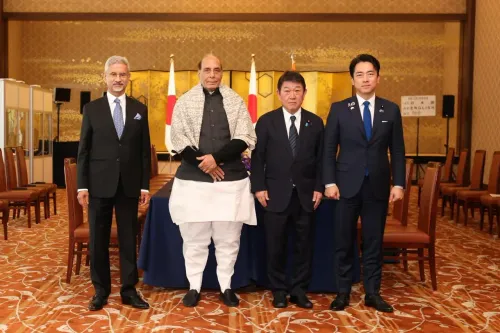
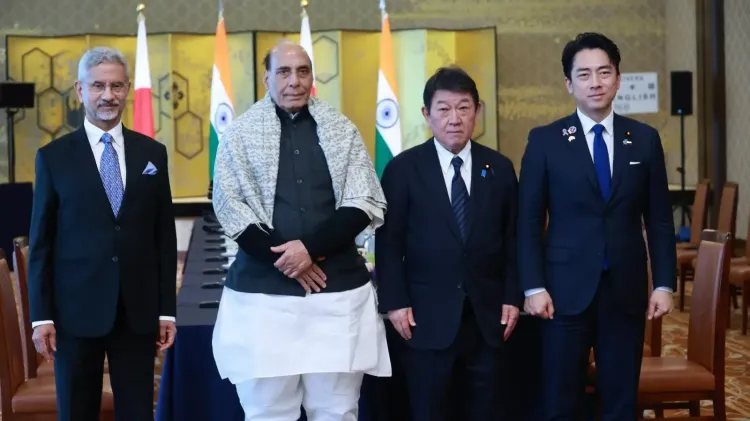
The meeting was co-chaired on the Indian side by Defence Minister Rajnath Singh and External Affairs Minister S. Jaishankar, and on the Japanese side by Minister of Foreign Affairs Toshimitsu Motegi and Minister of Defence Shinjiro Koizumi.
UNSC Reform and Mutual Candidature Support
The ministers reiterated their shared commitment to reforming the United Nations Security Council (UNSC), including expansion in both permanent and non-permanent categories — a position backed by a majority of UN member states. Both countries formally expressed mutual support for each other's candidatures for a permanent seat in a reformed UNSC. They also confirmed support for each other's bids for non-permanent seats for the terms 2028–29 and 2033–34.
Indo-Pacific, Quad, and Regional Security Architecture
The joint statement underscored the synergies between India-Japan bilateral cooperation and the Quad's four priority areas: maritime and transnational security, economic prosperity and security, critical and emerging technologies, and humanitarian assistance and emergency response. The ministers welcomed recent Quad Foreign Ministers' Meetings and the Quad Leaders' Summit held in November, highlighting the alliance's growing institutional depth.
Notably, the two sides welcomed the first India-Japan-Philippines Trilateral 1.5 Dialogue and the first trilateral naval PASSEX exercise involving India, Japan, and Indonesia — signalling a broader Indo-Pacific coalition-building effort that extends beyond the Quad's core four. The ministers also stressed the importance of cooperation with ASEAN member states to strengthen regional resilience.
Cybersecurity and Digital Infrastructure
Acknowledging a rise in cyberattacks globally, the ministers agreed to strengthen cybersecurity cooperation, including on Artificial Intelligence (AI)-enabled cybersecurity and the security of AI systems, with particular focus on critical infrastructure. They directed their teams to renew the existing Memorandum of Cooperation in Cybersecurity and convene the next India-Japan Cyber Dialogue at an early date.
On digital connectivity, both sides agreed to enhance cooperation in developing trusted, redundant, and high-speed undersea cable networks, including through industry partnerships, to secure critical undersea communications infrastructure across the Indo-Pacific.
Strategic Convergence and Rules-Based Order
The joint statement described the two nations as 'leading democracies and major economies,' reaffirming their commitment to 'maintaining and strengthening an international order which is free, open and based on the rule of law, respect for principles of national sovereignty and territorial integrity, and peaceful resolution of disputes without resorting to threat or use of force.' Both sides underlined that all countries must 'refrain from any attempt to unilaterally change the status quo' — widely read as a reference to Chinese assertiveness in the South China Sea and Eastern Ladakh.
The ministers also committed to enhancing synergies between the Indo-Pacific Oceans' Initiative (IPOI), India's MAHASAGAR framework, and Japan's updated Free and Open Indo-Pacific (FOIP) vision. With both sides deepening defence, diplomatic, and digital ties, the fourth 2+2 dialogue signals a maturing Special Strategic and Global Partnership that is increasingly central to the Indo-Pacific security architecture.
Point of View
Multilateral pressure campaign. At the same time, the mutual UNSC permanent-seat endorsement locks in a reciprocal relationship that serves India's long-term agenda of reshaping global governance. What mainstream coverage tends to underplay is the digital dimension: the agreement on undersea cable security and AI-enabled cybersecurity is quietly as consequential as the defence headlines — it reflects a shared recognition that the next theatre of great-power competition is subsea and digital, not just maritime or territorial.
NationPress
19 Nov 2026
Frequently Asked Questions
What was decided at the India-Japan 2+2 ministerial meeting in Tokyo?
At the fourth India-Japan 2+2 Foreign and Defence Ministerial Meeting in Tokyo on 19 November 2026, both nations jointly condemned cross-border terrorism and called for action against all UN-listed terror groups, including LeT, JeM, Al Qaeda, and ISIS. They also backed each other for permanent UNSC seats and agreed to deepen cooperation on cybersecurity, undersea cables, and Indo-Pacific security.
Why did India and Japan name Lashkar-e-Tayyiba and Jaish-e-Mohammad?
The two countries named LeT and JeM — both Pakistan-based groups designated by the UN — as part of a call for 'concerted action' against UN-listed terrorist organisations. This signals a deliberate diplomatic effort to build international consensus around counter-terrorism pressure on networks that have targeted India.
How does the India-Japan UNSC support work?
India and Japan have expressed mutual support for each other's candidacies for permanent seats in a reformed UNSC. They also confirmed support for each other's non-permanent seat bids for 2028–29 and 2033–34, cementing a formal diplomatic reciprocity on the UN reform agenda.
What was agreed on cybersecurity and digital infrastructure?
The ministers agreed to strengthen cooperation on AI-enabled cybersecurity and the security of AI systems, with particular focus on critical infrastructure. They also directed teams to renew the Memorandum of Cooperation in Cybersecurity and to collaborate on building trusted, high-speed undersea cable networks across the Indo-Pacific.
Who represented India and Japan at the 2+2 meeting?
India was represented by Defence Minister Rajnath Singh and External Affairs Minister S. Jaishankar. Japan was represented by Minister of Foreign Affairs Toshimitsu Motegi and Minister of Defence Shinjiro Koizumi. The meeting was co-chaired by both pairs of ministers.