India Urges Nationals to Leave Iran Promptly Amid US-Iran Ceasefire
Synopsis
In a surprising twist, India has advised its citizens in Iran to leave immediately, even as a ceasefire agreement between the US and Iran unfolds. The Indian Embassy emphasizes using designated routes for safety. What does this mean for travelers and the broader geopolitical landscape?
Key Takeaways
India has advised its nationals in Iran to leave immediately.
Travelers must use routes suggested by the Indian Embassy.
The advisory follows a ceasefire announcement between the US and Iran.
Trump has paused military actions for two weeks based on Iran's agreement.
Safe passage through the Strait of Hormuz is contingent on coordination with Iranian forces.
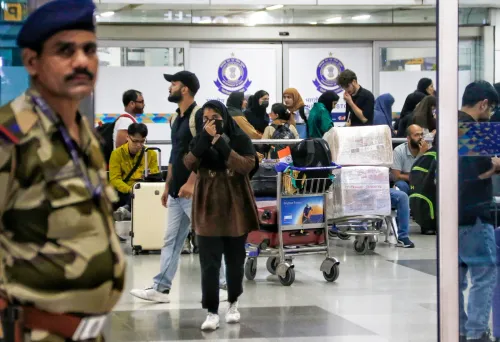
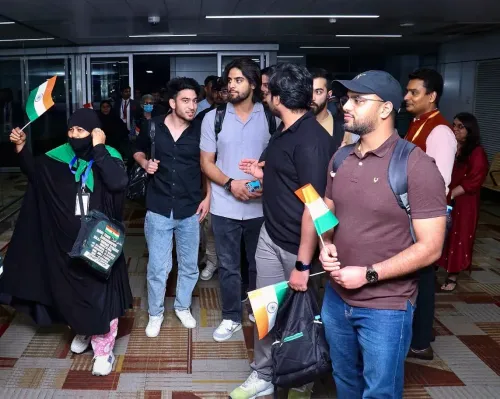
Tehran, April 8 (NationPress) On Wednesday, India urged its citizens in Iran to leave the country promptly, utilizing only routes recommended by the embassy, despite the recently announced ceasefire between the United States and Iran.
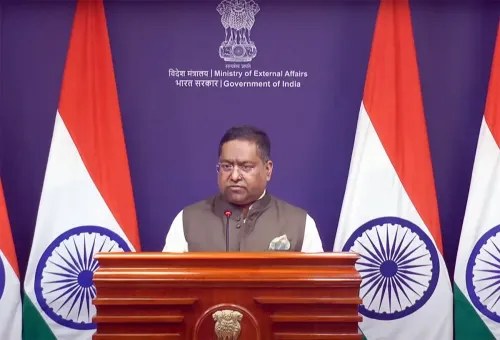
In a statement, the Indian Embassy in Tehran remarked, "Following the advisory issued on April 7, 2026, and considering the latest developments, Indian nationals remaining in Iran are strongly encouraged to exit the country quickly, in coordination with the Embassy and adhering to the routes advised by the Embassy."
"It is reiterated that no attempts should be made to approach any international land border without prior consultation with the Embassy," the Indian mission further emphasized, providing emergency contact details within the advisory.
This advisory came mere hours after the US and Iran announced a ceasefire agreement.
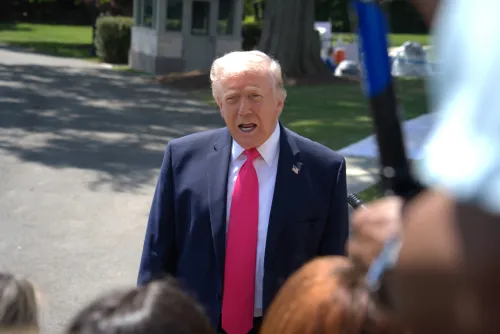
US President Donald Trump backed away from escalating military actions against Iran, declaring a conditional two-week halt in planned strikes related to the reopening of the Strait of Hormuz, a move that has brought significant relief globally.
The announcement was made just 90 minutes before a self-imposed 8 p.m. EST deadline set by Trump for Iran to negotiate a deal, following behind-the-scenes diplomatic efforts.
In a post on Truth Social, Trump stated he would suspend military escalation for two weeks if Iran consented to reopen the crucial shipping route.
He mentioned that discussions with Pakistan led to what he termed a "double-sided ceasefire."
Trump elaborated that this decision was made since the US had already achieved all military goals and was progressing towards a permanent peace agreement with Iran and stability in the Middle East.
He noted that the United States received a "10-point proposal from Iran" that provided a viable framework for negotiation.
Trump asserted that nearly all contentious issues had been resolved, and the two-week pause would facilitate finalizing the agreement.
The ceasefire hinges on Iran's agreement to the "complete, immediate, and safe reopening of the Strait of Hormuz."
Iran showed tentative signs of acceptance, with Foreign Minister Seyed Abbas Araghchi stating that Tehran would cease operations if attacks were halted.
"If attacks against Iran are stopped, our formidable armed forces will halt their defensive operations," he stated.
"For a two-week period, safe passage through the Strait of Hormuz will be achievable through coordination with Iran's Armed Forces, considering technical limitations," he added.
Point of View
The Indian government's advisory highlights the ongoing complexities and risks in international relations, especially in volatile regions. Prioritizing the safety of its citizens is paramount, and this move reflects a cautious approach amidst fluctuating geopolitical tensions.
NationPress
19 Sept 2026
Frequently Asked Questions
Why did India issue a new advisory for its nationals in Iran?
India urged its citizens to leave Iran promptly due to ongoing tensions, despite a ceasefire agreement between the US and Iran, to ensure their safety.
What routes should Indian nationals use to leave Iran?
Indian nationals are advised to utilize only the routes recommended by the Indian Embassy in Tehran.
What was the recent development regarding the US and Iran?
The US and Iran reached a conditional ceasefire agreement, which included a temporary pause in military escalation by the US.
What did President Trump say regarding the ceasefire?
Trump announced he would suspend military actions against Iran for two weeks if Iran agreed to reopen the Strait of Hormuz.
What are the implications of the ceasefire?
The ceasefire aims to promote stability in the region and allows for further negotiations between the US and Iran.