Indian American Army doctor's skull-free brain surgery offers faster recovery
Synopsis
An Indian American Army surgeon has developed a technique to remove skull-base brain tumours entirely through the nose — no cranial opening required. The first high-profile case: a Marine who had headaches for 15 years walked out of intensive care two days after the operation with his vision clearing.
Key Takeaways
Major Jagatkumar Patel , an Indian American US Army surgeon, developed a minimally invasive technique to remove brain tumours through the nasal passage without opening the skull.
The procedure was performed alongside Lt.
Charles Miller at Walter Reed Army National Medical Centre in Bethesda .
Patient Marine Staff Sergeant Andy Archer had a 4.4-centimetre tumour pressing against his optic nerve after suffering headaches for 15 years .
Archer showed no external signs of surgery just two days post-operation and his vision began to recover.
Patel stated no other team in the Defense Health Agency currently performs this category of complex skull-base surgery with the same approach.
Major Jagatkumar Patel, an Indian American surgeon serving in the US Army, has developed an innovative minimally invasive technique to remove brain tumours without opening the skull — instead operating entirely through the nasal passages. The procedure, credited to Patel and his neurosurgical partner, is drawing attention from the Pentagon as a potential advance in military and civilian neurosurgery.
How the Procedure Works
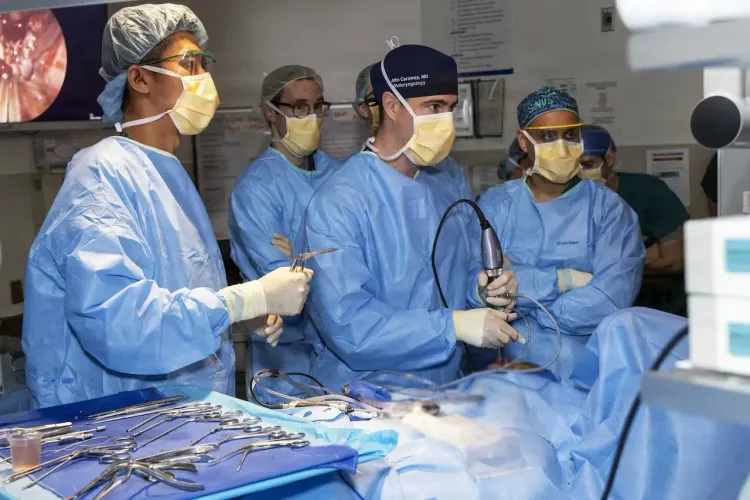
The technique involves navigating through the nose to reach tumours at the base of the skull — a region historically accessible only through open cranial surgery. Patel developed a detailed plan to map the complex nasal anatomy and create a clear surgical corridor.
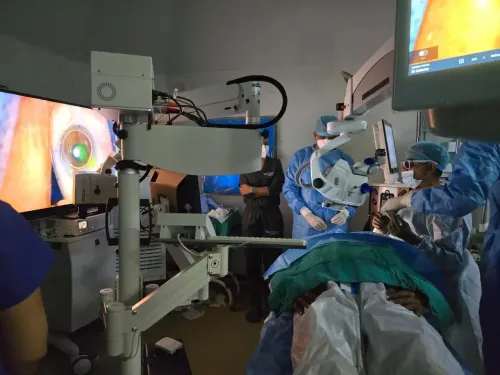
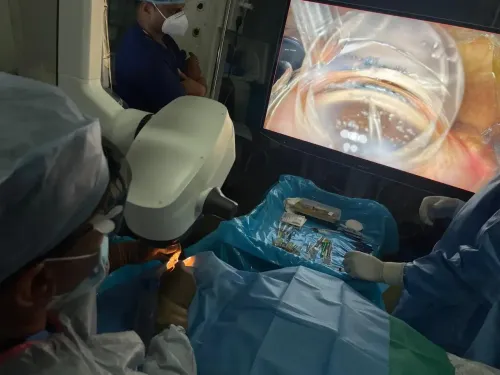
During the operation, Patel uses an endoscopic camera to deliver high-definition, close-up visualisation of the tumour on a surgical monitor, allowing his colleague to dissect and extract the growth with precision. 'If he needs to get to critical structures, I can drive the camera closer, so he has perfect visualisation,' Patel said.
'Historically, most of these surgeries were done open, which is a much more challenging procedure for the patient,' Patel noted. 'Today, if a tumour is the appropriate size and location, open surgery just isn't necessary. Through the nose, we get the best access and the best chance of complete removal.'
The Patient: A Marine's 15-Year Battle
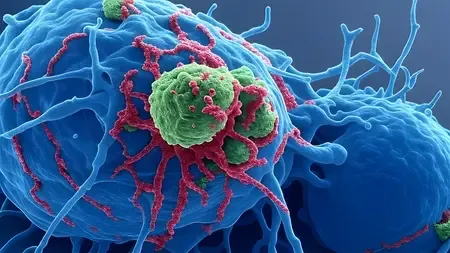
The procedure was recently performed on Marine Staff Sergeant Andy Archer, who had endured severe headaches for 15 years. When he developed vision problems, an MRI scan revealed a tumour approximately the size of a golf ball — measuring 4.4 centimetres — positioned in front of the pituitary gland and pressing against the optic nerve.
Archer was transferred to Walter Reed Army National Medical Centre, the premier military health facility in Bethesda, where Patel and Lieutenant Colonel Charles Miller performed the minimally invasive transnasal procedure to extract the tumour entirely.
Recovery and Outcomes
Just two days after surgery, Archer showed no visible external signs of having undergone a major brain operation. He was already sitting up in the surgical intensive care unit, and his vision had begun to clear — a recovery trajectory that would have been significantly longer with conventional open surgery.
Patel was quick to attribute the success to teamwork. 'My skills in navigating the nasal approach are only useful because he is skilled enough to completely remove the tumour once we get there,' he said, referring to Miller. 'It is a true team effort.'
Significance Within Military Medicine
'I don't think anyone else in the Defense Health Agency has this kind of team performing these complex skull base surgeries,' Patel said. He also acknowledged the procedure's limitations: the tumour must be of a specific size and located in a position accessible through the nasal route. 'A minimally invasive approach through the nasal passages is more challenging and we are mindful that the tumour has to be in a certain spot to go through the nose,' he added.
The technique represents a meaningful departure from standard neurosurgical practice and could set a precedent for how skull-base tumours are treated within the US military health system going forward.
Point of View
But their adoption within military health infrastructure has lagged. Patel's claim that no other Defense Health Agency team replicates this capability suggests the US military's premier medical system may be behind the curve on minimally invasive neurosurgery. The faster recovery this technique enables is not merely a comfort metric — for active-duty personnel, it directly affects return-to-service timelines, which carries strategic as well as humanitarian weight.
NationPress
31 Jul 2026
Frequently Asked Questions
What is the brain surgery technique developed by Major Jagatkumar Patel?
Major Jagatkumar Patel developed a minimally invasive technique to remove skull-base brain tumours entirely through the nasal passages, using an endoscopic camera for visualisation, without opening the skull. The approach allows for faster patient recovery compared to conventional open cranial surgery.
Who was the first patient to undergo this procedure?
Marine Staff Sergeant Andy Archer was a key patient who underwent the procedure at Walter Reed Army National Medical Centre. He had suffered from severe headaches for 15 years before an MRI revealed a 4.4-centimetre tumour pressing against his optic nerve.
How quickly did the patient recover after the surgery?
Just two days after the procedure, Andy Archer showed no visible external signs of having undergone major brain surgery and was sitting up in the intensive care unit. His vision also began to improve within that period.
What are the limitations of this transnasal brain surgery?
According to Major Patel, the tumour must be of an appropriate size and located in a position accessible through the nasal route. The approach is more technically challenging than open surgery and is not suitable for all skull-base tumour cases.
Where was the surgery performed and who carried it out?
The surgery was performed at Walter Reed Army National Medical Centre in Bethesda by Major Jagatkumar Patel, an ear, nose, and throat specialist, working in tandem with neurosurgeon Lieutenant Colonel Charles Miller, who extracted the tumour once Patel established the surgical pathway.