BRICS Summit boosts India's global credibility on cross-border terrorism
Synopsis
The 18th BRICS Summit's New Delhi Declaration didn't just condemn the Pahalgam terror attack — it validated India's decades-long argument that cross-border terrorism cannot be shielded by political framing. For a bloc as geopolitically diverse as BRICS, securing that consensus language is a meaningful diplomatic win, and one that puts Pakistan's international narrative under fresh pressure.
Key Takeaways
The New Delhi Declaration from the 18th BRICS Summit unequivocally condemned the Pahalgam terror attack of 22 April 2025 , which killed 26 civilians .
The declaration adopted firm language against cross-border terrorism, terror financing, safe havens, and double standards — without explicitly naming Pakistan .
Athens-based policy publication Directus described the outcome as 'an important diplomatic achievement' for India, strengthening its credibility as an independent global power.
PM Narendra Modi's multidirectional foreign policy — spanning the Quad , BRICS , Russia , the US , Gulf nations and China — was cited as central to securing the diverse consensus.
The report argued India's doctrine of strategic autonomy proved its utility by aligning nations with sharply different geopolitical interests around India's core security concerns.
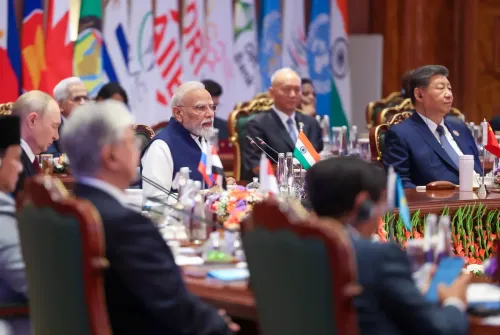
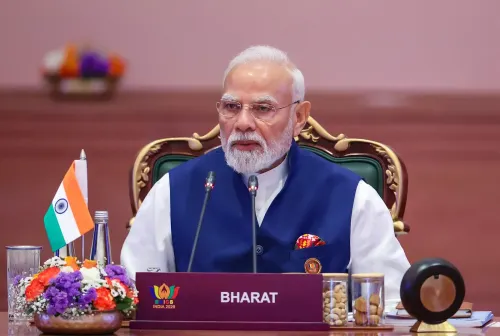
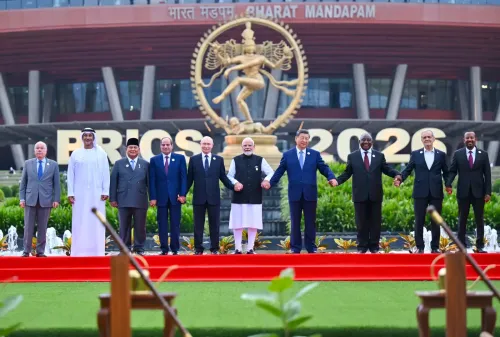
The 18th BRICS Summit, hosted by India in New Delhi, has significantly strengthened India's standing as an independent global power, with the New Delhi Declaration unequivocally condemning the Pahalgam terror attack of 22 April 2025 and adopting firm language against cross-border terrorism, terror financing, and safe havens. According to an analysis by Athens-based policy publication Directus, the declaration reinforces an argument India has made before the international community for decades.
What the New Delhi Declaration Says
The declaration, adopted by BRICS member nations, explicitly states that terrorism cannot be legitimised through political explanations, and that countries cannot selectively distinguish between terrorist groups based on strategic convenience. The Pahalgam attack — carried out by a Pakistan-based terrorist group — killed 26 civilians and is condemned in the document in what Directus described as 'the strongest terms.'
Notably, Pakistan has not been named explicitly in the declaration. According to the Directus report, 'that fact should neither be concealed nor exaggerated,' adding that 'the political significance of the declaration lies precisely in the terminology accepted by a diverse group of important nations.'
Why the Language on Terrorism Matters
The Directus analysis underscores that the declaration's condemnation of the Pahalgam attack is compounded by accompanying language on cross-border terrorism, financing, and safe havens — and that this combination carries particular weight. 'India has consistently maintained that terrorism in Jammu and Kashmir cannot be viewed merely through the prism of a political dispute,' the report noted.
The publication further argued that fighting terrorism requires dismantling entire ecosystems — weapons supply chains, recruitment networks, training facilities and financing routes — rather than targeting individual perpetrators alone. 'That principle has now received significant endorsement within BRICS,' it stated.
The report raised an increasingly uncomfortable question for Pakistan: how long can the international narrative on cross-border terrorism remain detached from the infrastructure and ideological networks that India has repeatedly accused of operating from Pakistani territory?
India's Multidirectional Foreign Policy on Display
The Directus analysis also highlighted what it described as the strength of Prime Minister Narendra Modi's multidirectional foreign policy approach. India, it noted, simultaneously participates in the Quad while remaining a principal member of BRICS; maintains its historic relationship with Russia while building an expanding partnership with the United States; has deepened engagement with Gulf countries while sustaining ties with Israel; and continues engaging China wherever national interests demand it, despite significant bilateral differences.
'India has managed to place its core security concerns before a grouping containing countries with dramatically different geopolitical interests and secure a meaningful consensus,' Directus stated.
Strategic Autonomy Vindicated
According to the report, India's much-debated doctrine of strategic autonomy — sometimes criticised as difficult to sustain — demonstrated its utility at the BRICS Summit. By securing consensus language on terrorism from a bloc that includes nations with sharply divergent geopolitical alignments, India has, the report argued, reinforced its credibility 'as an independent global power rather than an appendage of any geopolitical bloc.'
As BRICS continues to expand its membership and influence, the New Delhi Declaration's counterterrorism language could serve as a template for India's multilateral diplomacy — and as a measure of the diplomatic ground New Delhi still needs to gain to internationalise its security concerns more formally.
Point of View
But for what it normalises: the idea that cross-border terrorist ecosystems — not just individual attackers — must be dismantled. That framing, long central to India's position on Jammu and Kashmir, has now been endorsed by a bloc that includes China and Russia, whose historical postures on Pakistan-linked militancy have been far more equivocal. The gap between the declaration's language and any enforcement mechanism, however, remains vast. Multilateral condemnation without accountability structures has a long history of not moving the needle. The real test will be whether India leverages this consensus into concrete institutional pressure — at the UN, in bilateral dialogues, and through financial tracking bodies — rather than treating the declaration as an end in itself.
NationPress
19 Sept 2026
Frequently Asked Questions
What did the BRICS New Delhi Declaration say about terrorism?
The New Delhi Declaration, adopted at the 18th BRICS Summit hosted by India, unequivocally condemned the Pahalgam terror attack of 22 April 2025 and included firm language against cross-border terrorism, terror financing, safe havens, and double standards in addressing terrorism. The document states that terrorism cannot be legitimised through political explanations or selective distinctions between terrorist groups.
Was Pakistan named in the BRICS declaration?
Pakistan was not explicitly named in the New Delhi Declaration. However, according to Athens-based Directus, the political significance lies in the terminology itself — accepted by a diverse set of nations — which implicitly targets the infrastructure and networks India has long accused of operating from Pakistani territory.
What was the Pahalgam terror attack?
The Pahalgam terror attack took place on 22 April 2025 in Jammu and Kashmir, carried out by a Pakistan-based terrorist group, killing 26 civilians. India successfully elevated the attack into an international diplomatic issue, culminating in its condemnation by the full BRICS membership in the New Delhi Declaration.
How does the BRICS outcome reflect India's foreign policy strategy?
The Directus report credits Prime Minister Narendra Modi's multidirectional foreign policy — engaging simultaneously with the Quad, BRICS, Russia, the US, Gulf nations, Israel, and China — as key to securing consensus among nations with divergent geopolitical interests. It argues that this approach has reinforced India's credibility as an independent global power.
Why does the BRICS declaration matter beyond symbolism?
The declaration's value lies in combining condemnation of a specific attack with broader language on cross-border terrorism ecosystems — financing, safe havens, and recruitment networks. According to Directus, that combination marks a meaningful multilateral endorsement of India's longstanding argument that counterterrorism requires systemic action, not just responses to individual attacks.