Hormuz Strait shipping route: Iran-Oman talks near final stages, says Tehran
Synopsis
Iran and Oman are close to agreeing on a temporary shipping corridor through the Strait of Hormuz — but the bigger story is what surrounds it: Trump claiming a Hormuz deal is within reach, Gulf states lobbying Washington to stand down from strikes, and Iran simultaneously warning Ukraine over a Caspian Sea attack. The strait has become the pressure point where maritime security, nuclear diplomacy, and great-power rivalry are colliding at once.
Key Takeaways
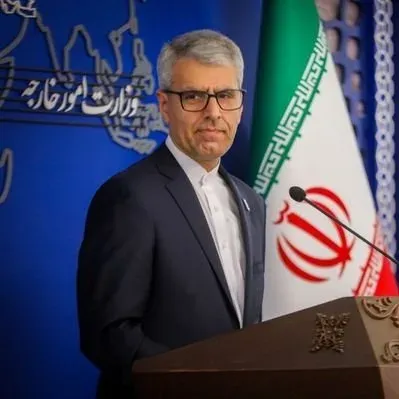
Iranian spokesman Esmaeil Baghaei confirmed on 3 August that Iran-Oman talks are focused on a temporary intermediate shipping corridor through the Strait of Hormuz .
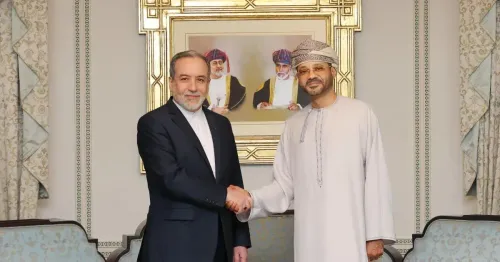
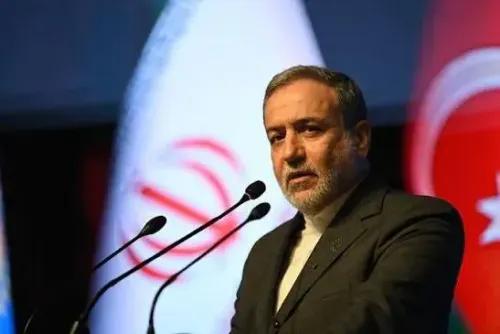
Foreign Minister Seyed Abbas Araghchi said the negotiations are in their final stages .
US President Donald Trump said on Sunday that Iran-US talks would begin Monday afternoon , citing potential deals on both Hormuz and Iran's nuclear programme.
Saudi Arabia , the UAE , and Qatar reportedly urged Washington to call off planned strikes against Iran, believing a deal is possible.
Iran has vowed to hold Ukraine accountable after a reported attack on an Iranian vessel in the Caspian Sea on 25 July .
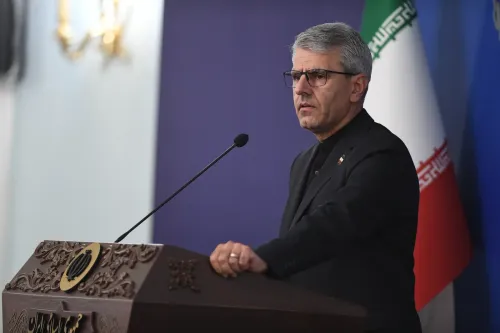
Iranian Foreign Ministry spokesman Esmaeil Baghaei said on Monday, 3 August that negotiations between Iran and Oman are centred on designating a temporary corridor to ensure safe commercial shipping through the Strait of Hormuz. The talks, he said, are in advanced stages and aim to establish an intermediate route before a permanent solution is finalised.
What the Proposed Route Entails
Speaking at a weekly press conference in Tehran, Baghaei said the discussions revolve around merging two existing paths — the southern route through Oman's waters and the northern route through Iran's territorial waters — into a single intermediate corridor. He clarified that the envisaged arrangement is a round-trip passage, not multiple separate lanes, and will remain in place temporarily until a permanent route is agreed upon.
Iranian Foreign Minister Seyed Abbas Araghchi had separately indicated at a cabinet meeting in Tehran on Sunday that the Iran-Oman negotiations are in their final stages, according to official Iranian reports.
Iran's Position on the Strait's Closure
Baghaei attributed the disruption to the waterway not to any bilateral dispute with Oman, but to what he described as US-Israeli 'military aggression' against Iran. He stated that the strait's status would remain unchanged for as long as Washington continues what he called its 'malicious' actions against the country. The characterisation underscores Tehran's framing of the Hormuz situation as a direct consequence of external military pressure rather than a regional maritime disagreement.
Trump Signals Talks, Mentions Hormuz and Nuclear Deals
US President Donald Trump said on Sunday that negotiations with Iran were set to begin Monday afternoon, noting that Saudi Arabia, the United Arab Emirates (UAE), and Qatar had urged Washington to stand down from planned strikes because, in his words, 'they think there's a deal.' Speaking to reporters aboard Air Force One en route to Joint Base Andrews, Trump said: 'There's a deal on (the Strait of) Hormuz, and then there will be a deal on the nuclear, or you might call it the denuclearisation of Iran.' He also claimed that Iran had itself requested the US to pull back the planned strikes, adding that Washington was now pursuing a negotiated path.
Separately, Saudi Crown Prince and Prime Minister Mohammed bin Salman Al Saud spoke by phone with Trump on Saturday and, according to a US official cited by Axios, 'expressed concern and asked for clarity' about the proposed plan of action against Iran.
Iran-Ukraine Tensions Over Caspian Sea Incident
Baghaei also addressed a separate flashpoint at the press conference, warning that Iran would take 'every necessary action' to hold Ukraine accountable for a recent attack on an Iranian vessel. On 25 July, Ukrainian President Volodymyr Zelensky stated that Ukrainian forces had struck a Russian warship and vessels reportedly used to transport Iran-linked military cargo in the Caspian Sea. Tehran has disputed the characterisation and signalled a firm response.
What Comes Next
The convergence of Iran-Oman maritime talks, US-Iran diplomatic signalling, and Gulf state lobbying marks a rare moment of multilateral pressure on the Hormuz question. Whether the temporary corridor agreement translates into a durable arrangement — and whether it unlocks broader nuclear negotiations — will depend heavily on the pace and outcome of the US-Iran talks that were set to begin this week.
Point of View
But the real architecture is far more complex — US strikes were reportedly on the table days ago, and Gulf states intervened to pause them. That is an extraordinary level of regional diplomatic traffic for what is being presented as a routine shipping negotiation. Tehran's insistence on blaming 'US-Israeli aggression' for the strait's disruption is a calibrated posture: it keeps domestic hardliners satisfied while leaving the door open for a deal. The more revealing signal is Trump's public mention of 'denuclearisation' in the same breath as Hormuz — suggesting Washington is attempting to bundle maritime access and nuclear concessions into a single package, a linkage Iran has historically resisted. Whether Tehran accepts that framing, or uses the corridor talks to extract relief without nuclear concessions, is the real question the mainstream coverage is underplaying.
NationPress
18 Sept 2026
Frequently Asked Questions
What is the proposed temporary shipping route through the Strait of Hormuz?
Iran and Oman are negotiating a single intermediate corridor that combines the southern route through Oman's waters and the northern route through Iran's territorial waters into one round-trip passage. It is intended as a temporary arrangement until a permanent route is agreed upon.
Why is the Strait of Hormuz currently disrupted?
Iranian officials attribute the disruption to US-Israeli military pressure on Iran, not to any dispute with Oman. Tehran has said the strait's status will remain unchanged as long as Washington continues what it calls hostile actions against Iran.
What did Trump say about a deal with Iran?
US President Donald Trump said on Sunday that Iran-US negotiations would begin Monday afternoon, and claimed that Saudi Arabia, the UAE, and Qatar had asked Washington to hold off on planned strikes because they believed a deal was possible. He also mentioned potential agreements on both Hormuz shipping access and Iran's nuclear programme.
What is the Iran-Ukraine dispute over the Caspian Sea?
On 25 July, Ukrainian President Volodymyr Zelensky said Ukrainian forces had struck a Russian warship and vessels allegedly used to transport Iran-linked military cargo in the Caspian Sea. Iran has since vowed to take every necessary action to hold Ukraine accountable.
What role did Gulf states play in the US-Iran standoff?
Saudi Crown Prince Mohammed bin Salman Al Saud spoke with Trump on Saturday and, according to a US official cited by Axios, expressed concern and sought clarity on the proposed strikes against Iran. Saudi Arabia, the UAE, and Qatar all reportedly urged Washington to pursue a negotiated path instead.