Iran-Pakistan-Afghanistan border smuggling reflects governance failures, report finds
Synopsis
A new Eurasia Review report reframes the Iran-Pakistan-Afghanistan smuggling crisis not as a policing failure but as a shadow political economy actively sustained by military-linked actors, corrupt institutions, and governance vacuums — with Balochistan at the epicentre. The finding that state actors benefit from keeping these networks alive is the most damning element of the analysis.
Key Takeaways
Smuggling across the Iran-Pakistan-Afghanistan frontier is described as a 'shadow political economy' embedded in security structures, not merely a law enforcement problem, according to a Eurasia Review report.
Strategic hubs including Bahramcha in Helmand Province and the Shin Nari corridor in Arghistan district connect local traffickers to regional and international markets.
Commodities trafficked include fuel, narcotics, weapons, timber, gemstones, gold, and marble — with operators diversifying to evade crackdowns.
The report alleges that segments of border security forces, intelligence services, customs authorities, and military-linked actors derive financial or political benefits from illicit trade.
Pakistan's Balochistan province is identified as especially vulnerable, with smuggling filling a governance vacuum in an economically underdeveloped, insurgency-affected region.
Smuggling across the Iran-Pakistan-Afghanistan border is not merely a law enforcement challenge but a symptom of entrenched governance failures, sustained by powerful vested interests and the absence of viable formal economic alternatives, according to a detailed report by Eurasia Review.
A Shadow Political Economy, Not Just Crime
The report argues that policymakers have long mischaracterised the smuggling networks along this frontier as a problem of weak borders and insufficient policing. 'For decades, policymakers have portrayed smuggling along the Iran-Pakistan-Afghanistan frontier as a law enforcement problem. In reality, it is something far more consequential: a shadow political economy that has become deeply embedded in the security architecture, local governance structures, and survival strategies of borderland communities,' the report stated.
Critically, the analysis contends that the persistence of these networks reflects the active interests of certain military actors who benefit from keeping the system alive — a finding that challenges the conventional narrative of governments trying but failing to dismantle illicit trade.
Strategic Hubs and a Multi-Commodity Network
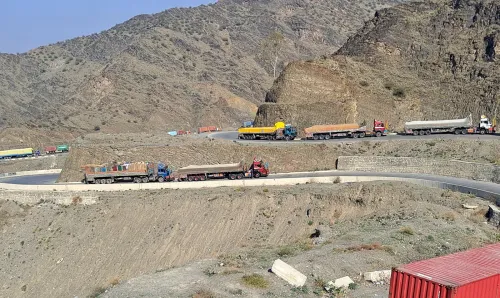
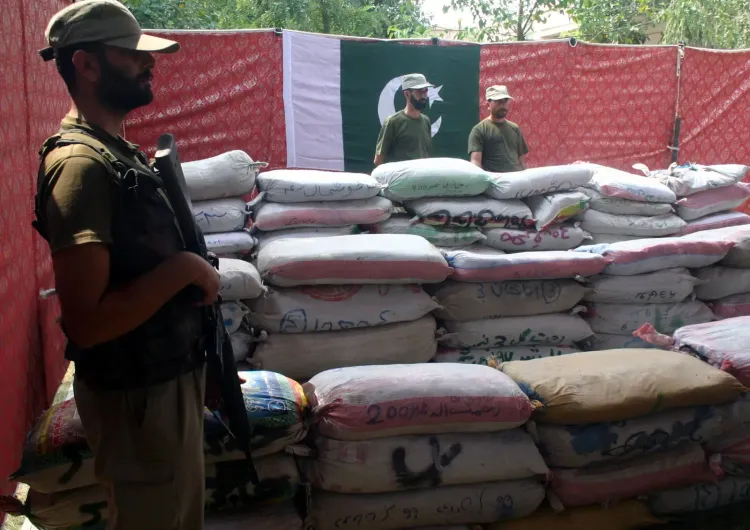
The smuggling corridors span the deserts of Balochistan and the rugged terrain connecting Iran, Afghanistan, and Pakistan, facilitating the movement of fuel, narcotics, weapons, timber, gemstones, gold, marble, and other high-value commodities. Strategic nodes such as Bahramcha in Helmand Province and the Shin Nari corridor in Afghanistan's Arghistan district have evolved into critical logistical hubs linking local traffickers with regional and international markets, according to the report.
Rather than isolated criminal enterprises, these networks operate as a sophisticated, multi-commodity system capable of adapting to state pressure. When authorities crack down on one revenue stream, operators pivot to another — a decline in fuel smuggling may coincide with a rise in gemstone trafficking, while intensified narcotics seizures may be accompanied by increased illicit gold and marble exports. This diversification, the report notes, is the foundation of the networks' resilience.
Institutional Complicity at Multiple Levels
The report takes direct aim at the 'uncomfortable reality' that segments of local administrations, border security forces, intelligence services, customs authorities, and military-linked actors derive political, financial, or strategic benefits from the illicit economy. 'Smuggling networks cannot move fuel tankers, timber shipments, precious stones, or bulk commodities across heavily monitored borders without some degree of institutional accommodation. Whether through corruption, selective enforcement, informal taxation, or political patronage, portions of the state apparatus often become intertwined with the very activities they are tasked with stopping,' it stated.
This dynamic is described as particularly acute in Pakistan's Balochistan province, which has long grappled with economic underdevelopment, insurgency, and a limited state presence.
Balochistan: Where Illicit Trade Fills a Governance Vacuum
In Balochistan, illicit trade provides livelihoods, generates revenue, and sustains patronage networks that allow local power brokers to retain influence, the report emphasised. For some Pakistani security actors, these networks serve not only as sources of financial gain but also as tools for managing tribal relations and preserving a semblance of stability in areas where formal state control remains weak.
Notably, the region's underdevelopment means that borderland communities have few viable formal economic alternatives, making smuggling a survival strategy rather than a purely criminal choice — a distinction the report argues is routinely ignored in policy discussions.
What the Analysis Signals for Regional Security
The findings carry significant implications for regional security, particularly as India monitors cross-border trafficking dynamics that affect narcotics flows and weapons proliferation in South Asia. The report's emphasis on institutional complicity — rather than mere capacity gaps — suggests that technical border-management solutions alone are unlikely to disrupt these networks without corresponding political will and accountability within the states involved.
Whether the governments of Iran, Pakistan, and Afghanistan will acknowledge and act on these structural failures remains the central question going forward.
Point of View
Kabul, and Tehran persistently avoids — it names institutional complicity as a structural feature, not an aberration. Framing smuggling as a 'governance failure' is accurate but still too soft: the report's own evidence points to active state facilitation, not passive neglect. For India, the implications are direct — narcotics and weapons flowing through these corridors do not stay in Balochistan. The real test of this analysis is whether any of the three governments will allow accountability mechanisms that could implicate their own security apparatus, a prospect that looks remote given current political conditions in all three countries.
NationPress
24 Oct 2026
Frequently Asked Questions
What does the Eurasia Review report say about Iran-Pakistan-Afghanistan border smuggling?
The report argues that smuggling across this frontier is not a simple law enforcement problem but a deeply embedded shadow political economy sustained by military-linked actors, corrupt institutions, and governance failures. It contends that certain security actors in the region actively benefit from keeping these networks alive.
Which commodities are smuggled across the Iran-Pakistan-Afghanistan border?
According to the report, smuggling networks move fuel, narcotics, weapons, timber, gemstones, gold, marble, and other bulk commodities. Strategic hubs like Bahramcha in Helmand Province and the Shin Nari corridor in Afghanistan's Arghistan district serve as key logistical nodes for these flows.
Why is Pakistan's Balochistan province specifically highlighted in the report?
Balochistan is identified as particularly vulnerable due to chronic economic underdevelopment, an active insurgency, and a weak formal state presence. In this environment, illicit trade fills a governance vacuum, providing livelihoods and sustaining patronage networks that local power brokers depend on for influence.
How do smuggling networks evade crackdowns by authorities?
The networks are described as a multi-commodity system that diversifies across revenue streams. When authorities intensify pressure on one area — such as fuel smuggling — operators shift to another, such as gemstone or gold trafficking. This adaptability is the primary source of their long-term resilience.
What is the significance of alleged institutional complicity in the smuggling networks?
The report's most consequential claim is that large-scale smuggling — moving fuel tankers and bulk commodities across monitored borders — is impossible without some degree of accommodation from state institutions, whether through corruption, selective enforcement, or political patronage. This shifts the policy challenge from border technology to political accountability within the governments concerned.