Iran: 18 killed, 108 wounded in US overnight strikes on civilian sites
Synopsis
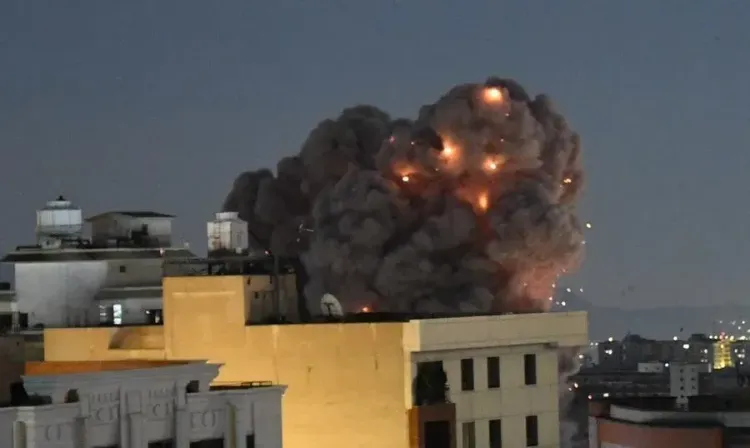
The US-Iran confrontation has entered a dangerous new phase. After US strikes killed 18 and wounded 108 on Iranian soil — hitting what Tehran calls civilian sites — the IRGC launched retaliatory missile attacks across five countries: Kuwait, Jordan, Iraq, Bahrain, and the UAE. The scale and geographic spread of Iran's response is unprecedented in recent memory and puts US forces and regional stability under acute pressure.
Key Takeaways
Iran's Health Minister Mohammad-Reza Zafarghandi confirmed 18 killed and 108 wounded in US overnight strikes on 3 September .
US Central Command said strikes targeted Iranian military targets , citing IRGC attacks on commercial shipping in the Strait of Hormuz .
Iran's Foreign Ministry condemned the strikes as violations of national sovereignty, calling them attacks on civilian infrastructure.
The IRGC claimed retaliatory strikes on US bases in Kuwait , Jordan , Iraq's Erbil , Bahrain , and the UAE .
The IRGC claimed its ballistic missile attack on Camp Tition in Jordan destroyed facilities and helicopters; US casualty figures remain unverified.
The confrontation represents one of the broadest direct US-Iran military exchanges in recent years.
Iran's Health Minister Mohammad-Reza Zafarghandi confirmed on 3 September that 18 people were killed and 108 others wounded in overnight strikes carried out by the United States against Iranian territory, according to a statement published on the official website of the Iranian president's office. The strikes have triggered a sharp military and diplomatic escalation between the two countries.
What the US Said
US Central Command stated on X that its forces had 'successfully completed a wave of strikes against Iranian military targets,' citing what it described as 'recent attempted attacks by the Islamic Revolutionary Guard Corps (IRGC) against commercial shipping in the Strait of Hormuz and against American service members' as justification for the action.
Iran's Official Response
Iran's Foreign Ministry condemned the strikes in the strongest terms, calling them acts of aggression that violated the country's national sovereignty and territorial integrity. The ministry said the US government, on Tuesday night, attacked several civilian locations and service infrastructure, killing and wounding Iranian citizens and damaging both public and private property. Iran declared its determination to 'decisively' defend its independence and sovereignty.
Iran's Retaliatory Strikes
Iran responded with a series of retaliatory attacks targeting US bases and assets across the region. The IRGC said it struck the living quarters and command post of the American commander at the Ali Al-Salem base in Kuwait, claiming it possessed complete intelligence on US movements across the region.
The IRGC also claimed a ballistic missile attack on the US Marines base Camp Tition on the Gulf of Aqaba in Jordan, describing it as retaliation for a US strike on a wedding ceremony in Sirik, Iran. According to the IRGC, the Jordan operation destroyed several facilities and helicopters, with American forces reportedly suffering heavy casualties — though these claims have not been independently verified.
In Iraq's Erbil, the IRGC said its ground forces destroyed a US surveillance balloon control system, a maintenance centre, and warehouses housing technical equipment, also citing the Sirik wedding strike as the trigger. The IRGC further claimed that several US personnel were killed and fuel storage facilities were set ablaze in the Erbil operation. Iran also reportedly struck US bases and assets in Bahrain, the United Arab Emirates, and Iraq's semi-autonomous Kurdistan region.
Regional Implications
The exchange marks one of the most direct and geographically broad military confrontations between the US and Iran in recent years. The involvement of multiple countries — Kuwait, Jordan, Iraq, Bahrain, and the UAE — signals a significant widening of the conflict's footprint. Notably, Iran's retaliatory strikes span both the Gulf and the Red Sea corridor, raising concerns over the security of commercial shipping lanes and US military presence across the Middle East. This comes amid already elevated tensions in the region following months of IRGC activity in the Strait of Hormuz.
Point of View
Not just a military response. Tehran is demonstrating that it can impose costs across the entire US footprint in the Middle East, not just at the point of attack. What remains opaque is the casualty and damage picture on the US side: all claims of 'heavy casualties' and destroyed facilities come exclusively from IRGC statements, which have historically overstated impact. The invocation of a wedding ceremony strike in Sirik as a casus belli for multiple retaliatory operations suggests Iran is also managing a domestic narrative. The Strait of Hormuz dimension is the one to watch — any sustained disruption to commercial shipping there would have immediate global economic consequences that extend well beyond the bilateral conflict.
NationPress
3 Sept 2026
Frequently Asked Questions
How many people were killed and wounded in the US strikes on Iran?
Iran's Health Minister Mohammad-Reza Zafarghandi confirmed that 18 people were killed and 108 others were wounded in overnight US strikes, according to a statement on the Iranian president's official website. The strikes reportedly targeted civilian locations and service infrastructure, according to Iran's Foreign Ministry.
Why did the US carry out strikes on Iran?
US Central Command said its forces struck Iranian military targets in response to what it described as recent attempted attacks by the IRGC against commercial shipping in the Strait of Hormuz and against American service members. Iran disputes this characterisation, calling the strikes unprovoked acts of aggression.
How did Iran retaliate against the US strikes?
The IRGC launched retaliatory strikes on US bases and assets in Kuwait, Jordan, Iraq's Erbil, Bahrain, and the UAE. It claimed to have hit the command post of the US Ali Al-Salem base in Kuwait, launched a ballistic missile attack on Camp Tition in Jordan, and destroyed a surveillance balloon control system in Erbil. These claims have not been independently verified.
What did Iran's Foreign Ministry say about the US strikes?
Iran's Foreign Ministry condemned the strikes in the strongest terms, calling them a violation of Iran's national sovereignty and territorial integrity. It said the US attacked civilian sites and service infrastructure, killing and wounding citizens, and reaffirmed Iran's resolve to 'decisively' defend its independence.
What is the significance of the Strait of Hormuz in this conflict?
US Central Command cited IRGC attacks on commercial shipping in the Strait of Hormuz as a key trigger for the US strikes. The strait is a critical global oil and gas transit route, and any sustained military activity there raises serious concerns about energy supply security and global shipping.