Iran's Pezeshkian, Araghchi vow to defend national interests amid US tensions
Synopsis
Iran's president and foreign minister used a meeting with Armenia's top diplomat to send an unambiguous signal: Tehran will not negotiate under military pressure, holds the US responsible for attacking it three times post-talks, and is tightening its grip on the Strait of Hormuz. Armenia, meanwhile, pledged its territory will not be used against Iran — a geopolitically significant assurance given its position in a volatile region.
Key Takeaways
President Pezeshkian and FM Araghchi separately met Armenian FM Mirzoyan in Tehran on 6 October 2026 .
Pezeshkian alleged the US attacked Iran three times after diplomatic talks, calling negotiation 'meaningless' under current conditions.
He cited the killing of 168 children at a school in Minab on 28 February as an unanswered grievance against Washington.
Araghchi said Iran will 'decisively' defend its interests but remains open to diplomacy to prevent escalation.
Iran has tightened control over the Strait of Hormuz following 28 February joint US-Israeli strikes on Iranian cities.
Armenia pledged its territory will not be used for any action against Iran, underscoring the 'strategic' bilateral relationship.
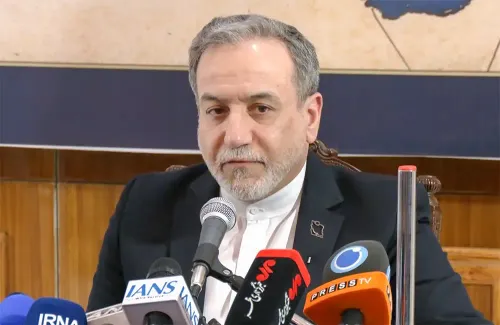
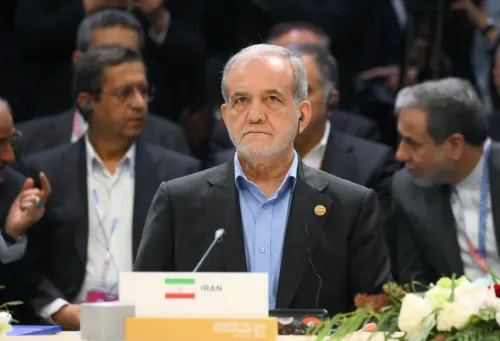
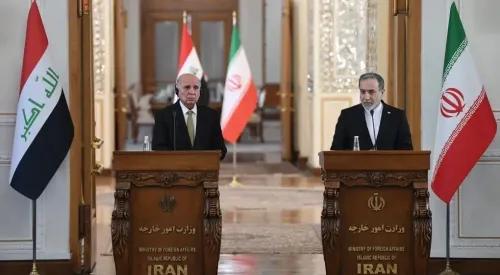
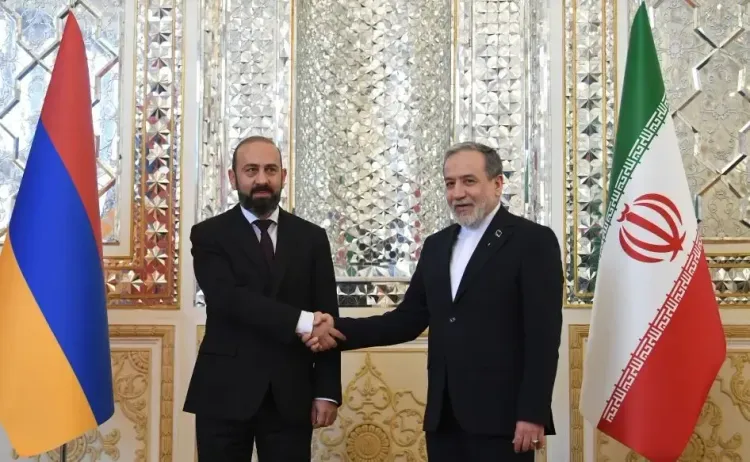
Iranian President Masoud Pezeshkian and Foreign Minister Seyed Abbas Araghchi separately met with visiting Armenian Foreign Minister Ararat Mirzoyan in Tehran on Monday, 6 October 2026, with both Iranian officials reaffirming the country's resolve to protect its national interests and security in the face of what they described as sustained American pressure and military aggression.
Pezeshkian's Sharp Rebuke of the United States
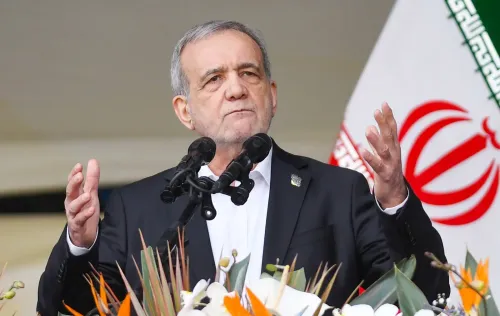
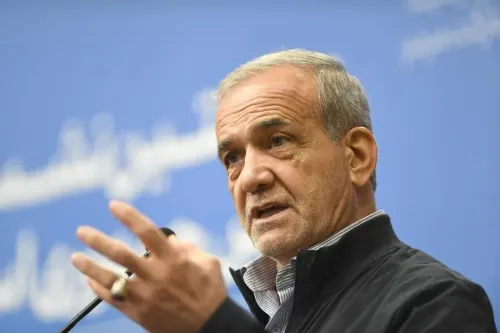
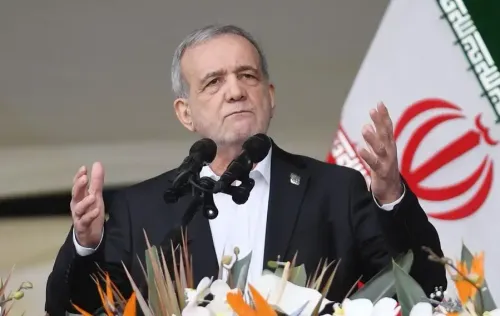
In his meeting with Mirzoyan, President Pezeshkian delivered a pointed critique of Washington, arguing that meaningful dialogue with the US is impossible given its conduct. 'Negotiation is meaningless with an enemy that resorts to acts of assassination, sanctions, pressure, and threats on a daily basis, and breaks its promises,' Pezeshkian said, according to a statement published on his official office website.
Pezeshkian alleged that the United States had attacked Iran on three separate occasions following rounds of talks, suggesting Washington's goal is regime change rather than diplomacy. 'So far, they (the United States) have attacked us three times following talks, which demonstrates that they are not seeking dialogue, but rather aiming to overthrow the Islamic Republic of Iran's establishment,' he said.
The president also referenced the killing of 168 children at a school in Minab, a city in Iran's south, on 28 February, for which he said Washington has offered no accounting. 'None of their actions and behaviors towards Iran complies with international law,' Pezeshkian added.
Araghchi: Diplomacy Yes, But Deterrence First
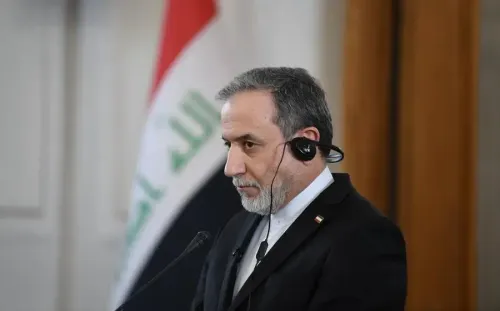
Foreign Minister Araghchi struck a dual note — asserting that Iran will 'decisively' defend its national interests and security while also clarifying that Tehran has never shied away from using diplomacy to prevent escalation, according to a statement from the Iranian Foreign Ministry.
Araghchi linked regional maritime insecurity directly to US-Israeli military actions, saying the 'precarious' consequences of what he called US-Israeli military 'aggression' against Iran are the primary driver of instability in commercial shipping through the Strait of Hormuz — a critical global chokepoint through which roughly 20% of the world's oil transits.
Armenia's Strategic Posture Toward Iran
Armenian Foreign Minister Mirzoyan, for his part, underscored the 'strategic nature' of Yerevan-Tehran relations and Armenia's commitment to deepening cooperation with Iran, according to the Iranian Foreign Ministry statement. In a separate meeting with Iranian Parliament Speaker Mohammad Baqer Qalibaf, Mirzoyan explicitly assured that Armenia would not permit its territory to be used for any action against Iran, according to Iran's official news agency.
Context: The 28 February Attacks and Their Aftermath
The diplomatic meetings come against the backdrop of a sharp military escalation that began on 28 February, when Israel and the United States reportedly launched joint strikes on Tehran and other Iranian cities. Iran responded with waves of missile and drone attacks targeting Israel and US assets and bases across the region, and tightened its control over the Strait of Hormuz — a move with direct consequences for global energy markets and commercial shipping.
The Armenia-Iran diplomatic exchange signals Tehran's active effort to shore up regional partnerships and signal that it is not diplomatically isolated, even as tensions with Washington and Tel Aviv remain at a historically high pitch. How the standoff evolves will have direct implications not only for the region but for global energy prices and maritime trade routes.
Point of View
And it matters because it signals Tehran has little institutional appetite for the kind of back-channel engagement that defused past crises. The Strait of Hormuz pressure point is the sharper story here: Iran's tightened grip on the waterway is not symbolic posturing, it is a lever over global energy markets that the West cannot easily dismiss. Armenia's explicit assurance that its territory will not be used against Iran is also notable — it reflects Yerevan's careful balancing act between its Western pivot and its indispensable economic relationship with Tehran. What mainstream coverage often misses is that these bilateral diplomatic rounds are Tehran's way of demonstrating strategic depth; the more partners it can visibly reassure, the harder it becomes to isolate Iran internationally.
NationPress
6 Oct 2026
Frequently Asked Questions
What did Iran's President Pezeshkian say about negotiating with the United States?
President Pezeshkian said negotiation with the US is 'meaningless' given what he described as a pattern of assassinations, sanctions, threats, and broken promises. He also alleged the US attacked Iran three times following diplomatic talks, suggesting Washington's aim is to overthrow the Iranian government rather than engage in dialogue.
What happened on 28 February 2026 involving Iran, the US, and Israel?
On 28 February 2026, Israel and the United States reportedly launched joint military strikes on Tehran and other Iranian cities. Iran responded with waves of missile and drone attacks against Israel and US regional assets, and subsequently tightened its control over the Strait of Hormuz.
Why is the Strait of Hormuz significant in this context?
The Strait of Hormuz is one of the world's most critical oil and gas transit routes, with roughly 20% of global oil supply passing through it. Iran's tightened grip on the strait following the February attacks has directly raised concerns about commercial shipping security and global energy prices.
What did Armenia's Foreign Minister Mirzoyan commit to during his Tehran visit?
Mirzoyan emphasised the strategic nature of Armenia-Iran ties and pledged Yerevan's commitment to expanding cooperation with Tehran. In a meeting with Iranian Parliament Speaker Mohammad Baqer Qalibaf, he specifically assured that Armenia would not allow its territory to be used for any action against Iran.
What is Iran's stated position on diplomacy despite current tensions?
Foreign Minister Araghchi said Iran will 'decisively' defend its national interests and security but has never hesitated to use diplomacy to prevent escalation. Tehran's position, as stated, is that it remains open to dialogue but will not yield on core security and sovereignty questions.