Iran IRGC: Four oil tankers hit mines near Hormuz Strait in three days
Synopsis
In an extraordinary 72-hour stretch, Iran's IRGC claims at least eight oil tankers — including supertankers carrying over four million barrels — were struck by naval mines near the Strait of Hormuz after allegedly disabling their tracking systems. With roughly 20% of global oil supply transiting this chokepoint, the incidents carry serious implications for energy markets and international maritime law.
Key Takeaways
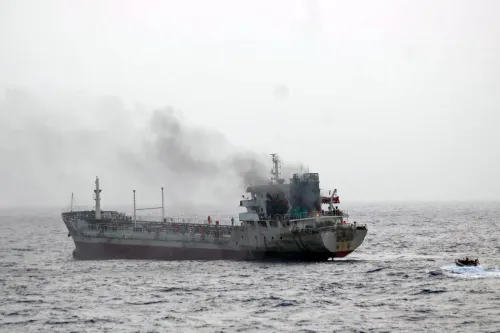
Iran's IRGC Navy reported two oil tankers catching fire east of the Strait of Hormuz on Saturday, 14 November after hitting naval mines.
Similar incidents were reported on Friday, Thursday, and Wednesday night — at least eight tankers reportedly affected in 72 hours .
On Wednesday night , two supertankers carrying a combined more than four million barrels of oil were disabled by explosions.
The IRGC says all vessels had switched off their radar, navigation, and tracking systems before entering 'forbidden' zones.
The Strait of Hormuz handles roughly 20% of global oil supply ; any sustained disruption would affect energy markets worldwide.
No independent verification of the IRGC's account has been confirmed; the identities of the tankers and their operators remain unconfirmed.
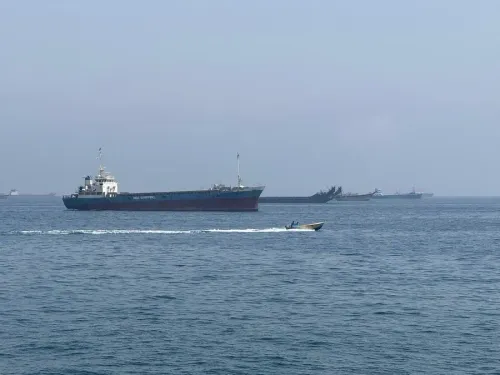
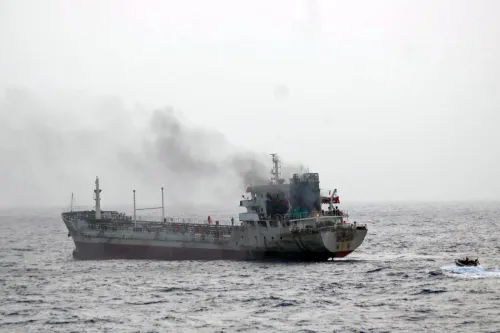
The Navy of Iran's Islamic Revolutionary Guard Corps (IRGC) announced on Saturday, 14 November that two more oil tankers caught fire after striking naval mines east of the Strait of Hormuz — the fourth such incident in as many days, marking a sharp escalation in maritime tensions along one of the world's most critical energy corridors.
What the IRGC Said
In statements published on the IRGC's official website, the Navy said the two vessels had disabled their navigation, identification, and tracking systems before transiting what it described as an 'unsafe and forbidden' zone east of the strait. One tanker was brought to a halt following the blast. The IRGC issued a pointed warning that explosions and fire are 'the fate awaiting' any vessel that attempts passage through restricted zones without coordinating with its traffic-control centre.
A day earlier, on Friday night, the IRGC's official outlet Sepah News reported two additional tankers — one identified as a supertanker — had exploded and caught fire under similar circumstances. Both had reportedly switched off their radar and navigation systems before entering what the IRGC termed an 'unauthorised route' through the strait.
A Pattern Across the Week
The incidents form a rapid sequence. On Thursday, the Iranian Army reported two more 'violating' tankers caught fire after entering the forbidden zone east of Hormuz with their radar systems disabled. The most significant episode, according to the IRGC, occurred on Wednesday night, when two supertankers carrying a combined more than four million barrels of oil were disabled by explosions while attempting to cross the strait.
Taken together, at least eight oil tankers have reportedly been caught up in mine-related incidents in the region over a 72-hour period, according to the IRGC's own statements. The scale and frequency of the incidents are without recent precedent in the strait's modern history.
Why the Strait of Hormuz Matters
The Strait of Hormuz is the world's single most important oil chokepoint, with roughly 20% of global oil supply — approximately 20 million barrels per day — passing through it. Any sustained disruption to shipping in the strait has immediate consequences for global crude prices and energy security, particularly for major importers in Asia, including India, China, and Japan. This comes amid already-elevated tensions in the broader Middle East region.
Iran's Regulatory Posture
The IRGC's statements frame the mine strikes as a consequence of vessels flouting Iranian maritime regulations — specifically, the requirement to coordinate with its traffic-control centre before transiting certain zones. Critics and international maritime observers, however, are likely to contest Iran's characterisation of the waters as 'forbidden,' given that the Strait of Hormuz is an internationally recognised transit passage under the United Nations Convention on the Law of the Sea (UNCLOS). No independent verification of the IRGC's account of the incidents was immediately available.
What Happens Next
The identities of the tankers, their flags, operators, and cargo destinations have not been officially confirmed by any party outside Iran. International shipping bodies and major flag states are expected to seek clarification. Oil markets and global shipping insurers will be closely watching for any further incidents or diplomatic responses, particularly from the United States, the United Kingdom, and other naval powers with assets in the region.
Point of View
Not just operations. But the deeper question is legal: Iran's designation of international transit lanes as 'forbidden zones' directly conflicts with UNCLOS, under which the Strait of Hormuz is a recognised passage for all nations. Mainstream coverage has focused on the explosions; what it has underplayed is that Iran appears to be asserting unilateral jurisdiction over a globally critical waterway. If the pattern of mine strikes continues unchallenged, it sets a dangerous precedent for chokepoint coercion — one that India, as a major oil importer through Hormuz, cannot afford to treat as a distant regional dispute.
NationPress
14 Nov 2026
Frequently Asked Questions
What happened to oil tankers near the Strait of Hormuz?
Iran's IRGC Navy reported that multiple oil tankers caught fire after striking naval mines east of the Strait of Hormuz across four consecutive days from Wednesday to Saturday, 14 November. The IRGC said the vessels had disabled their radar and navigation systems and were transiting zones it described as 'forbidden.'
How many tankers were affected and how much oil was involved?
According to IRGC statements, at least eight oil tankers were involved in mine-related incidents over approximately 72 hours. On Wednesday night alone, two supertankers carrying a combined more than four million barrels of oil were reportedly disabled by explosions.
Why does the Strait of Hormuz matter for global energy supply?
The Strait of Hormuz is the world's most critical oil chokepoint, with roughly 20% of global daily oil supply — around 20 million barrels — passing through it. Major Asian importers including India, China, and Japan depend heavily on uninterrupted transit through the strait.
What is Iran's justification for the mine strikes?
The IRGC says the tankers were transiting 'unsafe and forbidden' zones without coordinating with its traffic-control centre and had switched off their tracking systems. It has warned shipowners that vessels ignoring Iranian maritime regulations face the same consequences.
Has any independent body verified Iran's account of the incidents?
No independent verification of the IRGC's account was immediately available. The identities of the tankers, their flag states, operators, and cargo destinations have not been confirmed by any party outside Iran. International maritime bodies and naval powers are expected to seek clarification.