Iran's IRGC claims missile strike on US air base, CENTCOM HQ in Jordan
Synopsis
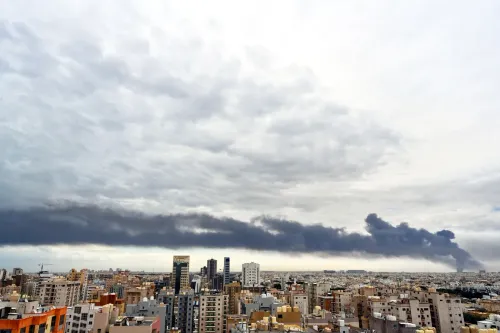
Iran's IRGC claimed a ballistic missile strike on a US air base and CENTCOM's Jordan headquarters on 29 July — the latest in a rapidly escalating series of cross-border military exchanges spanning Kuwait, Bahrain, Jordan, and Iraq's Kurdistan region since 24 July. The US military says every missile was intercepted, but the pace and geographic spread of these strikes signals a dangerous new tempo in the Iran-US confrontation.
Key Takeaways
Iran's IRGC claimed on 29 July that its Aerospace Force struck a US air base and CENTCOM headquarters in Jordan using ballistic missiles.
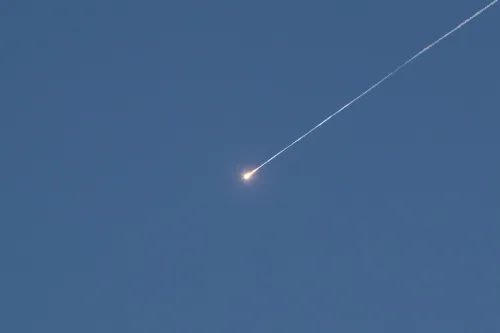
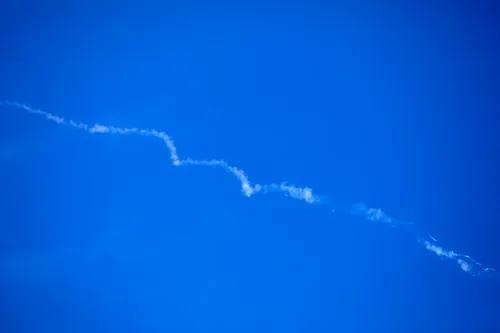
CENTCOM confirmed the launch but stated all missiles were 'successfully intercepted'; US forces placed on high readiness.
On 24 July , the IRGC claimed separate strikes on US assets in Kuwait , Bahrain , and Jordan , including a Patriot air defence system and the US Fifth Fleet watchtower.
The IRGC also claimed operations against US positions in Erbil , capital of Iraq's Kurdistan region .
Independent verification of damage claims by either side has not been established.
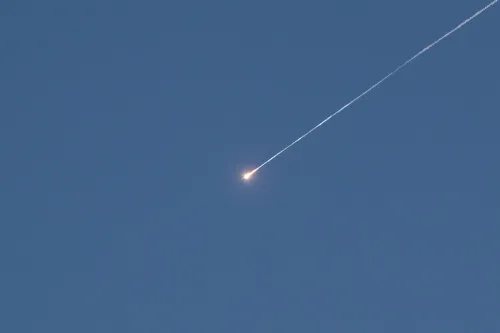
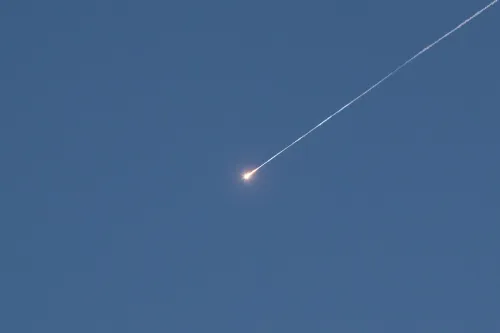
Iran's Islamic Revolutionary Guards Corps (IRGC) on Wednesday, 29 July claimed that its Aerospace Force launched a ballistic missile attack on a US air base and the US Central Command (CENTCOM) headquarters in Jordan, according to local media reports. The strike, the IRGC said, was carried out in direct retaliation for US military operations against Iran.
What the IRGC Claimed
In a formal statement, the IRGC said its Aerospace Force targeted the US air base and CENTCOM's Jordan headquarters using ballistic missiles. The corps vowed to sustain its resistance for as long as Iran faces what it described as 'threats, illegal and hostile moves' from US forces, according to Iran's official Islamic Republic News Agency (IRNA).
US Military's Response
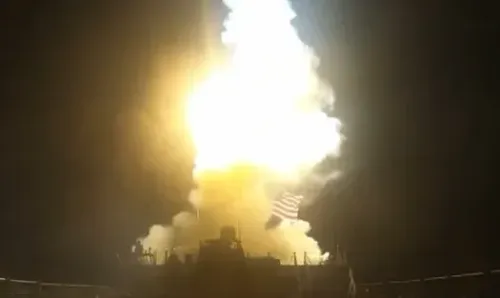
The US Central Command (CENTCOM) pushed back swiftly, stating on X that at 5:45 p.m. ET, IRGC forces had launched multiple ballistic missiles from Iranian territory in what it characterised as an attempted 'surprise attack' on American forces in the Middle East. 'All Iranian missiles were successfully intercepted,' CENTCOM said, adding that 'US forces remain vigilant and at a high state of readiness.'
Pattern of Escalation Since July 24
This is not an isolated incident. On 24 July, the IRGC claimed retaliatory strikes against US bases and assets across Kuwait, Bahrain, and Jordan, in statements carried by its official outlet Sepah News. Among the targets the IRGC said it hit:
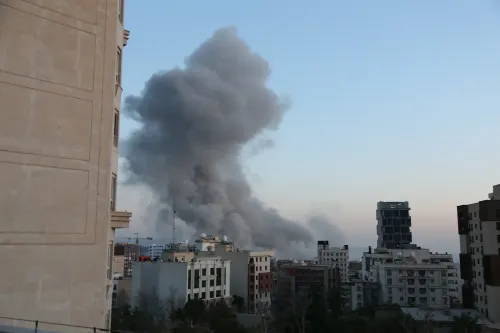
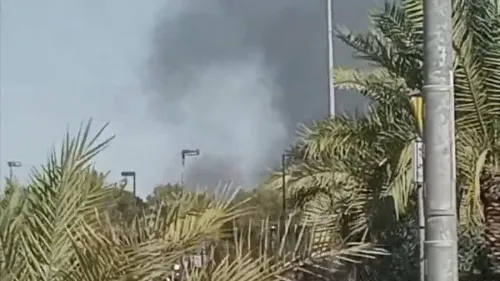
A 'very large' US ammunition depot at Ali Al Salem Air Base in Kuwait, reportedly destroyed using 'advanced and ultra-heavy' kamikaze drones, according to Xinhua News Agency. The IRGC also claimed to have destroyed three US ammunition and equipment depots at Al-Adiri Camp in Kuwait, targeted the watchtower of the US Fifth Fleet headquarters in Bahrain, and struck the Al-Azraq Air Base in Jordan — with the corps claiming US fighter aircraft sustained damage and barracks housing US personnel were hit.
Additionally, the IRGC said its forces destroyed a Patriot air defence system and an espionage balloon, and struck US troop accommodation facilities during operations against US military positions in Erbil, the capital of Iraq's Kurdistan region.
Broader Context
The latest exchange comes amid a sharp deterioration in US-Iran relations, with military confrontations spreading across multiple countries in West Asia. The IRGC's claims — and the US military's counter-narrative of full interception — underscore the information war running parallel to the physical one. Independent verification of the extent of damage on either side remains unavailable at the time of reporting.
As both sides escalate rhetoric and military posture, the risk of miscalculation across the wider West Asia theatre remains elevated. The international community, including regional actors, will be watching closely for any indication of a diplomatic off-ramp.
Point of View
Bahrain, Jordan, and Erbil within five days. This is no longer a single-front exchange; it is a multi-theatre pressure campaign. The US counter-claim of full interception is credible given its layered air defences, but the real danger is not any single strike — it is the normalisation of ballistic missile launches as a routine diplomatic instrument. Each cycle of claim and counter-claim raises the floor for the next escalation, and the absence of a visible diplomatic channel makes de-escalation structurally harder.
NationPress
29 Jul 2026
Frequently Asked Questions
What did Iran's IRGC claim on 29 July?
The IRGC claimed its Aerospace Force fired ballistic missiles at a US air base and the US CENTCOM headquarters in Jordan on 29 July, stating the attack was retaliation for US military operations against Iran.
Did the missiles hit their targets?
The US military said all Iranian ballistic missiles were successfully intercepted and denied any successful strike. Independent verification of damage claims on either side is not yet available.
What strikes did the IRGC claim before 29 July?
On 24 July, the IRGC claimed retaliatory strikes on US bases in Kuwait, Bahrain, and Jordan, including the destruction of an ammunition depot at Ali Al Salem Air Base, facilities at Al-Adiri Camp, the US Fifth Fleet watchtower in Bahrain, and Al-Azraq Air Base in Jordan. It also claimed operations in Erbil, Iraq.
Why is the IRGC carrying out these strikes?
The IRGC has stated the strikes are retaliatory, carried out in response to what it describes as US military attacks against Iran and what it calls 'illegal and hostile moves' by US forces. The corps has vowed to continue until those threats cease.
What is the broader significance of these exchanges?
The escalation represents one of the most geographically widespread US-Iran military confrontations in recent years, spanning at least four countries — Kuwait, Bahrain, Jordan, and Iraq. The pace and scale of the exchanges signal a significant deterioration in the security environment across West Asia.