Iran's IRGC strikes US bases in Jordan after Larak Island attack
Synopsis
Iran's IRGC struck two US air bases in Jordan with missiles and drones on 31 August, hours after the US hit IRGC rocket launchers on Larak Island — the first known American strike on Iran since late July. With Tehran vowing 'even more devastating responses' and Washington pledging to protect the Strait of Hormuz, this exchange marks a dangerous new threshold in US-Iran military confrontation.
Key Takeaways
Iran's IRGC launched a combined missile and drone strike on the King Hussein and Al-Azraq US bases in Jordan on 31 August .
The strikes were claimed as retaliation for a US strike on IRGC rocket launchers on Larak Island , Hormozgan province , the previous night.
The US action on Larak Island was the first known American strike against Iran since late July , according to US Central Command .
At least two people were killed and two others injured on Larak Island, according to Iran's semi-official Tasnim news agency .
The IRGC vowed that 'every attack will be met with even more devastating responses,' raising fears of further escalation around the Strait of Hormuz .
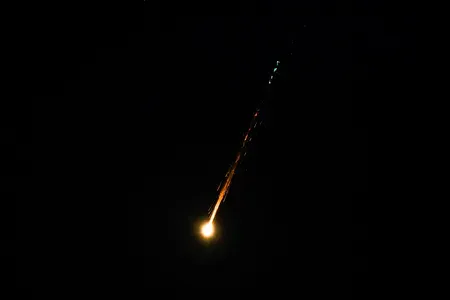
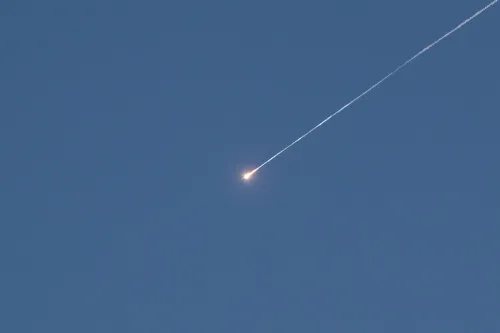
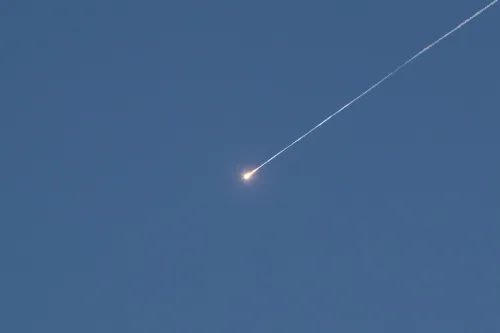
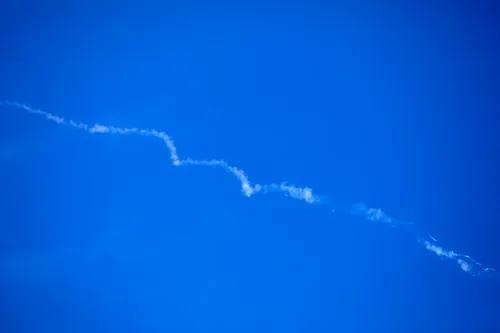
Iran's Islamic Revolutionary Guard Corps (IRGC) announced on Monday, 31 August that it had launched a combined missile and drone strike against US air bases in Jordan, describing the operation as direct retaliation for what it called a US-Israeli aerial assault on Iran's Larak Island the previous night.
What the IRGC Said It Targeted
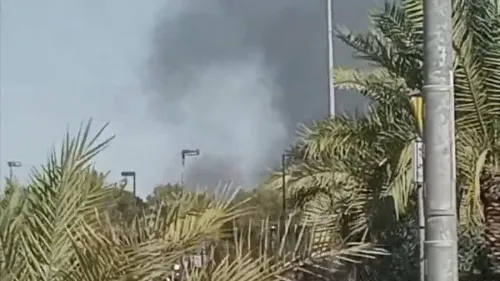
According to Iran's Fars news agency, citing an official IRGC statement, the strikes were aimed at 'technical and maintenance infrastructure' as well as areas where 'enemy fighter jets' were stationed at the King Hussein and Al-Azraq US bases in Jordan. The IRGC claimed the strikes inflicted 'heavy damage,' though independent verification of those claims was not immediately available.
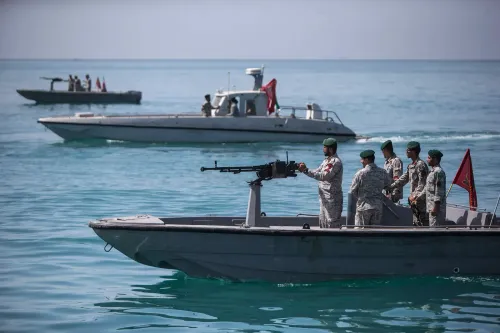
'Aggression and crimes will not solve the enemy's desperation in attempting to weaken the Islamic Republic's control over the Strait of Hormuz, and every attack will be met with even more devastating responses,' the IRGC statement read.
What Triggered the Escalation
The sequence began on Sunday night when US Central Command spokesperson Tim Hawkins confirmed that US forces struck two IRGC rocket launchers on Larak Island — a small Iranian island off the coast of Bandar Abbas, east of Qeshm Island and south of Hormuz Island in Hormozgan province. Hawkins stated that IRGC forces had been 'observed preparing to launch rockets with sea mines into the Strait of Hormuz,' and that the US military was 'monitoring the area closely and remains prepared to protect the free flow of commerce' through the strategic waterway.
The US strike on Larak Island marked the first known American military action against Iran since late July, according to Hawkins.
Casualties Reported on Larak Island
The IRGC, in a statement published by its official outlet Sepah News, said multiple military personnel and civilians were killed or wounded in the US-Israeli strike on Larak Island. Iran's semi-official Tasnim news agency, citing unofficial reports, said at least two people were killed and two others injured in what it described as a US drone attack on the island. The IRGC vowed the attack would be met with 'punishment for the aggressor.'
Strategic Significance of the Strait of Hormuz
The Strait of Hormuz is one of the world's most critical maritime chokepoints, through which a significant share of global oil exports passes. Any disruption — whether through sea mines or military action — carries immediate consequences for global energy markets. This latest exchange represents a sharp escalation in the ongoing US-Iran confrontation over control of and access to the strait.
What Comes Next
With the IRGC explicitly threatening further retaliation and the US reaffirming its commitment to securing the strait, the risk of additional military exchanges remains elevated. Regional governments, shipping operators, and energy markets are closely watching developments as both sides signal readiness for continued action.
Point of View
Not just proxy harassment. The IRGC's explicit framing around the Strait of Hormuz — not ideology, but control of a chokepoint — signals that Tehran is treating this as a strategic contest over maritime leverage, not merely a tit-for-tat. Washington's stated rationale, protecting 'free flow of commerce,' is legally and diplomatically defensible, but each round of retaliation narrows the space for de-escalation. The real danger is that neither side has a clear off-ramp, and the Strait of Hormuz is too consequential for global energy supply for this to remain a contained exchange.
NationPress
31 Aug 2026
Frequently Asked Questions
Why did Iran's IRGC strike US bases in Jordan?
The IRGC said it struck the King Hussein and Al-Azraq US bases in Jordan on 31 August in direct retaliation for a US strike on IRGC rocket launchers on Larak Island, Iran, the previous night. It was framed as punishment for what Tehran called a 'US-Israeli' aerial assault on Iranian territory.
What happened on Larak Island before the IRGC strike?
US forces struck two IRGC rocket launchers on Larak Island on Sunday night after US Central Command observed IRGC forces preparing to launch rockets with sea mines into the Strait of Hormuz. It was the first known US military strike against Iran since late July.
Were there casualties in the Larak Island attack?
According to Iran's semi-official Tasnim news agency, at least two people were killed and two others injured in the US strike on Larak Island. The IRGC also said multiple military personnel and civilians were killed or wounded, though figures could not be independently verified.
Where is Larak Island and why does it matter?
Larak Island is a small Iranian island located off the coast of Bandar Abbas in Hormozgan province, positioned near the Strait of Hormuz — one of the world's most critical oil-transit chokepoints. Its strategic location makes it a key site for any Iranian effort to threaten or restrict maritime commerce.
What are the risks of further escalation?
The IRGC has explicitly warned that 'every attack will be met with even more devastating responses,' while the US has reaffirmed its commitment to protecting free navigation through the Strait of Hormuz. With both sides signalling readiness for continued action, the risk of additional military exchanges remains high.