Trump calls US-Iran conflict 'small potatoes', claims Hormuz control
Synopsis
Trump's 'small potatoes' framing of a conflict that has killed 18 Americans is a revealing political signal — it minimises the war without ending it, claims victory without withdrawal, and warns of fresh strikes while offering no exit timeline. The Pickaxe warning and the claim of having 'essentially taken over Iran' suggest the operation is far from over, whatever label Washington applies to it.
Key Takeaways
President Trump called the US-Iran confrontation a 'military conflict' , not a war, describing it as 'small potatoes' on 5 September .
18 US service members have died in the five-month operation , which Trump compared favourably to longer wars in Vietnam and Afghanistan.
Trump claimed the US controls the Strait of Hormuz , with minesweepers having cleared the waterway and oil shipments flowing through it.
He warned of a potential strike on a site he called 'Pickaxe' if renewed activity is detected there.
Trump said he personally asked Chinese President Xi Jinping not to intervene, and claimed China's involvement has been minimal.
No withdrawal timetable was given; Trump said he wanted to leave before the next president inherits the situation.
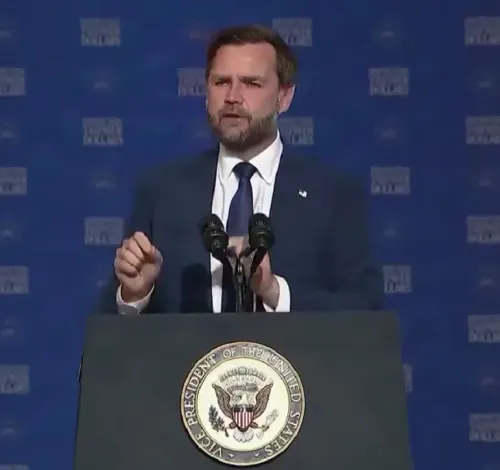
President Donald Trump has characterised the ongoing US confrontation with Iran as an intermittent 'military conflict' rather than a full-scale war, asserting that Washington now controls the Strait of Hormuz and has successfully blocked Tehran from acquiring a nuclear weapon. The remarks, made to reporters on 5 September, came after Vice President J.D. Vance also declined to label the confrontation a war, even as the United States resumed strikes against Iran.
Trump's framing of the conflict
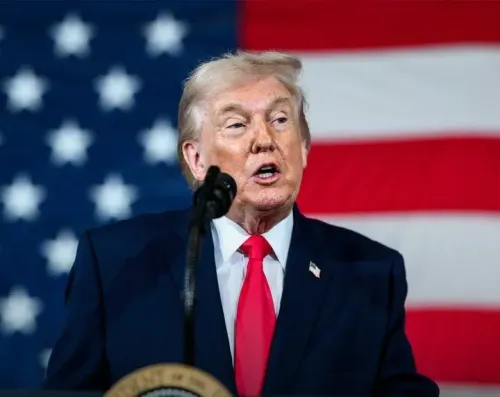
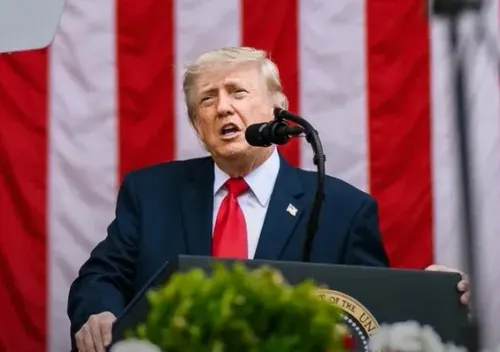
'Well, I'll tell you what, a lot of people don't call it a war. I call it a military conflict because it's small potatoes for us. It's not a big thing,' Trump told reporters. He described the operation as 'intermittent', adding: 'You know, we do intermittent strikes. We're not fighting right now. There's no fighting.'
When pressed on characterising a confrontation in which 18 US service members had lost their lives as 'small potatoes', Trump defended the five-month operation, arguing it bore no comparison to longer American engagements in Vietnam and Afghanistan.
Nuclear deterrence and military gains claimed
'Iran will not have a nuclear weapon. We've stopped them from having,' Trump said, presenting the operation's primary objective as achieved. He claimed US forces had destroyed Iranian radar systems, aircraft, and equipment used to protect the Strait of Hormuz, and that American minesweepers had cleared mines from the strategic waterway. 'We control the Hormuz Strait, and we control it very strongly,' he said.
Trump went further, declaring: 'We took over Venezuela and we have essentially taken over Iran' — a sweeping characterisation that offered no elaboration on what 'taken over' means in operational or diplomatic terms.
Warning over 'Pickaxe' site and continued monitoring
Trump warned that the United States could strike a location he identified as 'Pickaxe' if renewed activity were detected there. 'We may hit Pickaxe very soon because if there was anything going on with Pickaxe,' he said, adding that US forces were monitoring movements across Iran. 'And if anything goes bad, we hit them. We hit them hard,' he said.
He noted there had been no shooting for several days following the latest US strikes, and claimed it would take Iran 25 years to rebuild if Washington ended the operation immediately. However, he offered no timetable for withdrawal, saying: 'But I want to leave so that the next president doesn't have to worry about it.'
China factor and the shifting role of Hormuz
On China's relationship with Iran, Trump said he had personally urged Chinese President Xi Jinping not to intervene. 'I said, please don't get involved to President Xi. And they're not really involved, very little involvement by China,' he said.
Trump acknowledged that China receives significant oil supplies through the Strait of Hormuz, but suggested the waterway's strategic centrality was diminishing. 'The Hormuz Strait is not what it used to be. Pipelines are being built all over the Middle East now, so they don't have to go through the Hormuz Strait,' he said, pointing to overland routes through Syria as emerging alternatives.
Point of View
Constitutional, and political weight that a war declaration carries. Yet the deaths of 18 service members, active strikes, and warnings of imminent further action at 'Pickaxe' describe something that most definitions of war would comfortably cover. The claim of having 'essentially taken over Iran' is the kind of maximalist assertion that goes unchallenged in a press briefing but will face far harder scrutiny if the operation drags on or escalates. Notably, Trump's appeal to Xi Jinping to stay out suggests Washington privately recognises that Chinese intervention — even economic — could significantly alter the balance of the confrontation.
NationPress
5 Sept 2026
Frequently Asked Questions
Why does Trump call the US-Iran confrontation a 'military conflict' and not a war?
Trump has said he uses the term 'military conflict' because the confrontation is 'intermittent' and, in his view, limited in scale compared to longer American wars. The distinction also carries political and legal significance, as a formal war declaration requires Congressional authorisation.
How many US service members have died in the Iran operation?
According to Trump's own statement, 18 US service members have been killed during the five-month operation. Trump acknowledged the deaths but argued the conflict could not be compared in scale to Vietnam or Afghanistan.
What is 'Pickaxe' and why did Trump mention it?
Trump referred to 'Pickaxe' as a location in Iran that the United States is monitoring for renewed activity. He warned that the US could strike it 'very soon' if any suspicious movement is detected, signalling that further military action remains possible.
Does the US control the Strait of Hormuz?
Trump claimed that US forces control the Strait of Hormuz 'very strongly', saying American minesweepers have cleared mines from the waterway and that oil shipments are passing through it. He also noted that new pipelines across the Middle East are reducing dependence on the strait.
What role is China playing in the US-Iran confrontation?
Trump said he personally urged Chinese President Xi Jinping not to intervene, and claimed China's involvement has been minimal. He acknowledged that China is a major recipient of oil shipped through the Strait of Hormuz, giving Beijing a significant economic stake in the conflict's outcome.