Karachi drug crisis: Stolen steel, broken signals, 5 dead in 2026
Synopsis
Karachi's drug crisis has a new, structural face: five people died in September 2026 when a school wall collapsed as addicts allegedly stripped it for scrap, 33 traffic signals are out from stolen cables, and the city sits 170th of 173 on the EIU's Global Liveability Index. The addiction epidemic is no longer just a human tragedy — it is physically dismantling one of South Asia's largest cities.
Key Takeaways
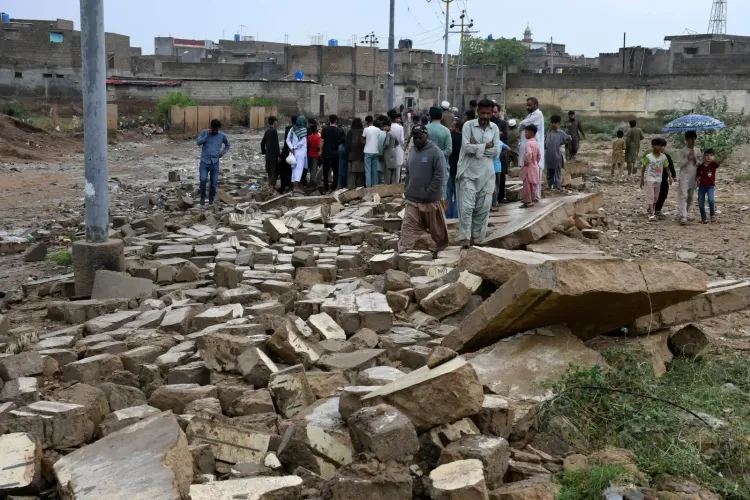
Five men died in Orangi Town, Karachi in September 2026 when a government school wall collapsed as they allegedly extracted steel rods to sell as scrap.
33 traffic signals in Karachi were non-functional as of October 2026 due to cable theft linked to the drug-and-scrap trade.
Stolen items include railings, streetlight equipment, gas meters, electric cables, brass fittings and manhole covers across multiple Karachi neighbourhoods.
The Natha Khan Bridge on Shahrah-e-Faisal was damaged in August 2025 after steel reinforcement was allegedly removed.
Karachi ranked 170th out of 173 cities on the EIU Global Liveability Index 2026 , scoring just 20 out of 100 on stability .
Reports cite weak enforcement at both the addiction and scrap-trade levels as enabling the cycle of theft and infrastructure decay.
Karachi's deepening drug crisis has begun leaving visible scars on the city's public infrastructure — from missing bridge railings and stolen electrical cables to 33 traffic signals rendered non-functional by cable theft, according to reports citing Pakistani and Sri Lankan media. The crisis, once seen primarily as a human and social tragedy, has evolved into a structural public safety emergency that affects every resident of Pakistan's largest city.
How Drug Addiction Is Destroying Public Infrastructure
The link between addiction and infrastructure damage has been documented repeatedly in 2026. In September 2026, five men died when a dilapidated government school wall collapsed in Orangi Town after they allegedly attempted to extract steel rods from the structure. According to police reports cited by Pakistani daily Dawn, the men had gathered near the school to consume drugs before attempting to strip the steel. The incident laid bare a grim cause-and-effect chain: addiction fuels the need for quick cash, which drives theft of public materials, which in turn endangers the broader population.
Separately, reports in October 2026 confirmed that 33 traffic signals across Karachi were non-operational due to cable theft. Stolen items reportedly include streetlight equipment, gas meters, electric cables, brass fittings and manhole covers — a pattern documented across roads, parks and pedestrian bridges throughout the city.
A City's Infrastructure Under Systematic Threat
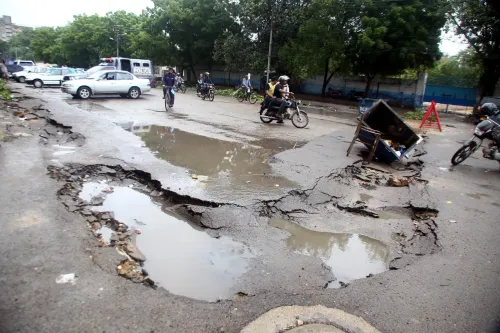
The damage is not isolated to a single neighbourhood. Reports citing Pakistani daily The Express Tribune indicate that theft of public infrastructure is widespread across Karachi, with railings stripped from pedestrian bridges and flyover structures in multiple areas. In August 2025, the Natha Khan Bridge on Shahrah-e-Faisal suffered structural damage after steel reinforcement was allegedly removed, creating a large pothole and disrupting traffic flow — an early signal of the crisis now playing out at greater scale.
Sri Lanka's Daily Mirror, which compiled these findings in a detailed report, noted that the consequences extend far beyond petty theft: 'When a stolen cable disables a traffic signal or missing steel weakens a bridge, the damage becomes a public safety issue.' The report argued that neither the Orangi Town deaths nor the traffic signal failures alone capture the full extent of the problem — together, they reveal a systemic failure with roots in addiction, organised demand for stolen scrap, and weak enforcement.
Karachi Ranked Fourth Least Liveable City Globally
The infrastructure deterioration comes against an already troubling backdrop. In July 2026, Karachi was ranked the world's fourth least liveable city on the Economist Intelligence Unit's (EIU) annual Global Liveability Index 2026, placing 170th among 173 cities assessed. The only cities ranked below Karachi were Dhaka, Damascus and Tripoli.
Karachi's overall score was 43 out of 100. It scored just 20 on stability, 54 on healthcare, 36 on culture and environment, 75 on education and 52 on infrastructure. The EIU index, a globally recognised benchmark, assesses urban liveability across healthcare, stability, culture and environment, education, and infrastructure.
Who Benefits — and Who Is Accountable
Reports raise pointed questions about the supply chain that makes such theft possible: who purchases stolen scrap materials, and why do scrap dealers face little meaningful scrutiny? Critics argue that enforcement gaps — at both the addiction and the scrap-trade levels — allow the cycle to continue unchecked. The drug problem in Karachi, as analysts note, is no longer confined to the individuals struggling with substance dependence. It is, as the Daily Mirror put it, 'etched into the city's streets, crossings and public structures.'
Authorities in Karachi have yet to announce a coordinated crackdown addressing both the addiction crisis and the organised theft of public assets. With the EIU ranking, recurring fatalities, and mounting infrastructure damage all converging in 2026, pressure on city and federal officials to act is intensifying.
Point of View
And treating them separately is precisely why neither has been solved. The scrap trade that monetises stolen steel and cables operates in plain sight; until traders face serious legal exposure, they remain the missing enforcement link. Meanwhile, a stability score of 20 out of 100 on a globally benchmarked index is not a warning sign — it is a verdict. Pakistan's federal and provincial governments have cycled through crackdown announcements before; what is absent is any institutional mechanism that closes the loop between addiction treatment, scrap-market regulation and infrastructure repair funding.
NationPress
3 Nov 2026
Frequently Asked Questions
What is the connection between Karachi's drug crisis and infrastructure damage?
People struggling with drug addiction in Karachi reportedly steal steel, cables and other materials from public infrastructure to sell as scrap and fund their habit. This has led to collapsed walls, non-functional traffic signals and structurally compromised bridges, turning a public health crisis into a public safety emergency.
How did five people die in Orangi Town in September 2026?
Five men died in September 2026 when a dilapidated government school wall in Orangi Town, Karachi, collapsed while they were allegedly extracting steel rods from it to sell as scrap. Police, citing reports from Pakistani daily Dawn, said the men had gathered at the site to consume drugs before attempting the theft.
How many traffic signals are non-functional in Karachi due to theft?
As of October 2026, at least 33 traffic signals in Karachi were reported to be non-operational because electrical cables had been stolen. The theft is part of a broader pattern of infrastructure stripping linked to the city's drug crisis.
Where did Karachi rank on the EIU Global Liveability Index 2026?
Karachi ranked 170th out of 173 cities on the Economist Intelligence Unit's Global Liveability Index 2026, making it the world's fourth least liveable city. It received an overall score of 43 out of 100, with a stability score of just 20. Only Dhaka, Damascus and Tripoli ranked lower.
What items are being stolen from Karachi's public infrastructure?
Reported stolen items include bridge and road railings, electrical cables, streetlight equipment, gas meters, brass fittings and manhole covers across multiple Karachi neighbourhoods. The Natha Khan Bridge on Shahrah-e-Faisal was also damaged in August 2025 after steel reinforcement was allegedly removed.