Khalistan convoy in Indianapolis exposes extremists' Western strategy: Report
Synopsis
A five-mile Khalistan flag convoy on Indianapolis's I-465 West was not a spontaneous act — it was a rehearsed play from a separatist network using First Amendment protections to globalise a cause most Sikhs in Punjab have already rejected. The Khalsa Vox report lays bare how a small, motivated fringe repeatedly forces an entire community into reputational damage control.
Key Takeaways
A five-mile convoy of vehicles flying Khalistan flags disrupted traffic on Indianapolis's I-465 West on 1 August .
The convoy was organised by Sikhs for Justice , ahead of a non-binding referendum scheduled for 16 August at Richard G.
The referendum carries no legal consequence and cannot alter territorial or constitutional arrangements.
A Khalsa Vox report describes the event as part of a deliberate strategy to exploit Western democratic freedoms for a separatist agenda rejected by most Sikhs in Punjab .
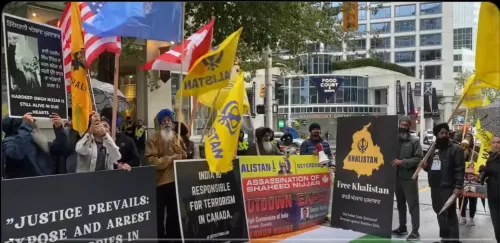
The same networks have repeatedly staged disruptive actions in Canada , including protests outside temples and desecration of religious symbols.
Mainstream Sikh organisations are repeatedly forced to publicly distance themselves from separatism, causing lasting reputational harm, the report argues.
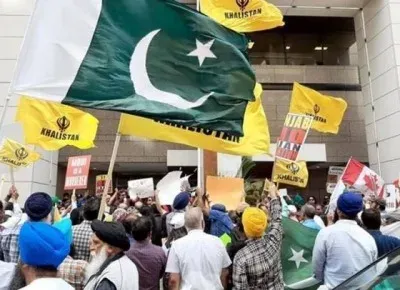
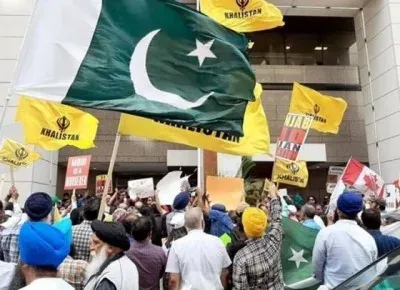
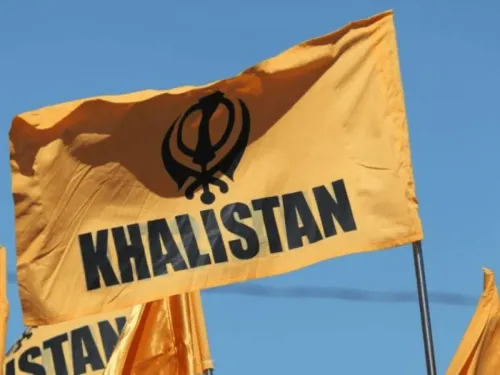
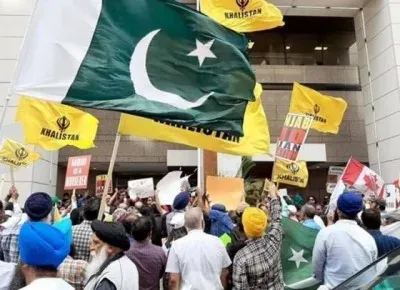
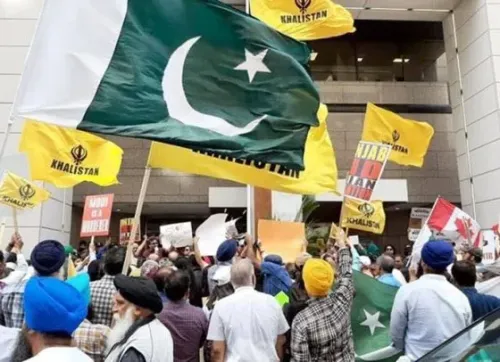
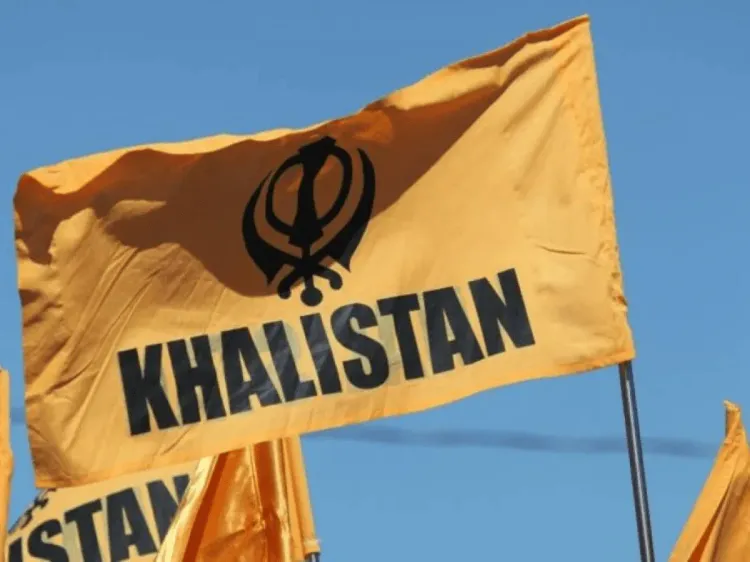
A convoy of vehicles flying yellow Khalistan flags that wound through Indianapolis, the capital of the US state of Indiana, on 1 August was not a spontaneous demonstration but the latest move in a calculated strategy to exploit Western democratic freedoms for a separatist agenda that has been broadly rejected in Punjab itself, according to a report by Khalsa Vox. The procession, organised by Sikhs for Justice — a group widely regarded as a vehicle for separatist extremism — stretched across a five-mile section of I-465 West, snarling traffic and drawing national attention ahead of a non-binding referendum scheduled for 16 August at Richard G. Lugar Plaza.
What Happened on I-465
Motorists on Indianapolis's I-465 West found themselves behind a rolling procession of cars displaying Khalistan flags, according to the report. The convoy was framed by organisers as a deliberate mobilisation of 'American Sikhs' in support of a vote to carve a separate Sikh state out of India's Punjab. Protected under the First Amendment, the demonstration was staged, the report noted, 'for maximum visibility' — though the immediate costs were borne by ordinary commuters and local authorities tasked with managing the disruption.
The Referendum and Its Limits
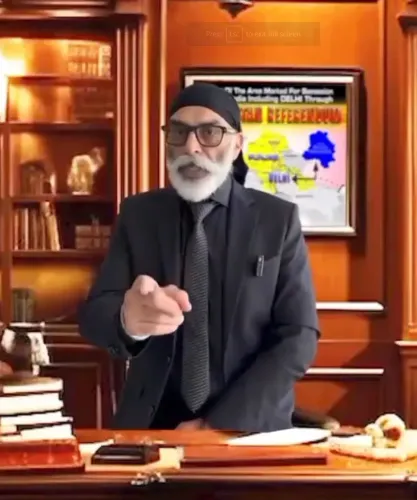
The planned vote carries no legal consequence. It cannot redraw territorial boundaries, alter constitutional arrangements, or compel any government to the negotiating table. According to the report, its function is 'primarily symbolic and divisive' — sustaining a narrative of grievance among sections of the diaspora while forcing mainstream Sikh communities across North America to respond, directly or indirectly, to actions taken in their name by a self-appointed fringe.
A Recurring Pattern in North America
The Indianapolis convoy is part of a broader, recurring pattern, the report argued. A small but highly motivated network has repeatedly converted public spaces in the US and Canada into arenas for a conflict that the majority of Sikhs — both in Punjab and the diaspora — have already rejected. In Canada, the same networks have pushed the boundaries of tolerance through protests outside temples, desecration of religious symbols, and actions that continue to evoke the shadow of past violence.
The report observed that convoys, highway blockades, and rallies featuring inflammatory rhetoric do not advance any legitimate cause. 'They cheapen it,' it stated, noting that such events invite the public to associate visible Sikh identity markers — turbans and kirpans — with separatism rather than with the community's documented record of integration, entrepreneurship, and civic contribution.
The Cost to the Sikh Community
Each such incident, the report argued, forces mainstream Sikh organisations into a defensive posture: repeatedly affirming that they oppose terrorism and secession while media attention gravitates toward the loudest voices. 'The result is reputational damage that no amount of community service or economic contribution fully erases in the public mind,' it stated. Critics argue this dynamic serves the separatist network's interests by keeping the issue alive and the community on the back foot.
What Comes Next
The non-binding referendum is scheduled for 16 August at Richard G. Lugar Plaza in Indianapolis. Its outcome will carry no formal weight, but observers note that the event's real purpose is to generate imagery and momentum for ongoing international advocacy by Sikhs for Justice. How US authorities and mainstream Sikh bodies respond in the days ahead is likely to shape the episode's longer-term impact on community relations and Indo-US diplomatic optics.
Point of View
Yet a small network continues to project that demand onto an entire diaspora. The reputational asymmetry is stark — it takes one highway convoy to generate a news cycle, and years of community service to recover from it. Western governments face a genuine dilemma: curtailing such demonstrations risks free-speech overreach, while permitting them creates diplomatic friction with India and internal harm to Sikh communities. That dilemma, unresolved, is precisely what groups like Sikhs for Justice continue to exploit.
NationPress
7 Aug 2026
Frequently Asked Questions
What was the Khalistan convoy in Indianapolis?
It was a five-mile procession of cars flying yellow Khalistan flags on Indianapolis's I-465 West on 1 August, organised by Sikhs for Justice to build support for a non-binding referendum on a separate Sikh state. The event disrupted traffic and drew national attention in the United States.
What is the Khalistan referendum scheduled for 16 August?
It is a non-binding vote organised by Sikhs for Justice at Richard G. Lugar Plaza in Indianapolis on 16 August, calling for a separate Sikh state carved out of India's Punjab. The referendum has no legal force and cannot change borders or compel any government to negotiate.
Who is Sikhs for Justice?
Sikhs for Justice is the organisation behind the Indianapolis convoy and referendum. It is widely regarded by analysts and governments as a vehicle for Khalistani separatist extremism, and has been involved in similar campaigns across the United States and Canada.
Why does the Khalsa Vox report say this harms the Sikh community?
The report argues that each high-profile separatist event forces mainstream Sikh organisations to publicly disavow terrorism and secession, while media focus remains on the loudest voices. This creates lasting reputational damage that community service and economic contributions cannot easily undo.
Has this kind of Khalistani activism happened before in North America?
Yes. According to the report, the same networks have repeatedly staged disruptive actions in Canada, including protests outside Sikh temples and desecration of religious symbols. The Indianapolis convoy is described as the latest episode in a recurring pattern of exploiting Western democratic freedoms to sustain a separatist cause.