US Democrats Khanna, Ansari tie Iran war curb to December funding vote
Synopsis
Two Democratic lawmakers are using the looming December 11 US government funding deadline as leverage against President Trump's Iran war — tying their votes on routine spending legislation to an explicit ban on offensive Iran operations. It is a shift from rhetoric to fiscal ultimatum, though Democratic leadership has not yet aligned behind it.
Key Takeaways
Ro Khanna and Yassamin Ansari will oppose any government funding bill without an explicit ban on spending for offensive operations in Iran .
The demand was made in a joint statement released on Wednesday, 19 November .
Federal funding expires under the current continuing resolution on 11 December 2026 ; a lapse would affect all agencies covered by 12 appropriations bills.
House Democratic Leader Hakeem Jeffries reiterated opposition to the Iran war but did not commit the caucus to the same funding condition.
The statement lacked legislative language defining 'offensive operations' or permitted exceptions, leaving the restriction's scope undefined.
Khanna and Ansari cited the November 3 election result and alleged lack of congressional authorisation as grounds for their opposition.
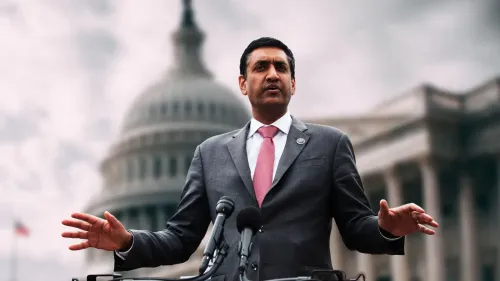
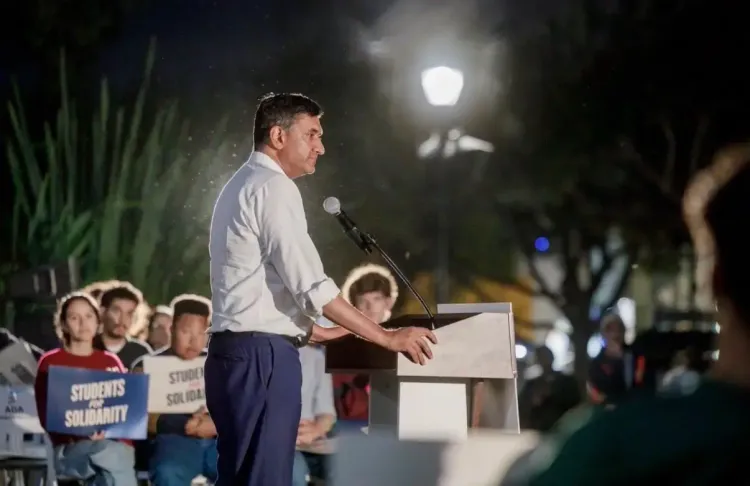
Two Democratic lawmakers — Indian American Congressman Ro Khanna and Representative Yassamin Ansari — have announced they will withhold support for any government funding package that does not explicitly prohibit spending on offensive military operations in Iran, injecting a hard condition into budget negotiations ahead of a critical December 11 deadline.
The Joint Statement and What It Demands
In a joint statement released on Wednesday, the two Democrats declared: 'We will oppose any funding package that does not explicitly prohibit funds from being used for offensive operations in Iran.' The demand links their votes on routine spending legislation directly to a restriction on the ongoing conflict — a tactic that elevates the Iran war debate from floor speeches to fiscal leverage.
Notably, the statement did not include legislative language defining what constitutes 'offensive operations' or specifying any exceptions to the proposed prohibition, leaving the practical scope of the restriction open to negotiation.
The Funding Deadline and What Is at Stake
Federal agencies are currently operating under the Continuing Appropriations and Extensions Act, 2027, signed into law on 2 September, which provides interim funding across all 12 annual appropriations bills through 11 December. If Congress fails to pass a new funding measure or further extension before that date, a lapse in government operations — commonly called a shutdown — becomes possible. The two lawmakers' position effectively makes their votes contingent on an Iran war rider in that legislation.
Where Democratic Leadership Stands
House Democratic Leader Hakeem Jeffries said earlier this week that congressional negotiators were weighing either a full government funding agreement before December 11 or another short-term extension into the new year. 'I don't want to get out ahead of that process,' Jeffries said, while also reiterating his opposition to the conflict: 'It should end. It should end today.'
Critically, Jeffries did not announce that Democrats as a caucus would collectively block a spending bill lacking the Iran restriction — a distinction that limits the immediate weight of the Khanna-Ansari position, though it signals a pressure campaign building within the party.
The Political and Legal Arguments
Khanna and Ansari argued that the November 3 election result reflected public opposition to President Donald Trump's war in Iran. They accused the administration of conducting the conflict unlawfully and without formal congressional authorisation, and contended that it was driving up costs for ordinary Americans. The statement frames the conflict not merely as a foreign policy disagreement but as a constitutional and fiscal one.
What Happens Next
The announcement adds a specific voting condition to the broader Democratic opposition to the Iran war, but its reach within the caucus remains unresolved. With the December 11 deadline approaching, the question is whether Jeffries and other Democratic leaders adopt the same bottom line — or distance themselves from it to preserve negotiating flexibility on the broader spending deal.
Point of View
Turning Iran into a potential shutdown trigger. The move is tactically shrewd but strategically exposed: without Jeffries and broader caucus buy-in, it risks being neutralised before the December 11 cliff. The absence of defined legislative language for 'offensive operations' is also a significant gap — it invites the administration to argue compliance while continuing operations, much as past war-powers restrictions have been gamed. The deeper question is whether this signals a genuine caucus pivot or remains a minority pressure play.
NationPress
19 Nov 2026
Frequently Asked Questions
What are Ro Khanna and Yassamin Ansari demanding on the Iran war?
They are demanding that any government funding bill include an explicit prohibition on using federal funds for offensive military operations in Iran. Without that restriction, they say they will vote against the legislation needed to keep federal agencies running past December 11.
What is the December 11 government funding deadline?
The US government is currently funded under the Continuing Appropriations and Extensions Act, 2027, signed on 2 September, which keeps all federal agencies operating through 11 December 2026. Congress must pass a new spending measure or another extension before that date to avoid a government funding lapse.
Does the wider Democratic caucus support this condition?
Not officially. House Democratic Leader Hakeem Jeffries echoed opposition to the Iran war, saying 'It should end. It should end today,' but he did not commit Democrats as a bloc to rejecting a funding bill that lacks the Iran restriction. The position, for now, reflects Khanna and Ansari's individual stance.
What legal argument do the lawmakers make against the Iran war?
Khanna and Ansari argue that President Trump is conducting the conflict unlawfully and without formal congressional authorisation. They also contend the war is raising costs for Americans and that the November 3 election result demonstrated broad public opposition to it.
Why does the statement lack a definition of 'offensive operations'?
The joint statement did not include legislative language specifying what qualifies as offensive operations or what exceptions might apply. This is a significant drafting gap that would need to be resolved before any such restriction could be enacted, leaving room for administrative interpretation.