UNSC elects Austria, Kyrgyzstan, Portugal, Trinidad, Zimbabwe for 2027-28 term
Synopsis
Kyrgyzstan made history at the UN General Assembly, winning its first-ever Security Council seat after three rounds of voting against the Philippines. Austria, Portugal, Trinidad and Tobago, and Zimbabwe sailed through in the first round. The five will take up their seats on 1 January 2027 — joining a Council increasingly defined by deadlock between its veto-wielding permanent members.
Key Takeaways
Austria , Kyrgyzstan , Portugal , Trinidad and Tobago , and Zimbabwe were elected non-permanent UNSC members on 4 June .
Kyrgyzstan will serve on the Security Council for the first time, defeating the Philippines after four rounds of voting.
The new members assume seats on 1 January 2027 and serve through 31 December 2028 .
They replace outgoing members Denmark , Greece , Pakistan , Panama , and Somalia .
A minimum of 129 affirmative votes — two-thirds of the 193-member UNGA — is required to secure a seat.
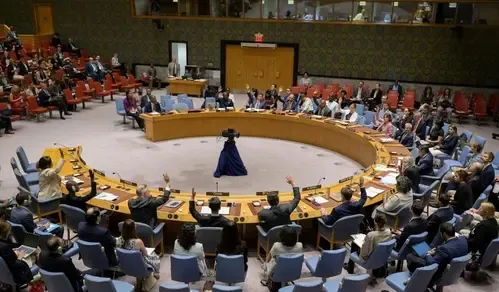
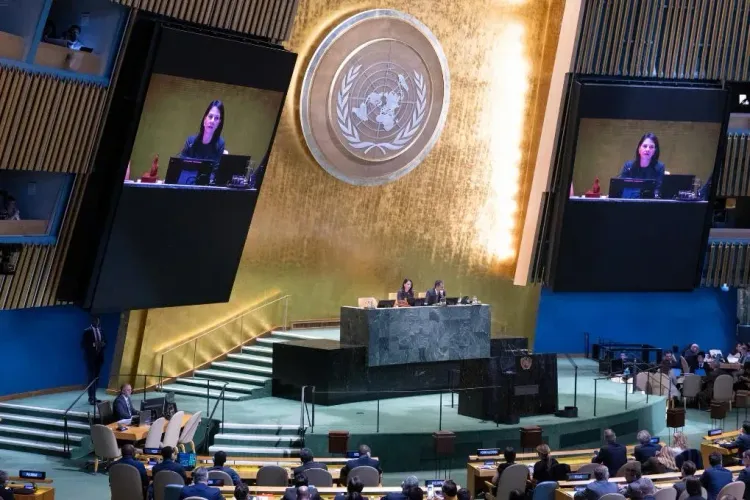
The United Nations General Assembly on Wednesday, 4 June, elected Austria, Kyrgyzstan, Portugal, Trinidad and Tobago, and Zimbabwe as non-permanent members of the UN Security Council for a two-year term beginning 1 January 2027. The vote at the UN headquarters in New York marks a historic first for Kyrgyzstan, which has never previously served on the Council.
Key results from the vote
Of the seven candidates contesting five seats, four — Austria, Portugal, Trinidad and Tobago, and Zimbabwe — secured election in the first round. Kyrgyzstan required three additional rounds of voting before defeating the Philippines in a tightly contested race for the Asia-Pacific seat.
How the election works
To win a non-permanent seat, a candidate must obtain a two-thirds majority of UN member states present and voting in the General Assembly. With all 193 member states participating, the threshold stands at a minimum of 129 affirmative votes. Abstentions are not counted as votes cast.
Who they replace
The incoming members will take over from the outgoing class of Denmark, Greece, Pakistan, Panama, and Somalia, whose terms expire on 31 December 2026. The new members will serve until 31 December 2028.
The composition of the Council
The Security Council has 15 members in total. The five permanent members with veto power — Britain, China, France, Russia, and the United States — are joined by 10 non-permanent members allocated by geographic region, with five replaced annually. The Eastern European group did not contest this cycle, as its seat — currently held by Latvia through 2027 — comes up for election every other year.
Why it matters
The Security Council is the most powerful organ of the United Nations, tasked with maintaining international peace and security. It can make legally binding decisions, impose sanctions, and authorise the use of force. The newly elected slate will help shape Council action on flashpoints ranging from Ukraine and Gaza to Sudan and the Sahel over the next two years.
Attention now shifts to how Kyrgyzstan, in particular, navigates its debut on a Council often paralysed by great-power divisions.
Point of View
Gaza, and Sudan. New faces rarely change outcomes when the deadlock sits at the top of the table.
NationPress
19 Sept 2026
Frequently Asked Questions
Which countries were elected to the UN Security Council on 4 June?
Austria, Kyrgyzstan, Portugal, Trinidad and Tobago, and Zimbabwe were elected as non-permanent members of the UN Security Council. They will serve a two-year term from 1 January 2027 to 31 December 2028.
Why is Kyrgyzstan's election historic?
It marks the first time Kyrgyzstan will serve on the UN Security Council since joining the United Nations. The Central Asian nation won its seat after defeating the Philippines in a contested race that required four rounds of voting.
Which countries will the new members replace?
The incoming members will replace Denmark, Greece, Pakistan, Panama, and Somalia, whose terms end on 31 December 2026. The handover takes effect on 1 January 2027.
How many votes are needed to win a UN Security Council seat?
A candidate must secure a two-thirds majority of UN member states present and voting at the General Assembly. With all 193 members participating, that translates to at least 129 affirmative votes, with abstentions not counted.
What powers does the UN Security Council hold?
The Security Council is the most powerful body of the United Nations, responsible for maintaining international peace and security. It can pass legally binding resolutions, impose sanctions, and authorise the use of military force.