Zimbabwe elected to UN Security Council for 2027-28; Mnangagwa hails win
Synopsis
Zimbabwe is back on the UN Security Council after more than three decades — its third stint, won in the first round of voting. For Mnangagwa, the result is a diplomatic vindication after years of Western isolation, and a platform to amplify Africa's voice on global security from January 2027.
Key Takeaways
Zimbabwe elected a non-permanent member of the UN Security Council for the 2027-2028 term.
President Emmerson Mnangagwa called it a major diplomatic milestone vindicating Harare's re-engagement agenda.
Austria , Portugal , Trinidad and Tobago , and Zimbabwe won in the first round; Kyrgyzstan beat the Philippines after four rounds.
The five will replace Denmark , Greece , Pakistan , Panama , and Somalia from 1 January 2027 .
This is Zimbabwe's third UNSC term, after 1983-1984 and 1991-1992 .
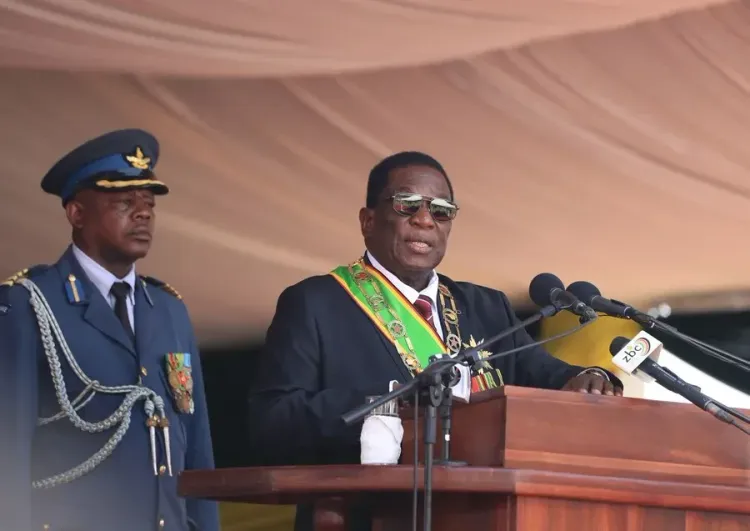
Zimbabwean President Emmerson Mnangagwa on Wednesday hailed his country's election as a non-permanent member of the United Nations Security Council (UNSC) for the 2027-2028 term, thanking UN member states for what he described as overwhelming support for Harare's candidature.
What Mnangagwa said
“Today, Zimbabwe marks a significant diplomatic milestone as the nation has been elected as a non-permanent member of the United Nations Security Council,” Mnangagwa said in a statement on Wednesday local time. He added that the result reflects the success of Zimbabwe's “engagement and re-engagement agenda” and the global community's confidence in its commitment to international peace.
“As we assume our seat on the global stage, Zimbabwe is poised to contribute meaningfully to international peace, security and multilateral cooperation, championing a fairer and more equitable global order while amplifying Africa's voice,” the President said.
Who else got in
Alongside Zimbabwe, Austria, Portugal, and Trinidad and Tobago were elected in the first round of voting at the UN General Assembly. Kyrgyzstan secured the fifth seat after defeating the Philippines in a contested race that went to four rounds. Seven candidates were in the fray for five available seats.
The newly elected members will replace outgoing non-permanent members Denmark, Greece, Pakistan, Panama, and Somalia, taking their seats from 1 January 2027 through 31 December 2028.
Why this matters for Zimbabwe
This is Zimbabwe's third stint on the UNSC, having previously served as a non-permanent member in 1983-1984 and 1991-1992. The return to the council comes as Harare seeks to broaden its diplomatic footprint after years of Western sanctions and contested elections, with Mnangagwa's government framing the win as international validation of its outreach push.
How the vote works
To secure a non-permanent seat, a candidate must win the backing of two-thirds of UN member states present and voting at the General Assembly. With all 193 member states voting, that translates to a minimum of 129 affirmative votes; abstentions are not counted.
Inside the Security Council
The 15-member Security Council has five permanent members — Britain, China, France, Russia, and the United States — and 10 non-permanent seats allocated by geographic region, with five rotated each year. This year's intake represents the African, Asia-Pacific, Latin American and Caribbean, and Western European and Other groups. The Eastern European group is not contesting this cycle, as its seat — currently held by Latvia through 2027 — comes up for election every other year.
Considered the most powerful organ of the UN, the Security Council is mandated to maintain international peace and security, and can issue legally binding decisions, impose sanctions, and authorise the use of force. Zimbabwe's two-year term will give Harare a vote, though not a veto, on some of the world's most consequential geopolitical decisions.
Point of View
This is the most tangible international validation since he took office in 2017. The harder test begins in 2027: a non-permanent seat brings visibility but no veto, and Harare will have to navigate Ukraine, Gaza, and Sahel files where its traditional alignment with Moscow and Beijing could complicate its stated ambition to be an honest broker for Africa.
NationPress
20 Sept 2026
Frequently Asked Questions
When will Zimbabwe begin its term on the UN Security Council?
Zimbabwe will assume its non-permanent seat on 1 January 2027 and serve until 31 December 2028. It was elected alongside Austria, Portugal, Trinidad and Tobago, and Kyrgyzstan.
How many times has Zimbabwe served on the UNSC before?
This will be Zimbabwe's third term as a non-permanent member of the Security Council. It previously held the seat in 1983-1984 and 1991-1992.
How many votes are needed to win a non-permanent UNSC seat?
A candidate must secure the support of two-thirds of UN member states present and voting at the General Assembly. With all 193 members voting, that is a minimum of 129 affirmative votes; abstentions do not count.
Which countries did the newly elected members replace?
The five incoming members — Austria, Kyrgyzstan, Portugal, Trinidad and Tobago, and Zimbabwe — will replace Denmark, Greece, Pakistan, Panama, and Somalia, whose terms end on 31 December 2026.
What powers will Zimbabwe have on the Security Council?
As a non-permanent member, Zimbabwe will be able to vote on resolutions, shape council agendas, and participate in decisions on sanctions and use of force. However, it will not have the veto power held by the five permanent members — Britain, China, France, Russia, and the United States.