India rejects USTR 12.5% tariff proposal at Section 301 hearing in Washington
Synopsis
India took its fight to Washington, directly challenging the USTR's proposed 12.5 per cent blanket tariff on Indian exports at a Section 301 hearing. New Delhi's argument — that the USTR's own data contradicts its adverse finding — is the sharpest legal counteroffensive India has mounted in a US trade proceeding in recent memory, with rice, cotton, and tobacco at the centre of the dispute.
Key Takeaways
India formally challenged the USTR's proposed 12.5 per cent additional tariff on Indian exports at a Section 301 hearing in Washington on 8 July .
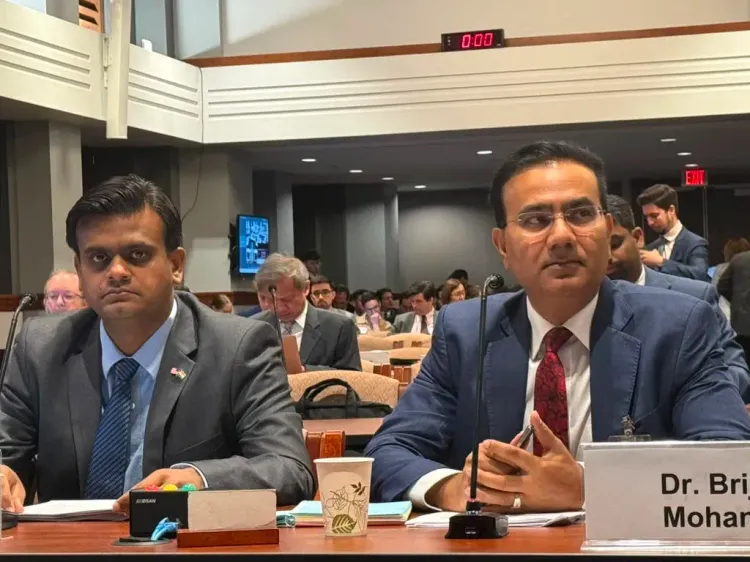
Dr Brij Mohan , Ministry of Commerce and Industry , argued the investigation fails to meet legal standards under Section 301 and lacks product-specific evidence linking Indian exports to forced labour.
India pointed to the USTR's own Appendix A data on tobacco, rice, and cotton as contradicting the adverse determination against India.
Shreyans Gupta of APEDA said India's rice imports account for less than 3 per cent of the value of rice exported to the US, and that regulatory safeguards prevent re-export of imported rice.
FICCI and CII urged the USTR to pursue compliance-based cooperation rather than punitive tariffs, warning of disruption to established US-India supply chains.
India on Wednesday, 8 July formally challenged the United States Trade Representative's (USTR) proposed 12.5 per cent additional tariff on Indian exports at a Section 301 public hearing in Washington, arguing the investigation lacks both a legal and factual basis. New Delhi warned that the proposed measure would disrupt established supply chains without meaningfully advancing efforts to eliminate forced labour.
India's Core Legal Challenge
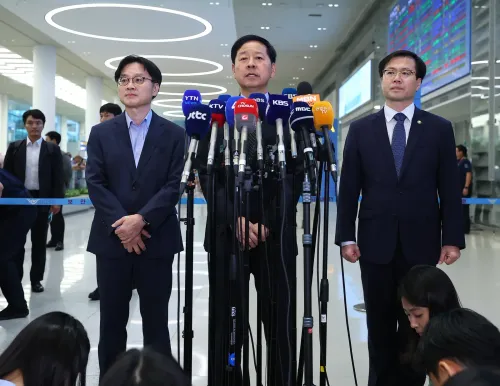
Dr Brij Mohan of the Ministry of Commerce and Industry led India's principal submission before the USTR hearing panel. He contended that the investigation had failed to meet the legal standards required under Section 301 and had not demonstrated that India's policies burden US commerce.
Dr Mohan argued that the USTR had not provided a clear assessment or justification for recommending a country-wide tariff rate against nearly all imports from India. He further charged that the methodology relied on 'broad trade patterns' rather than sector-specific or product-specific evidence linking Indian exports to forced labour.
He also rejected the premise that the absence of an explicit import ban on goods produced with forced labour amounted to permitting such practices. 'The absence of an explicit forced labour import prohibition does not constitute acquiescing to or permitting forced labour in any form,' he told the panel, adding that eliminating forced labour required multiple policy interventions tailored to country-specific circumstances.
Notably, Dr Mohan pointed to the USTR's own data — including figures on tobacco, rice, and cotton in Appendix A — arguing it contradicted the adverse determination against India by showing rising US exports and negligible or declining third-country competition in the Indian market.
India's Rice Exports Under Scrutiny
Shreyans Gupta, First Secretary (Commerce) at the Embassy of India, appeared on behalf of the Agricultural and Processed Food Products Export Development Authority (APEDA) to challenge the USTR's findings specifically on rice imports.
Gupta noted that India is the world's largest producer and exporter of rice, and that imported rice represents only a tiny fraction of domestic production, serving niche consumer demand rather than export processing. He said approximately 45 per cent of India's rice imports originate from Thailand, consisting mainly of speciality jasmine varieties that are neither re-exported nor comparable to US-grown rice.
He further argued that India's rice imports account for less than 3 per cent of the value of rice exported to the US, and that regulatory safeguards prevent imported rice from being re-exported as Indian produce. 'Export of rice from India to the US is allowed only from the rice mills registered with the Ministry of Agriculture and Farmers Welfare,' Gupta said, adding that exporters must also comply with stringent labour standards imposed by major US private-sector buyers.
Gupta urged the USTR to rescind the investigation against India or, alternatively, exempt Indian rice from any proposed measures.
Indian Industry Pushes Back
Indian industry bodies also appeared before the panel to oppose the proposed tariff. Poornima Shenoy of the Federation of Indian Chambers of Commerce and Industry (FICCI) said Indian industry fully supported eliminating forced labour from global supply chains but argued that an economy-wide tariff would penalise compliant sectors and raise costs for US businesses and consumers without addressing the underlying issue.
Shuchita Sonalika of the Confederation of Indian Industry (CII) said India had a comprehensive legal framework prohibiting forced labour and that Indian exporters already operated under rigorous compliance systems required by global customers. She urged the USTR to pursue 'compliance-based cooperation, not punitive tariffs', warning that additional duties would disrupt well-established US-India supply chains.
What the Section 301 Investigation Covers
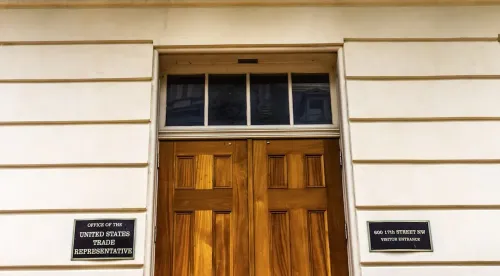
The USTR launched the Section 301 investigation to examine whether several trading partners have failed to prohibit or effectively enforce restrictions on imports produced with forced labour. The Washington hearings bring together government officials, industry groups, labour organisations, and businesses from multiple countries before the USTR makes its final determination.
This comes amid broader tensions in US trade policy, with Washington deploying Section 301 — a Cold War-era trade statute — with renewed frequency against multiple trading partners. India's pushback at the hearing sets the stage for a contested final ruling that could reshape bilateral trade flows across agriculture, textiles, and manufacturing.
Point of View
Not just a diplomatic protest. The deeper problem is structural: Section 301 gives the USTR broad discretionary authority, and 'burden on US commerce' has historically been interpreted expansively. India's argument that a country-wide tariff is methodologically unsound is sound in principle, but the statute's bar is not high. If the USTR proceeds, the real casualty will be the agriculture and textile sectors — exporters who are already compliant but will bear the cost of a blunt instrument aimed at a systemic problem.
NationPress
8 Jul 2026
Frequently Asked Questions
What is the USTR Section 301 investigation against India?
The USTR launched a Section 301 investigation to examine whether India and several other trading partners have failed to prohibit or enforce restrictions on imports produced with forced labour. The investigation could result in a 12.5 per cent additional tariff on nearly all Indian exports to the United States.
Why is India opposing the proposed 12.5 per cent US tariff?
India argues the investigation lacks a legal and factual basis, contending the USTR has not demonstrated that Indian policies burden US commerce or established a causal link between India's regulatory framework and forced labour in its exports. New Delhi also says the methodology relies on broad trade patterns rather than product-specific evidence.
What did India say about its rice exports at the USTR hearing?
India's representative argued that rice imports account for less than 3 per cent of the value of rice exported to the US, that imported rice is not re-exported as Indian produce, and that exports to the US originate exclusively from registered mills under the Ministry of Agriculture. India urged the USTR to either drop the investigation or exempt Indian rice.
What did Indian industry bodies say at the Section 301 hearing?
FICCI and CII both opposed the tariff, arguing that a blanket economy-wide levy would penalise compliant exporters and raise costs for US businesses and consumers. CII called for 'compliance-based cooperation, not punitive tariffs', noting that Indian exporters already operate under rigorous standards required by global buyers.
What happens next after the USTR Section 301 hearing?
The USTR will review submissions from all parties — including government officials, industry groups, and labour organisations from multiple countries — before issuing a final determination. The timeline for that ruling has not been publicly specified.