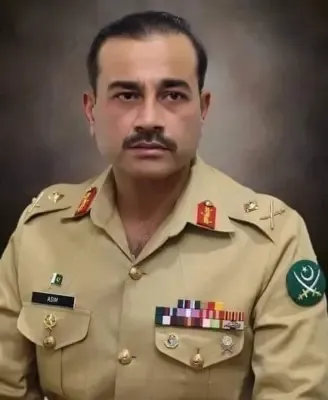
Asim Munir flagged Hindu-Jewish ties as threat to Muslims at Tehran meet
Synopsis
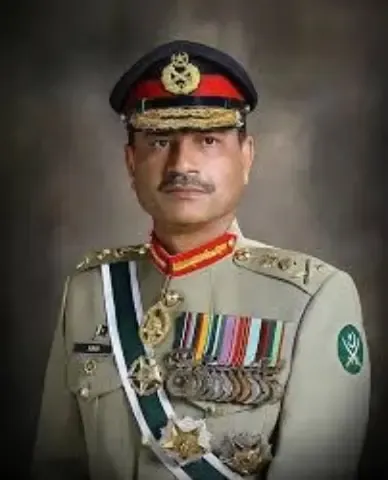
Pakistan Army Chief Asim Munir reportedly told a four-nation security conclave in Tehran that the growing bond between Hindus and Jews posed a threat to Muslims and Pakistan — a disclosure made publicly by Iran's Mohsen Rezaei. Combined with Munir's earlier Two-Nation Theory speech just before the Pahalgam attack, the remarks reveal a consistent pattern of religious framing at the highest levels of Pakistan's military command.
Key Takeaways
Pakistan Army Chief Asim Munir reportedly described Hindu-Jewish ties as a threat to Muslims and Pakistan at a four-nation security meeting in Tehran on 26 October 2026 .
The disclosure was made by Iran's Mohsen Rezaei in an interview with state broadcaster IRIB , a video of which circulated widely on social media.
The meeting also included Turkish intelligence chief Ibrahim Kalin and Saudi Arabia's Defence Minister Prince Khalid bin Salman , who also cited Israel as a threat.
Pakistani journalist Najam Sethi said Munir described the Hindu-Jewish alliance as a 'major threat' and warned of a 'geopolitical convergence against Muslims and Pakistan.' Munir had previously invoked the Two-Nation Theory at an event in Islamabad days before the Pahalgam terror attack by Pakistan-based terrorists.
Critics argue his rhetoric reinforces marginalisation of Pakistan's minority communities , who face ongoing persecution and violence.
Pakistan Army Chief General Asim Munir reportedly raised the issue of growing Hindu-Jewish ties at a high-level four-nation security meeting in Tehran on 26 October 2026, characterising the relationship as a threat directed against Muslims and Pakistan, according to statements by Iran's top security official Mohsen Rezaei. The disclosure has drawn sharp attention in India and among regional observers tracking Pakistan's security posture.
What Rezaei Disclosed
Rezaei made the remarks during an interview with Iranian state broadcaster IRIB, a video of which has been widely circulated on social media. In the interview, he described the tenor of conversations at the four-nation gathering, which was attended by Munir, Turkish intelligence chief Ibrahim Kalin, Saudi Arabia's Defence Minister Prince Khalid bin Salman, and Rezaei himself.
'They spoke very strongly against Israel. Khalid bin Salman said that after you (Iran), Israel would target Turkey, and then come after Saudi Arabia. Ibrahim Kalin, the head of Turkish intelligence, shared the same view. Asim Munir also spoke about the threat posed by Israel and the emerging bond between Hindus and Jews against Muslims and even Pakistan,' Rezaei said in the interview.
Pakistani Commentators React
Pakistani journalist Najam Sethi commented on the footage via his YouTube channel, saying Munir had described the alliance between Hindus and Jews as a 'major threat' and warned of a 'geopolitical convergence against Muslims and Pakistan.' The remarks, according to Sethi, reflect a broader framing within Pakistan's military establishment of India-Israel ties as a civilisational challenge rather than a bilateral security concern.
A Pattern of Religious Rhetoric
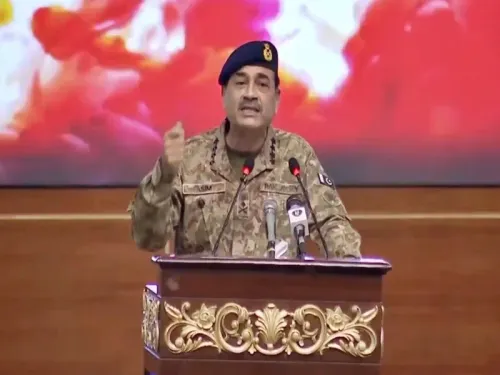
This is not the first time Munir has invoked Hindu-Muslim divisions in public discourse. Just days before the Pahalgam terror attack carried out by Pakistan-based terrorists, Munir made a pointed reference to the Two-Nation Theory at an event in Islamabad. He asserted that Hindus and Muslims were two fundamentally distinct nations and called on Pakistanis to pass the narrative of Pakistan's creation to their children.
'You should definitely tell Pakistan's story to your children. Our forefathers believed that we were different from Hindus in every possible aspect of life. Our religion is different. Our customs are different. Our traditions are different. Our thoughts are different. Our ambitions are different. That was the foundation of the Two-Nation Theory. It was laid on the belief that we are two nations, not one,' he said at the time.
Impact on Pakistan's Minorities
Critics argue that Munir's repeated invocations of Hindu-Muslim difference reinforce the marginalisation of Pakistan's already dwindling minority community, which continues to face documented persecution, discrimination, and violence across the country. Human rights organisations have long flagged the link between state-level religious rhetoric and ground-level attacks on minorities.
This comes amid broader international scrutiny of India-Israel defence and technology cooperation, which Pakistan and several Muslim-majority states have framed as a strategic encirclement. How these narratives shape Islamabad's foreign and security policy in the months ahead will be closely watched.
Point of View
Not a domestic political rally, suggesting this framing is now embedded in Pakistan's official security doctrine. The timing matters too — coming after the Pahalgam attack and amid sustained India-Pakistan tensions, the rhetoric risks feeding the very radicalisation it ostensibly warns against. And domestically, every time Munir frames Hindus and Jews as adversaries, it narrows the already shrinking civic space for Pakistan's persecuted minorities.
NationPress
4 Nov 2026
Frequently Asked Questions
What did Asim Munir say at the Tehran security meeting?
Pakistan Army Chief Asim Munir reportedly characterised the growing bond between Hindus and Jews as a threat to Muslims and Pakistan during a four-nation security meeting in Tehran on 26 October 2026. The remarks were disclosed publicly by Iran's top security official Mohsen Rezaei in an interview with Iranian state broadcaster IRIB.
Who else attended the Tehran four-nation security meeting?
The meeting was attended by Pakistan Army Chief Asim Munir, Turkish intelligence chief Ibrahim Kalin, Saudi Arabia's Defence Minister Prince Khalid bin Salman, and Iranian security chief Mohsen Rezaei. According to Rezaei, all participants spoke strongly against Israel and framed India-Israel ties as a regional threat.
Has Asim Munir made similar remarks before?
Yes. Just days before the Pahalgam terror attack carried out by Pakistan-based terrorists, Munir invoked the Two-Nation Theory at an event in Islamabad, asserting that Hindus and Muslims were fundamentally distinct nations. Critics say this is part of a pattern of religious polarisation at the highest levels of Pakistan's military.
What is the significance of Munir's remarks for India?
The remarks are significant because they frame India-Israel defence and technology cooperation as a civilisational threat to Muslims, elevating a bilateral security relationship to a religious conflict narrative. For India, it underscores the ideological dimensions of Pakistan's security posture beyond conventional military rivalry.
How do these remarks affect Pakistan's minorities?
Critics and human rights organisations argue that rhetoric from senior military figures invoking Hindu-Muslim divisions reinforces the marginalisation of Pakistan's already dwindling minority community. Pakistan's minorities continue to face documented persecution, discrimination, and violence, and state-level religious framing is widely seen as contributing to that environment.