Asim Munir's power grab puts Pakistan's provincial autonomy at risk
Synopsis
Pakistan's military establishment, led by Army chief Asim Munir, has used emergency rule to suspend PTI's elected provincial government in Khyber Pakhtunkhwa — a move analysts say reveals a replicable blueprint for neutralising opposition through federalism's own instruments, without redrawing a single border.
Key Takeaways
Pakistani President Asif Ali Zardari approved emergency rule in Khyber Pakhtunkhwa on 11 October , suspending the PTI -led provincial government.
The move came amid an active Long March demanding the release of jailed former Prime Minister Imran Khan .
Islamabad cited the provincial government's failure to curb militancy, but analysts link the decision to Army chief Asim Munir's centralisation agenda.
A Parrhesia News report warns that Munir's reported proposal to create new provinces could further fragment autonomous political power across Pakistan.
The KP emergency is described as a model: geographical boundaries intact, provincial autonomy suspended — federalism's vocabulary preserved while its substance is hollowed out.
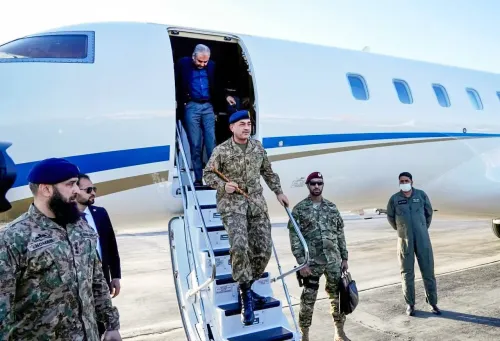
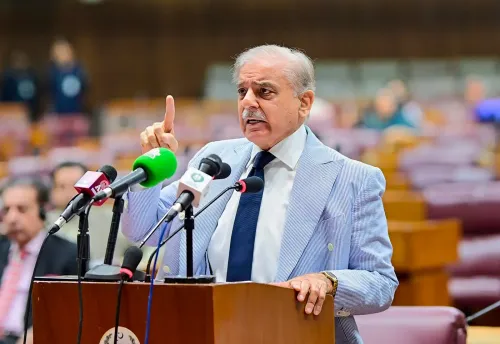
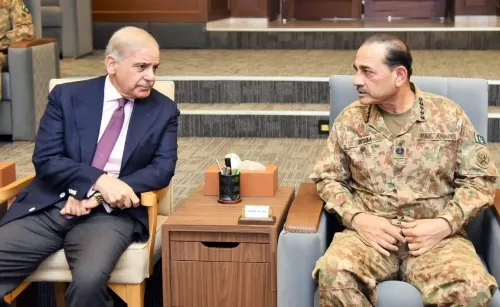
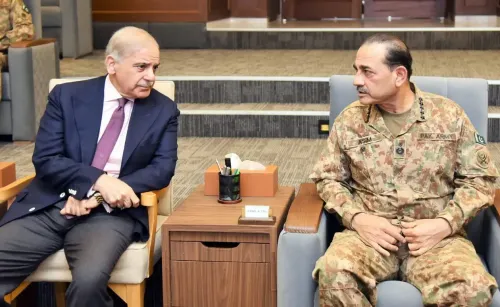
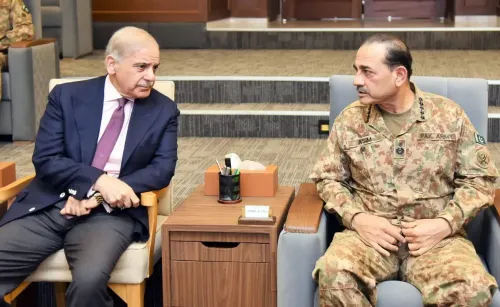
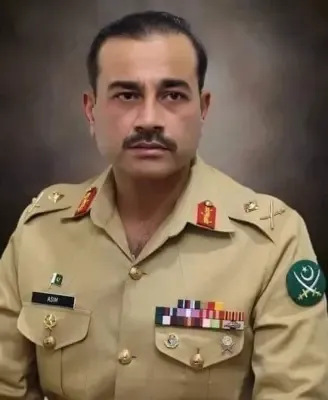
Pakistani Army chief General Asim Munir's ongoing centralisation drive has triggered serious concerns about the future of provincial autonomy in Pakistan, with Khyber Pakhtunkhwa (KP) emerging as a stark case study in how the federal centre can strip an elected provincial government of its political authority without redrawing a single border, according to a report by Parrhesia News.
Emergency Rule Imposed on Khyber Pakhtunkhwa
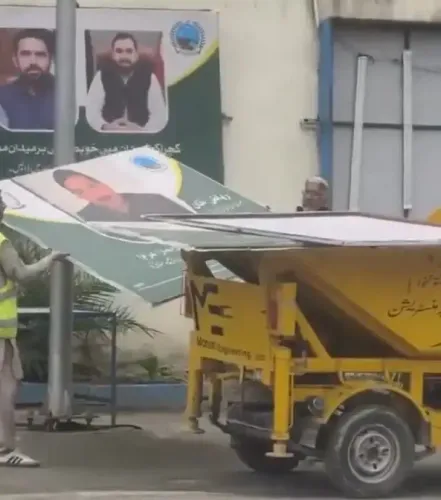
On 11 October, Pakistani President Asif Ali Zardari formally approved emergency measures in Khyber Pakhtunkhwa, suspending the provincial government controlled by jailed former Prime Minister Imran Khan's Pakistan Tehreek-e-Insaf (PTI) party. The federal government cited the province's alleged failure to contain militancy as justification, but the move came in the middle of an active Long March demanding Khan's release from custody.
According to the Parrhesia News report, the timing was not incidental. By dismantling PTI's institutional foothold in the province, Islamabad effectively targeted the organisational infrastructure from which the movement challenging military-backed federal authority derives much of its strength.
A Blueprint for Containing Opposition
The report argues that what has unfolded in KP represents a replicable model of central control: a province that becomes the base of a national political challenge can be brought under emergency measures — its map unchanged, its autonomy suspended. The distinction, as the analysis notes, is surgical. Governor's rule neutralises provincial power immediately; territorial reorganisation fragments it over time.
'The emergency in Khyber Pakhtunkhwa approaches the same problem through a different instrument. Territorial reorganisation could fragment provincial power over time. Governor's rule can neutralise it immediately. One redraws the institution; the other takes away its authority. Both can leave the vocabulary of federalism intact while reducing the capacity of a province to act independently,' the Parrhesia News report stated.
Notably, a provincial government offers an opposition far more than a street protest can: administrative authority, political continuity, and a territorial centre around which supporters can organise. The Long March, the report argued, made that residual power visible — and the emergency was designed to make it unavailable.
Munir's Centralisation Agenda and the New Provinces Proposal
The KP emergency, according to the analysis, must be read alongside Munir's broader reported push to create new provinces in Pakistan. While provincial reorganisation may serve legitimate administrative purposes, the report warned that dividing existing provinces into smaller, more dependent units could erode their fiscal bargaining power and their capacity to resist decisions from the Centre.
The report further contended that the 11 October decision fits a broader pattern: weakening institutions capable of converting public support into organised opposition against the military-backed order. Critically, the analysis stressed, the question is not whether Munir personally signed the emergency proclamation, but whether the arrangement reinforces the system over which he presides.
Why Khyber Pakhtunkhwa Matters to This Equation
Imran Khan remains imprisoned, yet PTI has continued to govern a province, sustain a national political campaign, and challenge Islamabad from an elected institutional base — a combination that the report identifies as uniquely threatening to the current federal arrangement. The emergency, it argues, is an attempt to sever that connection between public support and institutional power.
What Comes Next
The Parrhesia News report does not rule out further centralisation measures, particularly if PTI's mobilisation capacity survives the current crackdown. Analysts tracking Pakistan's civil-military balance will be watching whether the KP template is applied elsewhere, and whether Munir's reported new-province proposals advance through Pakistan's legislature in the months ahead.
Point of View
Smaller provinces: if smaller units are less capable of resource bargaining and political resistance, the design is not administrative efficiency — it is structural subordination. Pakistan's democratic institutions have never been stronger than its military, but the KP episode shows how quickly even an elected provincial government can be neutralised when the centre decides it must be.
NationPress
24 Oct 2026
Frequently Asked Questions
What triggered emergency rule in Khyber Pakhtunkhwa in October 2026?
Pakistani President Asif Ali Zardari approved emergency measures in Khyber Pakhtunkhwa on 11 October, suspending the PTI-led provincial government. While Islamabad cited the government's failure to tackle militancy, the decision coincided with an active Long March demanding the release of jailed former Prime Minister Imran Khan.
How does the KP emergency relate to Asim Munir's centralisation agenda?
According to an analysis by Parrhesia News, the emergency fits a broader pattern in which Army chief Asim Munir has moved to weaken institutions capable of converting public support into organised opposition against the military-backed federal order. The report argues that whether or not Munir signed the proclamation directly, the outcome consolidates the system he presides over.
What are the concerns about Munir's proposal to create new provinces in Pakistan?
Analysts warn that dividing existing provinces into smaller, more dependent units could reduce their fiscal bargaining power and their capacity to resist decisions from the Centre. The Parrhesia News report argues this would achieve through territorial reorganisation what emergency rule achieves immediately — the erosion of autonomous provincial power.
Why does provincial autonomy matter to PTI's political survival?
A provincial government gives an opposition more than street protests can: administrative authority, political continuity, and a territorial base for sustained mobilisation. Even with Imran Khan imprisoned, PTI's control of Khyber Pakhtunkhwa allowed it to organise the Long March and challenge Islamabad from an elected institutional platform — which the emergency sought to end.
What is the broader significance of the Khyber Pakhtunkhwa case for Pakistani federalism?
The KP episode demonstrates that the federal centre can effectively suspend a province's political authority without altering its geographical boundaries, leaving the formal vocabulary of federalism intact while stripping it of operational meaning. Analysts say it sets a template that could be applied to any province that becomes the base of a national political challenge.