CCP a threat to global democracy, uses coercion and tech: NED chief
Synopsis
The head of the US National Endowment for Democracy told a Taipei summit that the Chinese Communist Party is the single biggest driver of a two-decade global slide in freedoms — and that its 'gray zone' tactics against Taiwan are designed to make authoritarian rule look inevitable. It is a stark framing of the democratic stakes in the Indo-Pacific.
Key Takeaways
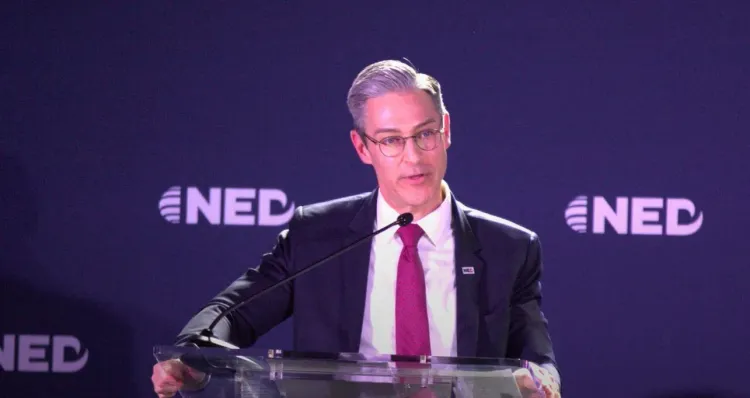
Damon Wilson , President and CEO of the National Endowment for Democracy , addressed the China In The World Summit in Taipei on 8 July 2025 .
He called China 'an anti-democratic superpower' and linked CCP influence to a 20-year consecutive decline in global freedoms and civil liberties.
Wilson accused the CCP of using corruption networks, transnational repression, media manipulation, and economic coercion to weaken democratic resilience worldwide.
He alleged China deploys 'gray zone' tactics against Taiwan to divide societies and erode public confidence in democracy.
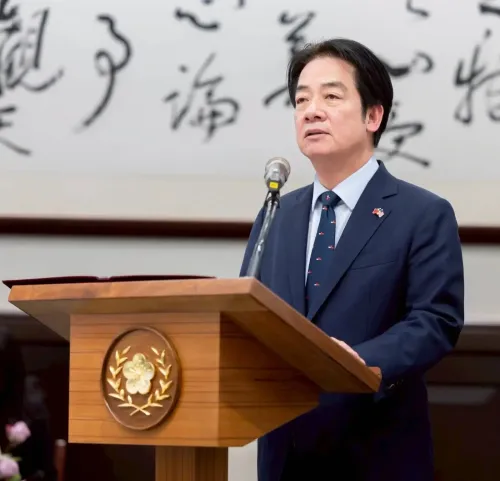
Taiwanese President Lai Ching-te earlier in June 2025 called on China to stop military expansion in the South and East China Seas and the Taiwan Strait.
Lai stated that China and Taiwan are not subordinate to each other and that only Taiwan's 23 million people can decide the island's future.
Damon Wilson, President and CEO of the National Endowment for Democracy (NED), has said that the Chinese Communist Party (CCP) poses a significant challenge to democracy worldwide, accusing it of deploying political, economic, technological, and information tools to reshape the global order in its own image. Wilson made these remarks at the China In The World (CITW) Summit in Taipei on Tuesday, 8 July 2025.
Key Allegations Against the CCP
Wilson described China as 'an anti-democratic superpower' that has embedded itself deeply in the world's economy, advanced technologies, and critical supply chains. He argued that China's negative influence has been a primary driver of a 20-year consecutive decline in global freedoms, political rights, and civil liberties.
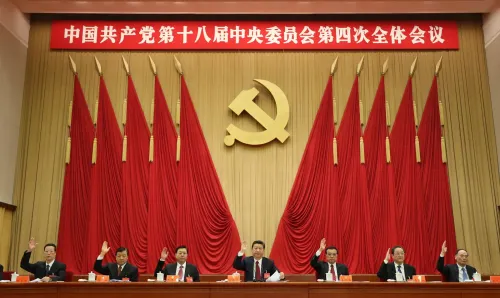
He further accused the CCP of expanding its reach by establishing new international institutions and leveraging corruption networks, transnational repression, media manipulation, and economic coercion to weaken democratic resilience globally. Wilson cited Chinese President Xi Jinping's repeated assertion that 'the world is undergoing changes unseen in a century' as evidence of the CCP's far-reaching strategic ambitions.
Gray Zone Tactics and Taiwan
Wilson alleged that the CCP employs 'gray zone' tactics specifically aimed at undermining Taiwan — tactics designed to divide societies, erode public confidence, and persuade the free world that authoritarian rule is inevitable. Despite this sustained pressure, Wilson praised Taiwan for demonstrating that democracy can continue to thrive, citing its resilient institutions, vibrant civil society, technological innovation, and the resolve of its people.
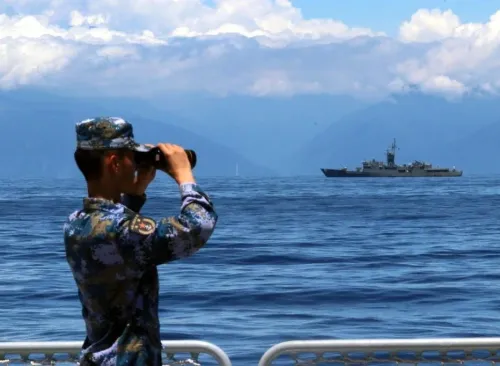
This comes amid an ongoing pattern of Chinese military activity in the region. China maintains that Taiwan is part of its territory and must be reunified with the mainland, by force if necessary — a position that Taipei firmly rejects.
Taiwan's Position and President Lai's Remarks
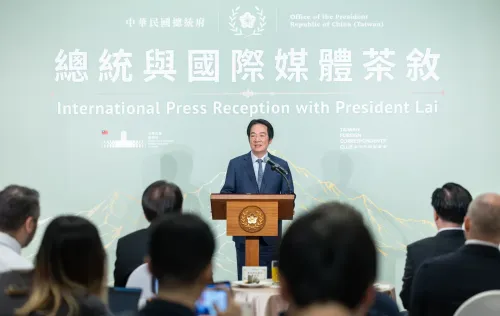
Earlier in June 2025, Taiwanese President Lai Ching-te called on China to halt its military expansion in the South China Sea, the East China Sea, and the Taiwan Strait, and to abandon any threat of force against the island. Speaking at a reception for foreign correspondents in Taipei, Lai expressed Taiwan's readiness to engage in exchanges and cooperation on the basis of equality and dignity, in pursuit of peaceful and mutually beneficial development.
Notably, Lai invoked Taiwan's democratic history, pointing out that the island held elections 30 years ago despite missile threats from China — a signal to the international community that sovereignty rests with the people. He stated unequivocally that China and Taiwan are not subordinate to each other and that Taiwan is not part of China. Taiwan, backed by strong public support, continues to assert its sovereignty and respond to Chinese incursions.
Broader Context
The CITW Summit serves as a platform for democratic nations and civil society organisations to discuss China's growing global influence. Wilson's remarks reflect a broader concern among Western policymakers and democracy advocates about the CCP's strategy of using multilateral institutions and economic leverage to tilt the international order away from liberal democratic norms. The NED, a US-based non-governmental organisation, has long tracked and documented democratic backsliding globally, attributing a significant portion of it to authoritarian influence operations.
As geopolitical tensions in the Indo-Pacific remain elevated, Wilson's address underscores the urgency with which democratic governments and civil society must coordinate their response to authoritarian influence — both overt and covert.
Point of View
But it also reflects a growing consensus among Western democracy-promotion institutions — one that Beijing routinely dismisses as ideological interference. What is notable is the explicit naming of 'gray zone' tactics against Taiwan at a public summit: this signals that the NED and its partners are moving from documenting authoritarian influence to actively calling it out by name. The harder question — whether democratic governments have the institutional coordination to counter CCP influence operations at scale — went largely unaddressed. Naming the threat is necessary; it is not sufficient.
NationPress
7 Oct 2026
Frequently Asked Questions
What did NED chief Damon Wilson say about the Chinese Communist Party at the Taipei summit?
Damon Wilson, President and CEO of the National Endowment for Democracy, said the CCP poses a major challenge to global democracy and has been a key driver of a 20-year consecutive decline in political rights and civil liberties. He described China as 'an anti-democratic superpower' embedded in global supply chains and technology.
What are 'gray zone' tactics and how does the CCP allegedly use them against Taiwan?
'Gray zone' tactics refer to coercive actions that fall below the threshold of open military conflict. According to Wilson, the CCP uses these methods — including media manipulation, economic coercion, and transnational repression — to divide Taiwanese society, erode public confidence, and make authoritarian rule appear inevitable.
What is Taiwan's official position on its relationship with China?
Taiwan firmly rejects China's claim that it is part of Chinese territory. President Lai Ching-te has stated that China and Taiwan are not subordinate to each other and that only Taiwan's 23 million people can determine the island's future. Taiwan continues to assert its sovereignty despite ongoing Chinese military pressure.
What did Taiwanese President Lai Ching-te say about China's military activities?
In June 2025, President Lai Ching-te called on China to halt its military expansion in the South China Sea, the East China Sea, and the Taiwan Strait, and to abandon any use of force against Taiwan. He also expressed willingness to engage with China on the basis of equality and dignity.
What is the National Endowment for Democracy and why does it matter in this context?
The National Endowment for Democracy is a US-based non-governmental organisation that tracks and supports democratic institutions worldwide. Its assessments carry weight in Western policy circles, and Wilson's remarks at the CITW Summit reflect a broader shift toward openly naming CCP influence operations as a systemic threat to the liberal international order.