Nepal PM Shah's border remarks spark row; govt issues damage-control clarification
Synopsis
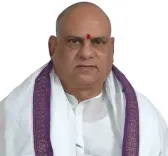
Nepal's PM Balendra Shah stunned Parliament by admitting Nepal had encroached on Indian territory — a first for any Nepali leader. The government rushed out a damage-control clarification within hours, but the political fallout is real: opposition parties demanded specifics, some lawmakers sought to expunge the remarks, and Shah separately revealed Nepal has quietly engaged the UK on its border row with India.
Key Takeaways
PM Balendra Shah told Parliament that Nepal had encroached on Indian territory in multiple places — the first such admission by a Nepali leader.
Nepal's Ministry of Foreign Affairs issued a same-day clarification, saying the remarks referred to no-man's land encroachment and cross-border occupation, not disputed territories.
Nepal's position on Limpiyadhura , Lipulekh , and Kalapani remains officially unchanged, the Foreign Ministry stated.
Opposition lawmakers demanded specifics and some sought to have Shah 's remarks expunged from Parliament's official record.
PM Shah disclosed that Nepal has held diplomatic discussions with the United Kingdom on the India border dispute — reportedly the first open admission of such engagement.
Technical border committees of Nepal and India are currently active on border pillar repairs and cross-border occupation records along the frontier.
Nepal's Ministry of Foreign Affairs has stepped in to clarify that Prime Minister Balendra Shah's controversial parliamentary remarks — in which he acknowledged that Nepal had encroached on Indian territory — were specifically about 'cross-border occupation' and encroachment in the no-man's land along the shared border, not a formal concession on disputed territories. The clarification came after Shah's comments on Sunday triggered a sharp political backlash in Kathmandu.
What the Prime Minister Said
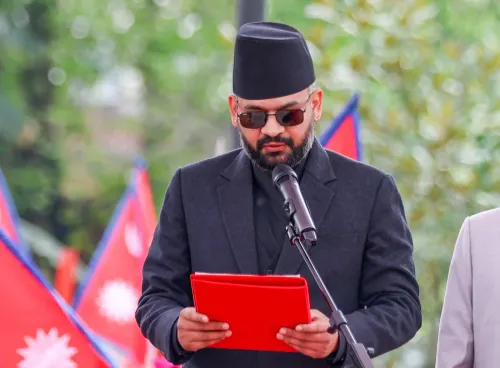
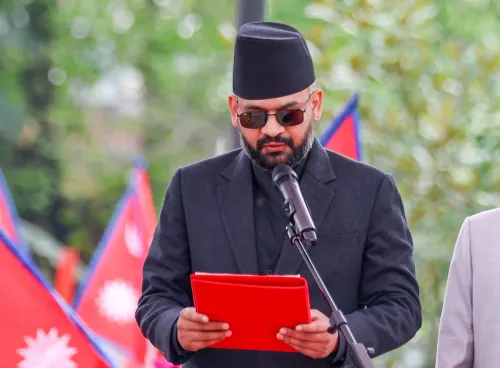
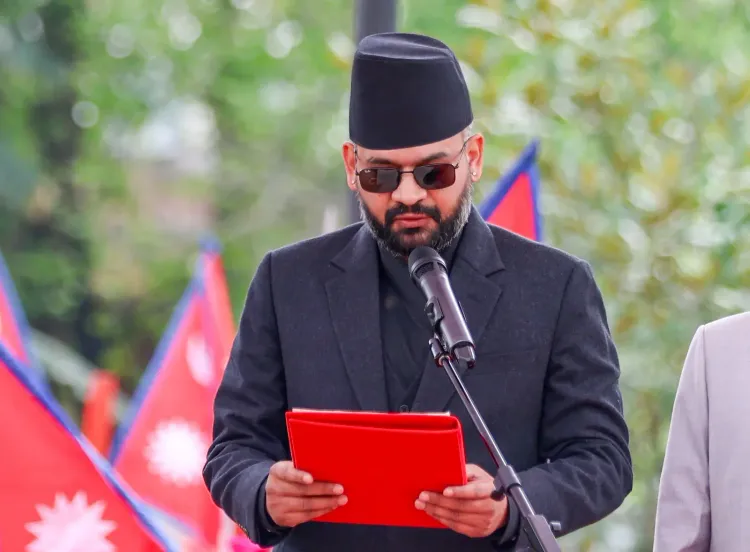
During his first-ever appearance before lawmakers to answer questions in Parliament, PM Shah made a striking admission: 'After becoming Prime Minister, I came to know that not only has India encroached on Nepal's land, but Nepal has also encroached on India's land in multiple places. Both sides should sit down and look into the matter.'
The remarks were notable because, while Nepal has long and consistently complained about Indian encroachment on Nepali land, there is no known instance of India formally accusing Nepal of encroaching on Indian territory. Shah did not disclose specific locations where Nepal had allegedly encroached.
The Government's Clarification
In a statement issued on Sunday evening, the Nepali government said the Prime Minister's comments related to technical studies conducted in border areas where citizens of one country have been using or occupying land that technically falls within the other country's territory.
'The matter mentioned by the Prime Minister in Parliament was primarily related to encroachment in the no-man's land area and cross-border occupation,' the Foreign Ministry stated. It explained that the 'Fixed Boundary Principle' adopted in river boundary areas has led to situations where Nepali citizens cultivate or reside on land technically on the Indian side, and vice versa.
The Ministry also reiterated that Nepal's official position on disputed areas — including Limpiyadhura, Lipulekh, and Kalapani — remains unchanged, and that unresolved border issues will be addressed through diplomatic dialogue and mutual understanding with India.
Political Fallout in Kathmandu
Opposition parties, foreign affairs experts, and border analysts were swift to criticise PM Shah, arguing that his unguarded remarks undermined Nepal's long-standing position on the border dispute and weakened its negotiating leverage with India. Several lawmakers demanded to know precisely where Nepal had allegedly encroached on Indian territory.
Some members even urged Speaker D.P. Aryal to expunge the Prime Minister's remarks from Parliament's official record — an unusual step that underscores the sensitivity of the issue.
Border Mechanisms and Diplomatic Engagement
According to the Foreign Ministry, technical committees and border mechanisms of both countries are currently engaged in repairing border pillars, addressing no-man's land encroachment, and collecting records of cross-border occupation in mapped frontier areas.
Responding separately to a question on the India–China agreement allowing Indian pilgrims to travel to Kailash Mansarovar through the disputed Lipulekh area, PM Shah confirmed that Nepal had sent an official diplomatic note to India and received a response. 'The response states that both governments will form teams comprising historians, surveyors and experts familiar with the territory and seek a resolution through table talks,' Shah said.
In what appears to be the first open admission of its kind, Shah also disclosed that Nepal had engaged diplomatically with the United Kingdom on the border dispute with India. 'We have spoken not only with India and China but also with the UK government. Our view is that the UK should also take an interest, as the issue dates back to the period when the British controlled India,' he said.
Historical Context
Nepal and India share a long, open border, much of which was defined by the 1816 Treaty of Sugauli. Mapping, however, remains incomplete in areas such as Susta and the Limpiyadhura–Lipulekh–Kalapani tri-junction. The border dispute has been a persistent irritant in bilateral relations, with Nepal publishing a revised political map in 2020 that included the contested territories — a move India rejected.
How both governments manage the diplomatic fallout from Shah's remarks will be closely watched, particularly as technical-level border talks are already under way.
Point of View
On the record in Parliament, acknowledged reciprocal encroachment. More revealing still is the disclosure of UK diplomatic engagement on the border dispute, which signals Kathmandu is testing third-party leverage — a strategy that carries its own risks with New Delhi. The episode exposes the tension between Shah's instinct for candour and the diplomatic discipline that border negotiations demand.
NationPress
14 Oct 2026
Frequently Asked Questions
What did Nepal PM Balendra Shah say about the India-Nepal border?
PM Shah told Parliament that Nepal had encroached on Indian territory in multiple places, not just the other way around. He said both sides should sit down and examine the issue, but did not specify locations. The remarks were made during his first appearance to answer lawmakers' questions in Parliament.
How did Nepal's government respond to the controversy?
Nepal's Ministry of Foreign Affairs issued a clarification on the same evening, stating that Shah's remarks referred specifically to cross-border occupation and encroachment in the no-man's land along the border — not to the formally disputed territories of Limpiyadhura, Lipulekh, and Kalapani. The Ministry reaffirmed Nepal's unchanged official position on those disputes.
What is Nepal's official position on the Lipulekh-Kalapani-Limpiyadhura dispute?
Nepal considers Lipulekh, Kalapani, and Limpiyadhura to be Nepali territory and has consistently demanded their return through diplomatic dialogue. Nepal published a revised political map in 2020 incorporating these areas, a move India rejected. The Foreign Ministry reiterated on Sunday that this position has not changed.
Why did some Nepali lawmakers want PM Shah's remarks removed from the record?
Several opposition lawmakers argued that Shah's admission of Nepali encroachment on Indian land undermined Nepal's long-standing negotiating position and could weaken its case in future border talks with India. Requesting expunction from the official parliamentary record was an attempt to limit the diplomatic damage.
What is the significance of Nepal engaging the UK on the India border dispute?
PM Shah disclosed that Nepal had held diplomatic discussions with the United Kingdom regarding its border dispute with India, arguing that the UK bears responsibility as the dispute traces back to the British colonial era and the 1816 Treaty of Sugauli. This appears to be the first time a Nepali leader has openly acknowledged such engagement with London.