Nepal PM Balen Shah rules out British mediation on India border row
Synopsis
Nepal's PM Balen Shah spent weeks facing fire over remarks that appeared to invite British involvement in the Kalapani-Lipulekh border row with India. His Sunday clarification — 'We are not seeking British mediation' — is as much damage control as it is diplomacy, and it signals Kathmandu's awareness that triangulating London into a bilateral dispute was always a non-starter with New Delhi.
Key Takeaways
Nepal PM Balen Shah on 21 June stated Nepal is not seeking UK mediation in its border dispute with India.
His original 31 May remarks in the House of Representatives had suggested Nepal had engaged the British government on the matter, drawing criticism at home and abroad.
The disputed territories — Limpiyadhura , Lipulekh , and Kalapani — are under Indian administration but claimed by Nepal.
India's MEA spokesperson Randhir Jaiswal affirmed that 'no third party has any role' in India-Nepal bilateral matters.
Shah's earlier remarks had also overshadowed RSP President Rabi Lamichhane 's visit to India in early June at the invitation of the BJP .
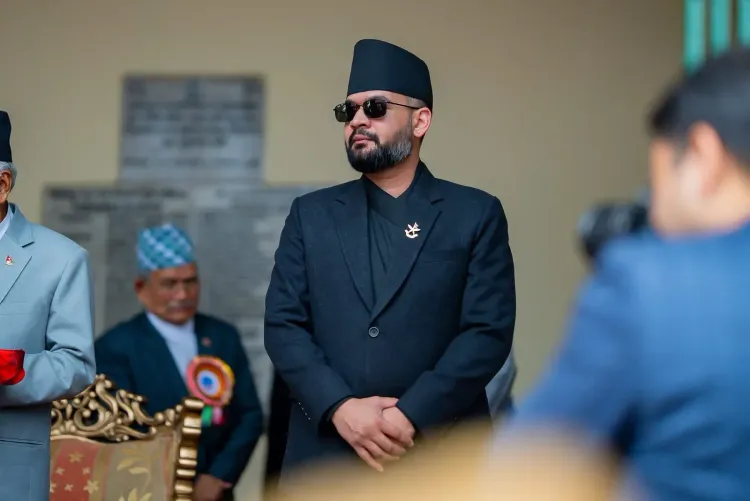
Nepal's Prime Minister Balen Shah on Sunday, 21 June clarified that Kathmandu is not seeking United Kingdom mediation to resolve its long-running border dispute with India, walking back remarks he had made before Parliament last month that triggered sharp domestic and diplomatic criticism.
What Shah Said Earlier
During his first appearance before lawmakers in the House of Representatives on 31 May, Shah had said Nepal had engaged not only with India and China but had also spoken with the British government, noting that historical records from the colonial era were held in London. 'Our view is that England (the UK) should also take an interest, as the issue dates back to the period when the British ruled India,' he had said, adding that all such matters should be resolved through dialogue and diplomatic negotiations.
Shah had also acknowledged, controversially, that Nepal had itself encroached on Indian territory — a statement that drew swift criticism from opposition parties, foreign policy experts, and border analysts within Nepal.
The Clarification at RSP Convention
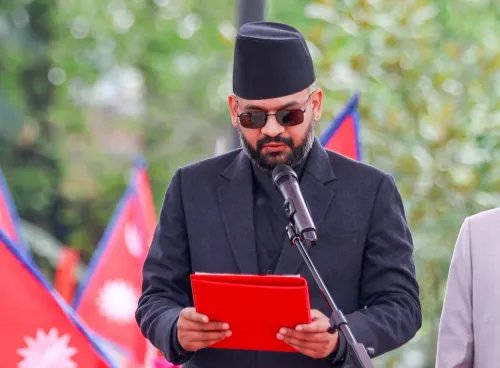
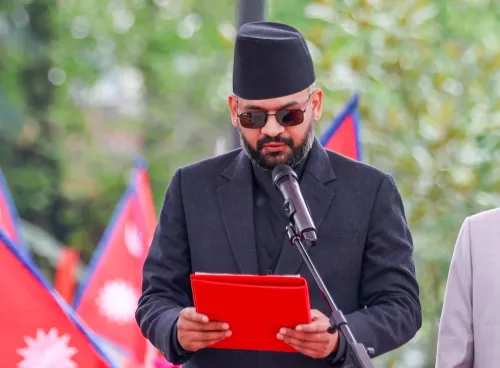
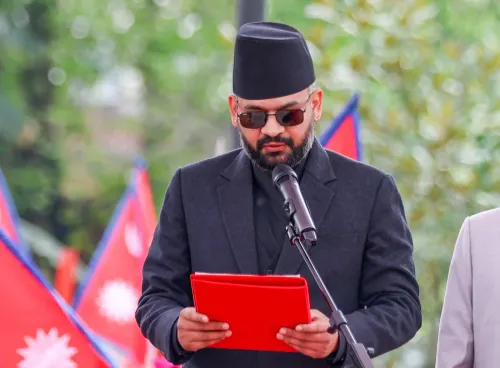
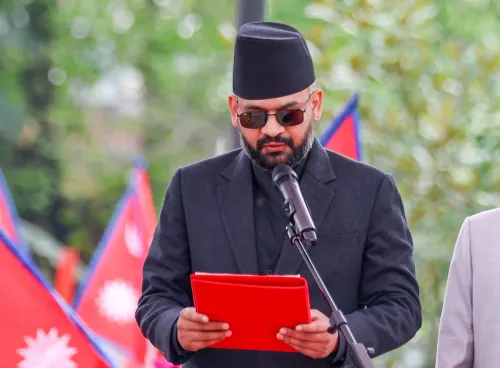
Addressing the inaugural session of the General Convention of the Rastriya Swatantra Party (RSP) in the southern Chitwan district on Sunday, Shah sought to reframe his earlier remarks. 'We have evidence regarding Kalapani and Lipulekh. What I meant was that if it is necessary to present records from the period when the British ruled the region, we are prepared to do so. We are not seeking British mediation,' he said.
He underscored Nepal's intention to resolve the dispute bilaterally. 'We will settle these matters ourselves through discussions with our neighbours. We have the evidence,' Shah said. 'No one should have any doubts about my nationalism.'
India's Position
New Delhi has been unambiguous in rejecting any third-party role. The Ministry of External Affairs (MEA) had responded to Shah's original remarks by stressing that existing bilateral mechanisms remain the appropriate channel. In early June, MEA spokesperson Randhir Jaiswal stated: 'We have established bilateral mechanisms to resolve border issues. Whatever bilateral matters exist between India and Nepal, no third party has any role in them.'
The Disputed Territories
The border row centres on the areas of Limpiyadhura, Lipulekh, and Kalapani — territories currently under Indian administration that Nepal claims as sovereign land. The dispute has persisted for decades and remains one of the most sensitive irritants in Nepal-India relations. Both governments have publicly committed to resolving the matter through diplomatic dialogue and mutual understanding, though no substantive breakthrough has been reported.
Diplomatic Ripple Effects
Shah's original remarks had also cast a shadow over the visit of RSP President Rabi Lamichhane to India in early June, where he had been invited by the Bharatiya Janata Party (BJP). The timing of the controversy complicated what was intended as a goodwill engagement between the two sides. With Sunday's clarification, Shah appears to be attempting to steady the bilateral relationship ahead of further diplomatic engagement.
Point of View
Which explicitly suggested London should 'take an interest' — a formulation that, in diplomatic language, is closer to an invitation than a historical reference. New Delhi's swift rebuttal — that no third party has any role — was not merely procedural; it was a signal that India will not tolerate any multilateralisation of what it considers a strictly bilateral file. The deeper issue is that Shah's dual acknowledgement — that Nepal has encroached on Indian territory while simultaneously claiming Indian encroachment — reflects a political balancing act that satisfies neither domestic nationalists nor India. The Kalapani-Lipulekh dispute is unlikely to move forward on rhetoric alone; what it needs is a structured bilateral mechanism with a credible timeline, which neither side has yet committed to publicly.
NationPress
20 Sept 2026
Frequently Asked Questions
What did Nepal PM Balen Shah clarify about British mediation?
Shah clarified on 21 June that Nepal is not seeking United Kingdom mediation in its border dispute with India. He said Nepal intends to resolve the matter through direct, evidence-based dialogue with its neighbours.
What were Balen Shah's original remarks that caused controversy?
On 31 May, Shah told the House of Representatives that Nepal had engaged the British government because historical records from the colonial era are held in London, and that the UK should 'take an interest' in the dispute. He also acknowledged that Nepal had encroached on Indian territory, which drew sharp domestic criticism.
What territories are at the centre of the Nepal-India border dispute?
The disputed areas are Limpiyadhura, Lipulekh, and Kalapani — currently under Indian administration but claimed by Nepal as sovereign territory. The dispute has remained unresolved for decades.
What is India's official position on third-party involvement?
India's Ministry of External Affairs has stated clearly that no third party has any role in resolving border issues between India and Nepal. MEA spokesperson Randhir Jaiswal reaffirmed this in early June, pointing to established bilateral mechanisms as the appropriate channel.
How did Shah's remarks affect Nepal-India diplomatic ties?
The controversy overshadowed RSP President Rabi Lamichhane's visit to India in early June, which had been arranged as a goodwill engagement with the BJP. Shah's Sunday clarification appears aimed at stabilising the relationship ahead of further diplomatic interactions.