North Korea threatens 'tit-for-tat' response to South Korea-US Hoguk drills
Synopsis
North Korea's KCNA issued an unusually pointed English-language warning as South Korea-US Hoguk drills and the US-Japan Keen Sword exercise launched on the same day — a convergence Pyongyang called a coordinated provocation. The explicit 'tit-for-tat' language, directed at an international audience, raises the stakes: every day until Hoguk ends on 30 October is now a potential window for a North Korean military response.
Key Takeaways
North Korea on 20 October 2026 threatened a 'tit-for-tat' response to joint South Korea - US military drills via a KCNA English-language commentary.
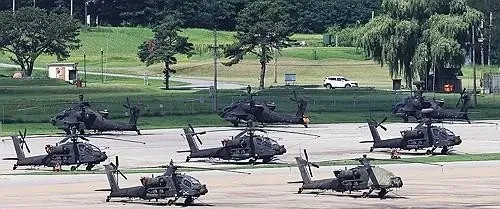
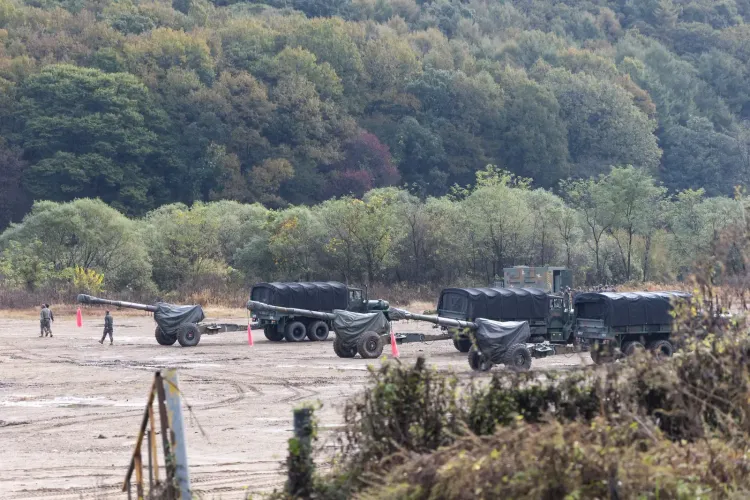
The annual Hoguk field exercise began 19 October and runs through 30 October , with US Forces Korea participating.
Japan and the US simultaneously launched the 'Keen Sword' exercise, which Pyongyang cited alongside Hoguk as dual provocations.
Pyongyang accused allied forces of 'muscle flexing' that undermines 'regional strategic stability' and threatened 'ceaseless upgrading' of its war deterrent.
The KCNA commentary was issued in English — a deliberate signal aimed at an international audience, consistent with past pre-escalation messaging.
North Korea on Tuesday, 20 October 2026, publicly denounced ongoing joint military exercises between South Korea and the United States, as well as a simultaneous large-scale drill between the US and Japan, labelling them 'muscle flexing' by 'enemy states.' In an English-language commentary released through the Korean Central News Agency (KCNA), Pyongyang warned that a 'tit-for-tat principle based on strong power will be applied' in direct response to the exercises.
The Drills That Triggered the Warning
South Korea launched the annual Hoguk field exercise on Monday, 19 October, with active participation from US Forces Korea, aimed at enhancing battlefield interoperability between allied troops. The drills are scheduled to run through 30 October, according to South Korea's Joint Chiefs of Staff. Simultaneously, Japan kicked off its own large-scale joint military exercise with the US, known as 'Keen Sword,' on the same day — a convergence of allied military activity that Pyongyang described as a coordinated provocation.
What North Korea Said
The KCNA commentary, issued in English — a deliberate signalling choice often used by Pyongyang to address an international audience — accused allied forces of acting to 'infringe upon the security interests of the DPRK and undermine the regional strategic stability.' North Korea referred to itself by its official name, the Democratic People's Republic of Korea (DPRK).
On the South Korea-US drills specifically, Pyongyang criticised Seoul for not concealing what it called the 'aggressive and provocative nature' of the exercise. 'Bolstered deterrent is required to deal with ever-escalating threats, and repeated provocations are bound to meet with such prompt reaction as bolstering of stronger capabilities,' the KCNA stated.
The commentary further warned that the DPRK 'will continue to remind them of its will to defend sovereignty through ceaseless upgrading, bolstering and responsible demonstration of its reliable war deterrent for self-defence' in response to what it termed 'oft-repeated US-Japan-ROK military provocations.'
Pattern of Escalation on the Korean Peninsula
Pyongyang's response follows a well-established pattern: North Korea has routinely used KCNA English-language commentaries to signal displeasure whenever the US and its allies conduct joint exercises. The language deployed — 'tit-for-tat,' 'war deterrent,' 'sovereignty' — mirrors past statements that have preceded missile tests or other military demonstrations. Notably, this is the first combined triggering of both the South Korea-US Hoguk exercise and the US-Japan Keen Sword drills in the same week, amplifying Pyongyang's stated grievance.
Regional and Strategic Implications
The simultaneous allied exercises reflect a broader trend of tightened trilateral security coordination among the US, South Korea, and Japan — a framework that has deepened significantly since 2023. For Pyongyang, the convergence of Hoguk and Keen Sword in the same week represents exactly the kind of combined posture it has repeatedly cited to justify advancing its own weapons programme. Analysts will be watching closely for any follow-on military signalling from North Korea in the coming days, particularly given the rhetoric's explicit 'tit-for-tat' framing. The Hoguk drills conclude on 30 October, and Pyongyang's next move within that window will be closely tracked by regional security observers.
Point of View
Historically, served as diplomatic cover for forthcoming military signalling — missile tests, artillery drills, or submarine activity tend to follow within days. The simultaneous triggering of both Hoguk and Keen Sword in the same week hands Pyongyang a more potent narrative than usual: it can now frame any response as reactive rather than aggressive. What mainstream coverage tends to underplay is the trilateral dimension — the tightening US-South Korea-Japan security architecture is precisely the threat calculus Pyongyang uses to legitimise weapons advancement domestically and internationally. The 30 October end-date of Hoguk is the immediate watch window.
NationPress
20 Oct 2026
Frequently Asked Questions
Why is North Korea threatening retaliation over the Hoguk exercise?
North Korea views joint US-South Korea military drills as rehearsals for an invasion, and has consistently used them to justify its own weapons programme. On 20 October 2026, it specifically warned of a 'tit-for-tat' response, citing both the Hoguk exercise and the simultaneous US-Japan Keen Sword drills as compounded provocations against its security interests.
What is the Hoguk exercise and when does it end?
Hoguk is South Korea's annual field exercise conducted with US Forces Korea to enhance combat interoperability. The 2026 edition began on 19 October and is scheduled to run through 30 October, according to South Korea's Joint Chiefs of Staff.
What is the Keen Sword exercise?
Keen Sword is a large-scale joint military exercise between the United States and Japan. It launched on 19 October 2026, the same day as Hoguk, a simultaneity that North Korea cited as evidence of coordinated allied military pressure.
What does 'tit-for-tat' mean in North Korea's context?
In Pyongyang's stated doctrine, a 'tit-for-tat' response implies a matching military action in kind — historically this has preceded missile tests, ballistic launches, or other demonstrations of its 'war deterrent.' The KCNA statement warned the DPRK would engage in 'ceaseless upgrading and bolstering' of its self-defence capabilities.
How does this fit into broader Korean Peninsula tensions?
The warning is consistent with a long-standing pattern in which North Korea uses KCNA English-language commentaries to signal displeasure before a military demonstration. The current episode is notable because it coincides with the first simultaneous launch of both Hoguk and Keen Sword in the same week, giving Pyongyang a compounded grievance narrative and raising the risk of a response before Hoguk concludes on 30 October.