Tarbela-5 second mishap in 2025 raises questions over Chinese contractor PCCCL
Synopsis
Pakistan's Tarbela-5 project has suffered its second major construction mishap since 2025, again implicating Chinese contractor PCCCL. An independent inquiry into the earlier collapse found unauthorised design changes by all three stakeholders and rejected the flooding excuse — while costs ballooned 285% to PKR 317 billion. The latest bund collapse raises urgent questions about contractual accountability on CPEC-linked infrastructure.
Key Takeaways
A protective bund collapsed at Pakistan's Tarbela-5 hydropower project , marking the second major mishap at the site since 2025 .
Chinese contractor Power Construction Corporation of China Limited (PCCCL) is involved; construction has been suspended and an emergency declared.
An earlier cofferdam collapse in July 2025 was attributed to unauthorised design modifications by all three stakeholders — PCCCL, the engineer, and WAPDA .
The inquiry rejected flooding as the cause, finding water flows were within historical norms and below the cofferdam's designed capacity.
The earlier collapse delayed the project by at least two years and drove estimated costs up 285% , from PKR 82.36 billion to PKR 317 billion .
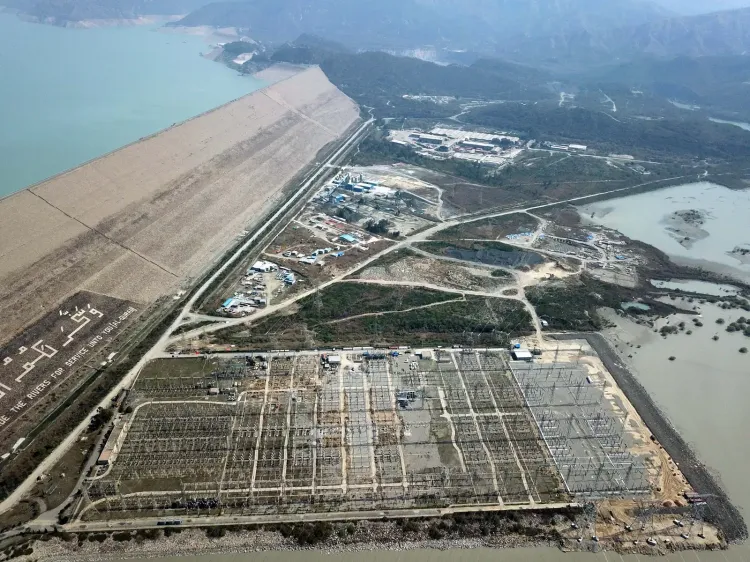
A protective bund collapse at Pakistan's Tarbela-5 hydropower project has marked the second major construction mishap at the site since 2025, triggering a sudden surge of reservoir water and forcing authorities to suspend all work. The incident involves Power Construction Corporation of China Limited (PCCCL), the Chinese contractor overseeing the project, and has renewed scrutiny over construction standards and contractual oversight at one of Pakistan's most critical energy infrastructure sites.
What Happened on Monday
Following Monday's bund collapse, an emergency was declared at the site. Construction activities were immediately suspended and workers were directed to evacuate to safer locations. The incident triggered a sudden inrush of reservoir water, adding urgency to an already troubled project.
The Earlier Cofferdam Collapse and Its Findings
The latest incident follows a cofferdam collapse at the same project earlier in July 2025, for which Pakistan's Water and Power Development Authority (WAPDA) was held responsible, according to a report citing findings accessed by Pakistani newspaper Dawn. A three-member independent inquiry committee identified unauthorised modifications to the cofferdam design after the contract was awarded as a key contributing factor.
The committee found that all three stakeholders — the contractor, the engineer, and WAPDA — had acted outside the scope of their contractual obligations. According to the inquiry findings, PCCCL had proposed a cofferdam design alteration that was not permitted under the contract, while the supervising engineer conditionally accepted a design deficiency without ensuring technical compliance. WAPDA subsequently approved the change when construction was nearing completion, without examining its contractual validity or technical shortcomings.
The findings specifically noted that PCCCL had proposed replacing the original cofferdam design with a rock-filled structure, considered a weaker alternative, across the project including the channel. That modified structure eventually collapsed. The inquiry also rejected attempts by stakeholders to attribute the failure to flooding, stating that water flows at the time 'were within annual levels, were not unusual and should have been taken into account in the original design.'
The Financial and Timeline Damage
The consequences of the earlier collapse have been severe. The project has been delayed by at least two years, and its estimated cost has surged by more than 285 per cent — from PKR 82.36 billion to PKR 317 billion. The inquiry attributed the failure to inadequate protective layers and filter arrangements, contradicting WAPDA's claim that flooding was responsible.
Broader Concerns Over Chinese Contractors
The Tarbela-5 project is part of Pakistan's broader energy infrastructure buildout, with significant Chinese involvement under the China-Pakistan Economic Corridor (CPEC) framework. Notably, this is the second time in rapid succession that PCCCL's work at Tarbela has come under scrutiny, raising questions about project oversight mechanisms, the role of independent engineers, and whether contractual safeguards are being enforced rigorously on Chinese-constructed infrastructure in Pakistan. Critics argue that the pattern of unauthorised design changes and regulatory approvals granted without technical scrutiny points to systemic governance gaps rather than isolated engineering failures.
What Comes Next
With construction suspended once again and a fresh emergency declared, the Tarbela-5 project faces the prospect of further delays and cost escalation. The cumulative impact of two major mishaps is likely to sharpen parliamentary and public scrutiny of WAPDA's oversight role and the contractual accountability framework governing Chinese construction firms operating in Pakistan.
Point of View
Involving the same Chinese contractor, cannot be dismissed as coincidence or bad weather — the inquiry's own findings make that clear. The pattern of unauthorised design changes approved without technical scrutiny, with each stakeholder deflecting blame, is a governance failure as much as an engineering one. For Pakistan, the deeper problem is structural: CPEC-linked projects have largely operated with limited independent oversight, and the Tarbela-5 cost blow-out — from PKR 82 billion to PKR 317 billion — is an early warning of what that deficit costs. The question now is whether Pakistani regulators will use this moment to enforce genuine contractual accountability, or whether the political weight of the China relationship will again absorb the fallout.
NationPress
11 Nov 2026
Frequently Asked Questions
What happened at the Tarbela-5 hydropower project?
A protective bund collapsed at the Tarbela-5 hydropower project in Pakistan, triggering a sudden surge of reservoir water and forcing authorities to declare an emergency and suspend construction. This is the second major construction mishap at the site since 2025, involving Chinese contractor PCCCL.
What did the inquiry into the earlier Tarbela-5 collapse find?
A three-member independent inquiry committee found that all three stakeholders — PCCCL, the supervising engineer, and WAPDA — had made unauthorised modifications to the cofferdam design. The committee rejected the flooding explanation, stating water flows were within historical norms and below the structure's designed capacity.
How much has the Tarbela-5 project been delayed and how much has it cost?
The earlier cofferdam collapse delayed the project by at least two years and drove its estimated cost up by more than 285%, from PKR 82.36 billion to PKR 317 billion. The latest bund collapse risks adding further delays and costs.
Who is PCCCL and what is its role at Tarbela-5?
Power Construction Corporation of China Limited (PCCCL) is the Chinese construction company contracted to build the Tarbela-5 hydropower project in Pakistan. The inquiry found it had proposed an unauthorised rock-filled cofferdam design — considered a weaker alternative — which subsequently collapsed.
Why does this matter beyond Pakistan?
The Tarbela-5 project sits within the broader China-Pakistan Economic Corridor (CPEC) infrastructure framework. Repeated construction failures and cost overruns at CPEC-linked projects raise wider questions about contractual accountability, independent oversight, and construction quality standards for Chinese-built infrastructure in partner countries.