PoK blockade: Pakistan forces choke food, medicine supply amid protest crackdown
Synopsis
A report by Athens-based Directus documents what it calls a deliberate Pakistani army strategy to crush PoK protests by sealing roads, cutting communications, and blocking food and medicine deliveries — with residents describing house raids and prices spiking three to four times. The comparison drawn to Bangladesh’s history, by a resident posting on X, signals how severe the local perception of the crisis has become.
Key Takeaways
Pakistani security forces have reportedly imposed a sweeping blockade across Pakistan-occupied Kashmir (PoK) , sealing routes to Muzaffarabad and Rawalakot .
Food and medicine supplies are being blocked, with vegetables selling at three to four times normal prices, according to a 1 July report by Athens-based Directus .
Internet and satellite services have been suspended, severely restricting information flow from the region.
Residents including Abdul Majid Awan reported being turned away by police while attempting to bring medicines from Rawalpindi .
CCTV footage allegedly shows security personnel raiding homes and confiscating remaining supplies.
No dialogue between Pakistani authorities and protest leaders has been reported; the humanitarian situation remains unresolved.
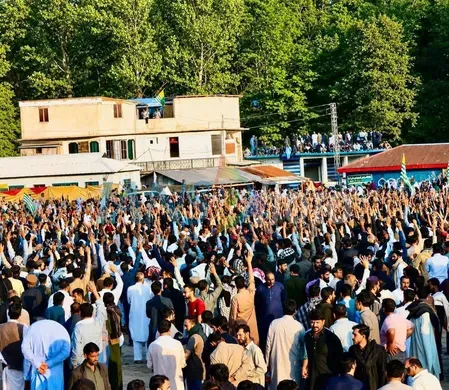
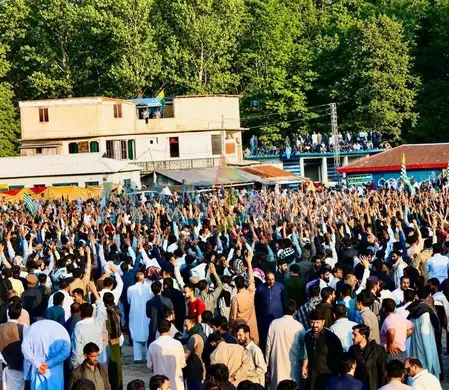
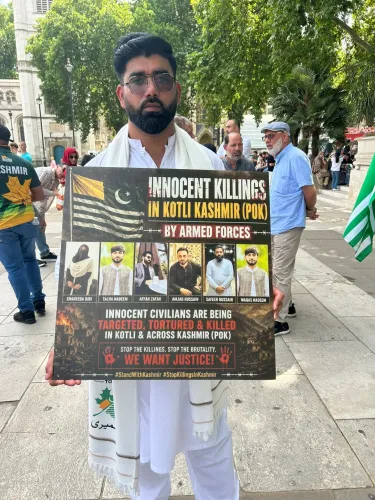
People in Pakistan-occupied Kashmir (PoK) are facing what a report by Athens-based outlet Directus describes as “horrendous and gruesome” treatment at the hands of Pakistani security forces, as authorities impose sweeping blockades to suppress protests demanding constitutional rights. The report, published on 1 July, details a coordinated crackdown involving road closures, communication blackouts, and the deliberate choking of food and medicine supplies across the region.
The Blockade and Its Impact
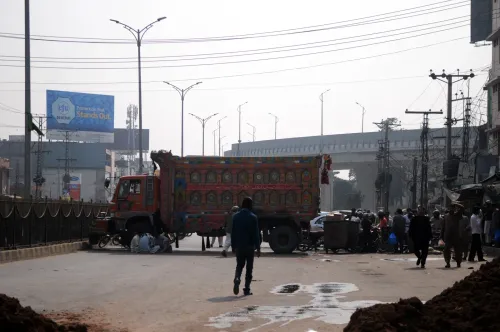
According to the Directus report, Pakistan’s army has effectively sealed off PoK through a series of coordinated restrictions, triggering acute shortages of essential food commodities and life-saving medicines. Routes to major cities including Muzaffarabad and Rawalakot have reportedly been sealed by Islamabad, isolating protesters from the rest of the region. Petrol pumps have remained closed and public transport services suspended, bringing normal life to a standstill.
Vegetables are reportedly being sold at three to four times their normal prices, as Pakistani security forces have allegedly prevented supplies from entering the region. Markets across the occupied territory have, according to international media reports cited by Directus, run out of fresh vegetables and fruits, with ordinary residents struggling to access even basic ration supplies.
Voices from the Ground
Abdul Majid Awan, a resident of Muzaffarabad, was quoted by Directus as saying: “We even tried bringing medicines from Rawalpindi in our own carrier vehicle, but the police did not allow us to enter Muzaffarabad, saying permission had not been granted.”
Sociology student Hasib Siddique said: “The state is so broke that our army now raids homes in Kashmir, ransacking cabinets and taking from families already crushed by shortages.” The report noted that CCTV footage allegedly showed security personnel conducting house raids and confiscating remaining supplies.
Communication Blackout and Social Media Resistance
The report highlighted that restrictions on news reporting, combined with the suspension of internet and satellite services, have severely curtailed the flow of information about ground conditions. Despite this, residents have reportedly managed to convey their situation to the outside world through social media and contacts based outside Kashmir.
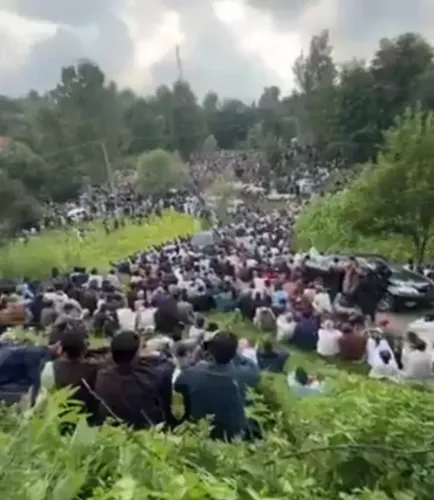
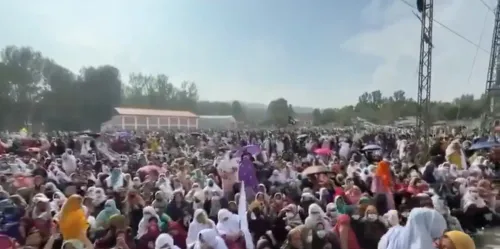
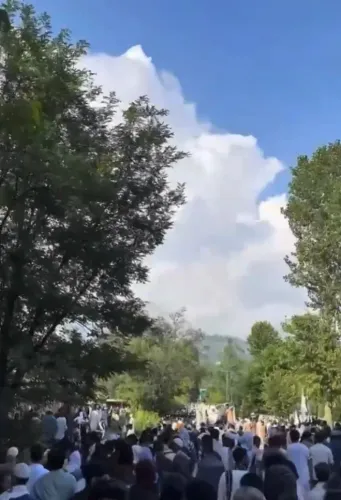
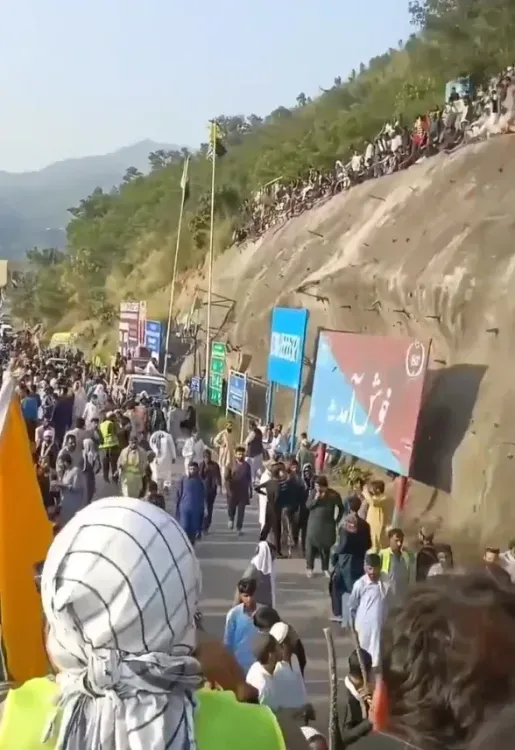
Videos circulating on social media purportedly show Kashmiris gathered near halted supply trucks and raising slogans against Pakistan. A user identified as Burhanuddin wrote on X: “Food transport vehicles heading to Kashmir are being stopped by the Pak Army and not allowed to enter the region. The army has intensified pressure in Kashmir; even food supply deliveries are being restricted. Generals are trying very hard to repeat the history of Bangladesh.”
What the Report Says About Islamabad’s Approach
The Directus report was pointed in its assessment of the Pakistani government’s response to the protests. “The Islamabad government and Pakistan’s military did not want Kashmiris to voice their concerns and sought to suppress the ongoing protests without holding any meaningful dialogue,” it stated, adding: “Smother people. Crush their spirit. How? Stop their access to food, medicines, and social communication.”
Paramilitary forces have reportedly been deployed across PoK to prevent residents from obtaining food supplies. The report argued that Islamabad has taken a “hostile stance” towards Kashmiris, disrupting the region’s lifeline through road and administrative blockades and the destruction of livelihoods largely dependent on tourism.
What Comes Next
The situation in PoK remains fluid, with no indication of dialogue between Pakistani authorities and protest leaders. The reported blockade, if sustained, risks deepening the humanitarian crisis in a region already under significant economic strain. International attention, amplified by social media accounts from residents and diaspora, may increase pressure on Islamabad to ease restrictions.
Point of View
Raiding homes, cutting communications — follow a pattern of collective punishment that international human rights frameworks explicitly prohibit. What makes this moment distinct is that the information blackout is failing: social media posts and diaspora networks are piercing the seal, making the crackdown visible in real time. The Bangladesh comparison invoked by a local resident is not incidental; it reflects a deep institutional memory of what happens when a state turns its military on its own population. Whether that comparison holds will depend on whether international pressure materialises before the humanitarian cost becomes irreversible.
NationPress
30 Sept 2026
Frequently Asked Questions
What is happening in Pakistan-occupied Kashmir right now?
Pakistani security forces have reportedly imposed a blockade across Pakistan-occupied Kashmir (PoK), sealing roads to cities including Muzaffarabad and Rawalakot, cutting internet and satellite services, and blocking food and medicine deliveries. The crackdown is aimed at suppressing protests in which residents are demanding their constitutional rights, according to a 1 July report by Directus.
Why are people in PoK protesting?
Residents of PoK have been protesting to demand their constitutional rights. The Directus report states that Pakistani authorities have refused to engage in meaningful dialogue with protesters, instead opting to suppress dissent through blockades and communication restrictions.
How severe is the food and medicine shortage in PoK?
According to the report, markets across PoK have run out of fresh vegetables and fruits, and essential medicines are difficult to obtain. Vegetables are reportedly being sold at three to four times their normal prices. One resident, Abdul Majid Awan, said police prevented him from entering Muzaffarabad even when he tried to bring medicines in a private vehicle.
Has information from PoK been completely blocked?
Pakistani authorities have suspended internet and satellite services and imposed restrictions on news reporting, according to the Directus report. However, residents have reportedly managed to share accounts of the situation through social media and relatives living outside Kashmir, allowing some information to reach the outside world.
What is the international response to the PoK crackdown?
No formal international response has been reported as of 1 July. The Directus report, published in Athens, is among the outlets drawing attention to the situation. Social media posts and diaspora networks have amplified accounts from residents, but no government or multilateral body has publicly intervened.