Pakistan minority girls face forced conversion and marriage: UN, EU raise alarm
Synopsis
Pakistan's courts and legal system are under sharp international scrutiny as cases of underage Christian and Hindu girls allegedly abducted, forcibly converted, and married multiply. With the UN citing data that 75% of forced-conversion-through-marriage victims in 2025 were Hindu and 25% Christian, and the European Parliament passing a formal resolution, the pressure on Islamabad is no longer just from rights groups — it is now institutional and multilateral.
Key Takeaways
Maria Shehbaz , 13 , and Aneeqa Ishaq , 16 , are two Christian girls from Pakistan whose alleged abduction and forced conversion cases have drawn international concern.
A Pakistani court granted custody of Shehbaz to her alleged captor, Shehryar Ahmad , 30 , after accepting his marriage claim, raising questions about how courts assess minority girls' consent.
UN experts reported in April 2025 that 75% of forced-conversion-through-marriage victims were Hindu and 25% were Christian .
The European Parliament adopted a resolution on 9 July calling for an end to child marriage and protection of Pakistan's religious minorities.
Two minor Hindu sisters, Roopi and Seeta , aged 13 and 14 , were allegedly abducted in Sindh's Tando Allahyar district on 19 September ; rights body VOPM has demanded an independent investigation.
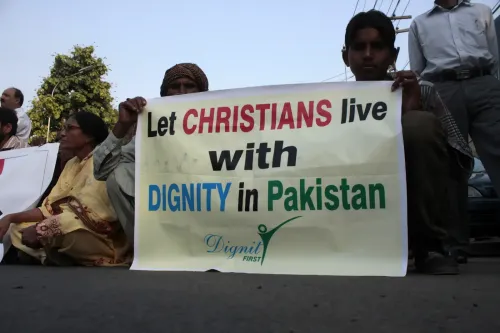
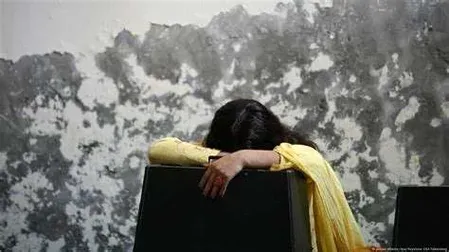
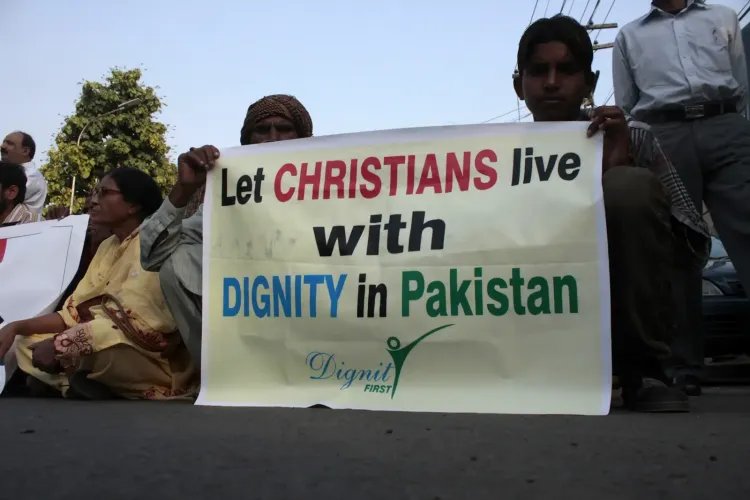
Pakistan is facing intensifying international scrutiny over the alleged abduction, forced conversion, and marriage of underage girls from religious minority communities, with the cases of Maria Shehbaz and Aneeqa Ishaq — both Christian minors — drawing attention from the United Nations, the European Parliament, and global rights groups. The two cases, detailed in a report by the European Times, have arrived at a moment when Pakistan's legal system is under the microscope for how it assesses age and consent in alleged forced conversion cases.
The Cases of Maria Shehbaz and Aneeqa Ishaq
Maria Shehbaz, a 13-year-old Christian girl, was allegedly kidnapped, forced to convert to Islam, and married to Shehryar Ahmad, aged 30, according to Alliance Defending Freedom International. A court subsequently granted Ahmad custody of Shehbaz after accepting his claim regarding the marriage — a decision that sparked concern from the international community about how Pakistani courts evaluate the age and consent of minority girls in such cases.
Aneeqa Ishaq, a 16-year-old Christian girl from Lahore, alleged she was kidnapped while travelling to a church, then forced to convert and sign documents stating she had married voluntarily. Ishaq is reportedly pursuing legal action after allegedly spending months in captivity. The European Times report noted that while the two cases differ in detail, 'both centre on the same question: whether a minority girl can exercise genuine freedom of religion and marriage when she is young, allegedly abducted and separated from her family.'
A Wider Pattern Across Pakistan
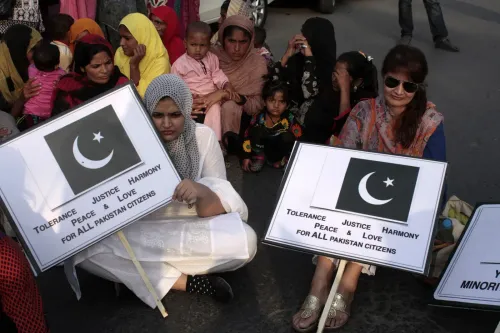
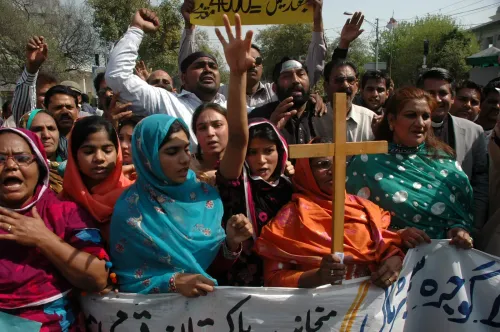
The two cases are not isolated. In April 2025, United Nations experts stated that women and girls from Pakistan's religious minorities continued to face kidnapping and forced conversion through marriage. According to UN data, approximately 75 per cent of those affected by forced conversion through marriage in 2025 were Hindu, while 25 per cent were Christian.
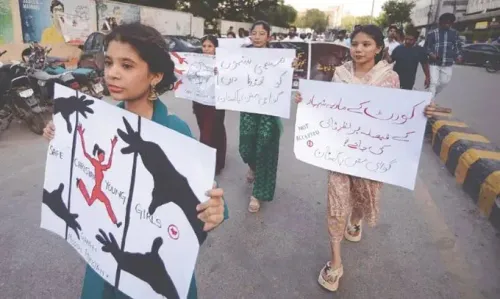
This comes amid a separate case reported on 19 September, in which Voice of Pakistan Minority (VOPM), a minority rights organisation, raised grave concern over the alleged abduction of two minor Hindu sisters — Roopi and Seeta, aged 13 and 14 — from Ibrahim Colony in Tando Allahyar district of Sindh province. According to VOPM, the family alleged the girls were forcibly converted to Islam and compelled to marry two men, Amjad Solangi and Mansoor Solangi. Authorities reportedly presented the sisters before a court, which sent them to a safe house rather than immediately returning them to their family. A video circulating online purportedly showed the girls saying, 'Let us go to our parents' and 'We want to go home.'
VOPM called for an urgent, independent, and transparent investigation, demanding that officials 'interview Roopi and Seeta in a child-sensitive environment, away from alleged husbands, religious figures, intermediaries or anyone who could pressure them,' and provide the girls with independent legal support and protection.
International Response: European Parliament and the UN
The European Parliament adopted a resolution on the human rights situation in Pakistan on 9 July, citing the same UN figures on forced conversion. The resolution called for an end to child marriage and the protection of religious minorities in Pakistan. Rights groups have described it as one of the clearest recent international statements on the issue.
Notably, the European Parliament's resolution drew attention to a structural concern that rights organisations have flagged for years: when a minority girl disappears in Pakistan, a subsequent claim that she converted and married of her own free will can, in practice, function as a legal shield for alleged perpetrators. Critics argue this pattern systematically disadvantages minority families seeking justice through Pakistani courts.
What Rights Groups Are Demanding
Rights organisations are pressing Pakistani authorities to establish child-sensitive interview protocols for minor girls in alleged abduction cases, ensure independent legal representation, and remove alleged perpetrators and intermediaries from the vicinity during any court proceedings. The cases of Maria Shehbaz, Aneeqa Ishaq, and the Sindh sisters are expected to remain under international scrutiny as Pakistan navigates growing pressure from multilateral bodies over its treatment of religious minorities.
Point of View
Independent verification of a minor girl's age or consent. The European Parliament's resolution and UN expert statements are significant not because they are new in substance — rights groups have raised these concerns for years — but because they signal that Pakistan's international partners are running out of patience with inaction. For Islamabad, the diplomatic cost of continued inaction is rising, yet domestic political incentives to reform laws on minority protection remain weak. The real test will be whether international pressure translates into enforceable procedural reform in Pakistani courts, or remains another round of resolutions that go unimplemented.
NationPress
30 Sept 2026
Frequently Asked Questions
Who are Maria Shehbaz and Aneeqa Ishaq?
Maria Shehbaz is a 13-year-old Christian girl from Pakistan who was allegedly kidnapped, forced to convert to Islam, and married to a 30-year-old man named Shehryar Ahmad. Aneeqa Ishaq is a 16-year-old Christian girl from Lahore who alleged she was kidnapped while heading to a church, forcibly converted, and made to sign documents claiming she married voluntarily; she is reportedly pursuing legal action after allegedly spending months in captivity.
What did the European Parliament say about Pakistan's treatment of religious minorities?
The European Parliament adopted a resolution on 9 July calling for an end to child marriage and the protection of religious minorities in Pakistan. The resolution cited UN figures showing that around 75% of women and girls affected by forced conversion through marriage in 2025 were Hindu and 25% were Christian, and has been described by rights groups as one of the clearest recent international statements on the issue.
What is the broader scale of forced conversion cases in Pakistan?
According to UN experts who raised the alarm in April 2025, women and girls from Pakistan's religious minorities continue to face kidnapping and forced conversion through marriage. UN data indicates that approximately 75% of those affected in 2025 were Hindu and 25% were Christian. A separate case involving two minor Hindu sisters in Sindh's Tando Allahyar district was reported as recently as 19 September.
What happened to the two Hindu sisters in Sindh?
Roopi and Seeta, aged 13 and 14, were allegedly abducted from Ibrahim Colony in Tando Allahyar district in Sindh province. Their family alleged they were forcibly converted to Islam and compelled to marry Amjad Solangi and Mansoor Solangi. Authorities reportedly presented them before a court, which sent them to a safe house rather than returning them to their family; a video circulating online reportedly showed the girls pleading to go home.
What are rights groups demanding from Pakistan's government?
The Voice of Pakistan Minority (VOPM) has called for an urgent, independent, and transparent investigation into the Sindh sisters' case. Rights organisations more broadly are demanding that Pakistani authorities interview minor girls in child-sensitive environments, away from alleged perpetrators and intermediaries, and ensure independent legal support and protection for victims.