CM Samrat Choudhary clears ₹2,761 cr to solarise Bihar farm feeders
Synopsis
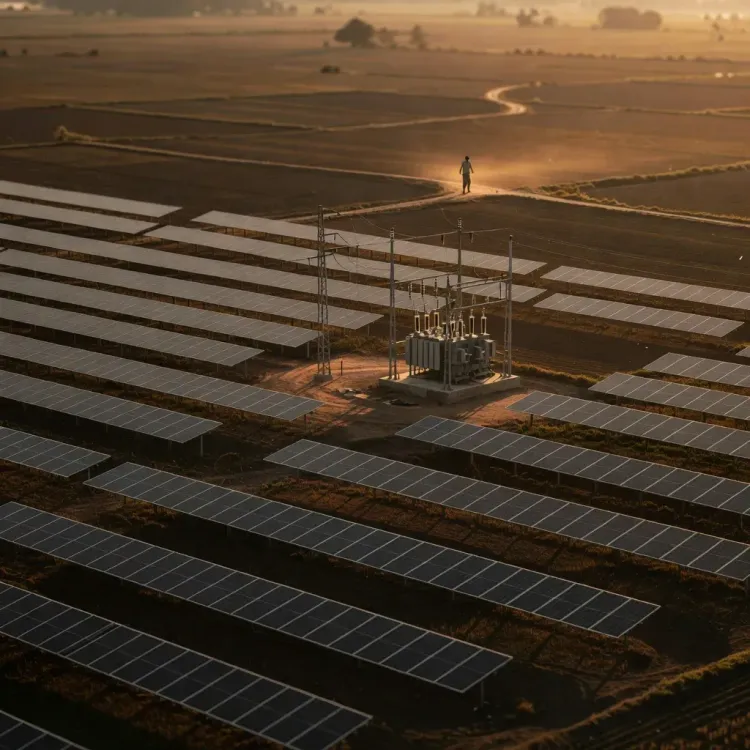
Bihar CM Samrat Choudhary announced a ₹2,761.55 crore cabinet grant to install 2,585 MW of solar plants on all agricultural feeders, covering 946 substations, with ₹47.30 crore in gram panchayat incentives to drive ground-level implementation.
Key Takeaways
Bihar cabinet approved a total grant of ₹2,761.55 crore for agricultural feeder solarisation. ₹2,714.25 crore is allocated for setting up 2,585 MW of solar power plants. ₹47.30 crore will be distributed to gram panchayats as incentives for implementation across 946 electricity substations .
The scheme targets solarisation of all agricultural feeders in Bihar, benefiting the state's farming communities.
The decision aligns with the national PM-KUSUM scheme launched in 2019 to solarise agricultural feeders and pumps.
Gram panchayats are built into the execution chain as co-implementers, not just beneficiaries.
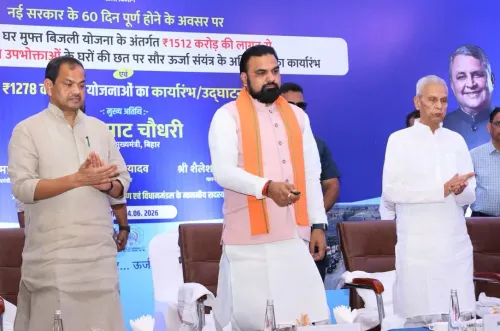
Bihar's 2,585 megawatts of new solar capacity just got a cabinet green light — and the state's farmers are at the centre of it. Bihar Chief Minister Samrat Choudhary announced on Wednesday, 30 September 2026 that the state cabinet has approved a total grant of ₹2,761.55 crore to solarise every agricultural feeder across the state, a decision that could fundamentally reshape how rural Bihar powers its fields.
What ₹2,761 crore buys Bihar's farmers
The cabinet approval breaks into two clear tranches. The larger portion — ₹2,714.25 crore — is earmarked for setting up 2,585 MW of solar power plants dedicated to agricultural feeders. The second tranche of ₹47.30 crore flows directly to gram panchayats as incentive money to drive implementation across 946 electricity substations spread through the state. The panchayat incentive is a deliberate design choice: it pulls local governance into the execution chain, making villages co-owners of the rollout rather than passive recipients.
PM-KUSUM's Bihar chapter scales up
This decision sits squarely within the national PM-KUSUM scheme, launched in 2019 to solarise agricultural feeders and irrigation pumps across India. Bihar has consistently aligned its state cabinet approvals with that central renewable energy framework, but a single tranche of this size — targeting sabhi krishi feeders (all agricultural feeders) — signals a step-change in ambition. Indian states have progressively used feeder solarisation to reduce the subsidy burden on state electricity utilities while simultaneously meeting renewable energy targets; Bihar is now pushing that logic to statewide scale.
946 substations, thousands of villages in the frame
The 946 electricity substations identified for the scheme span Bihar's agricultural heartland, where erratic grid power has long crimped crop yields and forced farmers onto expensive diesel pumps. By anchoring solar generation at the feeder level rather than individual farms, the model delivers reliable daytime power to entire clusters of villages in one stroke. The gram panchayat incentive structure — ₹47.30 crore distributed across those substations — is designed to keep local bodies financially motivated to clear land, coordinate logistics, and monitor progress on the ground.
The phased rollout of 2,585 MW of solar plants and the actual utilisation of panchayat funds will be the real test of whether the cabinet sanction translates into kilowatts in the field. Bihar's agricultural sector, one of the state's economic pillars, is watching closely.
A ₹2,761 crore bet on the sun — now comes the harder part of turning approvals into electrons.
Point of View
585 MW in a single approval — but for its architecture: routing ₹47.30 crore through gram panchayats embeds local accountability into a scheme that has historically struggled with last-mile execution in other states. For the BJP-led NDA government in Bihar, the announcement ahead of any electoral cycle carries clear political signalling toward the farming vote bank. More broadly, it reflects a maturing state-level strategy of using PM-KUSUM as a fiscal lever to reduce electricity subsidy outflows while simultaneously building a renewable energy record — a dual dividend that both New Delhi and state finance departments increasingly prize.
NationPress
30 Sept 2026
Frequently Asked Questions
What is the Bihar agricultural feeder solarisation scheme?
It is a Bihar cabinet-approved plan to install 2,585 MW of solar power plants on all agricultural feeders in the state, funded by a ₹2,761.55 crore grant, aimed at providing reliable daytime power to farmers and reducing dependence on the conventional grid.
How much money has Bihar approved for solar agricultural feeders?
The Bihar cabinet approved a total of ₹2,761.55 crore — ₹2,714.25 crore for solar plant installation and ₹47.30 crore as incentives to gram panchayats for implementation across 946 substations.
What is PM-KUSUM and how does it relate to Bihar's scheme?
PM-KUSUM is a central government scheme launched in 2019 to solarise agricultural feeders and pumps across India. Bihar's cabinet approval aligns with this national framework, scaling distributed solar capacity at the state level.
What role will gram panchayats play in Bihar's solar feeder scheme?
Gram panchayats will receive ₹47.30 crore in incentive funds to support implementation at 946 electricity substations, making local bodies active participants in coordinating and monitoring the rollout.
Who announced the Bihar solar feeder cabinet decision?
Bihar Chief Minister Samrat Choudhary announced the cabinet decision on 30 September 2026, posting the details on X under the hashtags #CabinetDecisions and #NDA4Bihar.