Pakistan MDCAT registrations fall 32% as costs, poor pay dim medicine's appeal
Synopsis
Pakistan's MDCAT registrations have plunged 32% in four years — from over 200,000 to under 140,000 — as soaring private college fees and uncertain doctor pay undermine medicine's decades-old status as the ultimate career aspiration. With vacant seats coexisting alongside priced-out students, the country's medical education model faces a structural reckoning.
Key Takeaways
MDCAT registrations fell nearly 32% , from 204,253 in 2022 to 138,158 in 2026 , according to official figures.
The Pakistan Medical Association (PMA) has linked the trend to high tuition fees and concerns over doctors' pay.
The PMDC flagged a structural gap between undergraduate medical output and available postgraduate training seats.
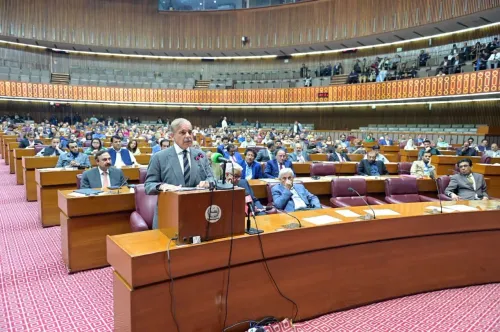
In August 2026 , Pakistan's National Assembly Standing Committee on National Health Services called for a review of vacant seats, fee disparities, and oversight of high-charging institutions.
The crisis reflects a broader erosion of medicine's appeal, compounded by recurring MDCAT controversies and uncertainty over specialist training pathways.
Pakistan's medical education sector is facing renewed scrutiny after registrations for the Medical and Dental College Admission Test (MDCAT) fell by nearly 32 per cent over four years — from 204,253 in 2022 to 138,158 in 2026 — according to a report by British newspaper Asian Lite. The sharp drop is raising fundamental questions about whether a medical career still offers Pakistani youth the financial security and social standing it once promised.
Scale of the Decline
The figures, drawn from official data cited in the Asian Lite report, represent a sustained multi-year contraction in aspiring doctors — not an isolated statistical blip. The Pakistan Medical Association (PMA) has warned that high tuition fees and concerns over doctors' remuneration are fuelling growing disillusionment with medicine as a profession. The Pakistan Medical and Dental Council (PMDC), meanwhile, has drawn attention to a structural mismatch: undergraduate medical output is outpacing postgraduate training opportunities, leaving many graduates in professional limbo.
Financial Burden on Families
For families seeking admission to private medical colleges, the cost of a medical degree is described as both lengthy and financially demanding. Beyond tuition fees, families must absorb expenses covering accommodation, transportation, textbooks, examination preparation, and general living costs — often sustained across five or more years. According to the report, the financial pressure is especially significant when families must commit resources over several years without certainty about their children's eventual earnings or employment.
Students who fail to secure public-sector seats face a stark choice: bear the expense of private education or pivot to an entirely different degree.
Regulatory Gaps and Fee Disparities
Pakistan's medical education sector has also attracted legislative attention over fee disparities between institutions. In August 2026, the National Assembly's Standing Committee on National Health Services asked the concerned ministry and the PMDC to review vacant seats in medical colleges, wide variations in tuition fees, and the oversight of institutions charging above-average rates. The committee's intervention, the report noted, exposed a troubling paradox: seats remain vacant at some medical colleges at the same time as prospective students find the financial bar too high to clear.
Deeper Structural Concerns
The Asian Lite report notes that the registration decline cannot be attributed to a single cause. Alongside financial pressures, aspiring doctors also contend with recurring controversies over the MDCAT entrance examination process and persistent uncertainty about postgraduate training pathways. The report observed that for many, the question is no longer simply whether they can secure a medical college seat, but whether the long and costly journey towards becoming a practising specialist remains worth pursuing.
This comes amid a broader erosion of the social contract that made medicine a generational aspiration for Pakistani families — the promise of professional prestige, stable income, and public service. Notably, the MDCAT registration decline coincides with similar disillusionment trends seen in other South Asian countries, where burgeoning private medical education markets have driven costs beyond middle-class reach.
What Comes Next
The PMDC and the health ministry are yet to announce concrete policy responses to the committee's recommendations from August 2026. Observers say addressing the crisis will require simultaneous action on fee regulation, postgraduate seat expansion, and transparent entrance examination reforms. Without intervention, Pakistan risks a compounding shortfall in its healthcare workforce at a time when demand for trained doctors continues to grow.
Point of View
The profession's value proposition has broken down in a fundamental way. Pakistan's medical education market now has the worst of both worlds: private colleges with vacant seats and a public sector that cannot absorb demand, with no coherent fee or placement policy bridging the two. The Standing Committee's August 2026 intervention was necessary, but recommendations without enforceable timelines rarely move the needle. Unless the PMDC introduces binding fee caps and the government meaningfully expands postgraduate intake, the registration slide will steepen — with real consequences for a healthcare system already stretched thin.
NationPress
7 Nov 2026
Frequently Asked Questions
By how much have Pakistan's MDCAT registrations fallen?
MDCAT registrations fell by nearly 32%, dropping from 204,253 in 2022 to 138,158 in 2026, according to official figures cited in a report by British newspaper Asian Lite. The sustained multi-year decline has placed Pakistan's medical education system under renewed scrutiny.
Why are fewer students registering for the MDCAT in Pakistan?
The Pakistan Medical Association has linked the decline to high tuition fees — especially at private medical colleges — and concerns over doctors' remuneration once they qualify. Recurring controversies over the MDCAT examination process and limited postgraduate training opportunities are also contributing factors.
What is the financial cost of medical education in Pakistan?
Beyond tuition fees, families must cover accommodation, transportation, books, examination preparation, and living expenses over five or more years, often without certainty about their child's eventual income. Students who cannot secure a public-sector seat face a choice between costly private education and switching to a different field.
What action has Pakistan's government taken on medical college fees?
In August 2026, the National Assembly's Standing Committee on National Health Services asked the health ministry and the PMDC to review vacant seats, tuition fee variations, and oversight of institutions charging higher fees. Concrete policy responses from the PMDC and the ministry are yet to be announced.
What structural problem has the PMDC identified in Pakistan's medical sector?
The PMDC has highlighted a mismatch between the number of undergraduate medical graduates produced each year and the number of postgraduate training seats available. This leaves many newly qualified doctors unable to advance to specialist training, compounding doubts about the long-term career prospects of studying medicine in Pakistan.