Pakistan seeks $10 billion US reserve support amid debt pressure

Synopsis
Pakistan's finance minister has quietly asked Washington for a $10 billion financial lifeline — one of the largest bilateral reserve-support requests in the country's recent history. With inflation at 11.7%, energy costs surging, and supply chains rattled by the US-Iran conflict, Islamabad's balance-of-payments position is under severe strain. Diplomatic sources say approval odds are strong, signalling a strategic US interest in keeping Pakistan economically afloat.
Key Takeaways
Muhammad Aurangzeb requested a $10 billion Exchange Stabilisation Support Facility from US Treasury Secretary Scott Bessent .
Pakistan's embassy in Washington confirmed the talks but the official readout did not cite the $10 billion figure.
Diplomatic sources told Dawn there are 'strong chances' the request will receive US approval.
Pakistan's inflation hit 11.7% in May 2025 , with transport and food prices each rising roughly 15% .
The US-Iran conflict has worsened Pakistan's vulnerability due to its heavy reliance on imported energy.
Pakistan's Finance Minister Muhammad Aurangzeb has formally requested US Treasury Secretary Scott Bessent for a $10 billion Exchange Stabilisation Support Facility to shore up the country's foreign exchange reserves and ease mounting debt pressures, according to reports citing a Dawn investigation. The request was confirmed by officials at Pakistan's embassy in Washington, though the embassy's official readout acknowledged Aurangzeb's appeal for US support without specifying the $10 billion figure.
What Pakistan Is Asking For
The proposed facility would allow the US Treasury, through its Exchange Stabilization Fund, to extend loans or other financial backstops directly aimed at strengthening Pakistan's reserves. Aurangzeb's broader pitch to Bessent reportedly covered Pakistan's macroeconomic stabilisation roadmap, including improving access to international capital markets, lifting sovereign credit ratings, and driving export-led growth.
He also raised the adverse economic impact of regional security developments — a reference widely understood to include the fallout from the US-Iran conflict, which has disrupted global supply chains and hit energy-import-dependent economies particularly hard.
Diplomatic Signals From Washington
Diplomatic sources in Washington told Dawn there were 'strong chances' the $10 billion request would receive US approval. The Trump administration is reportedly keen to 'remain engaged' with Islamabad, suggesting the request has political as well as financial dimensions. Pakistan's finance ministry also confirmed the meeting in a post on X, noting that Aurangzeb discussed the country's journey toward macroeconomic stability and sustainable growth with Bessent.
Pakistan's Worsening Economic Backdrop
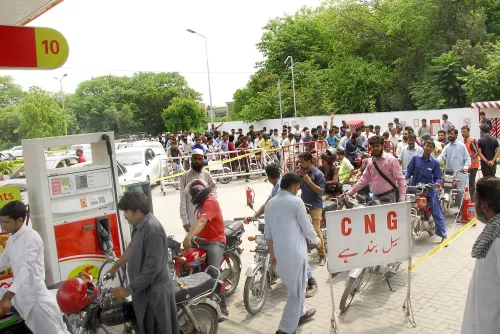
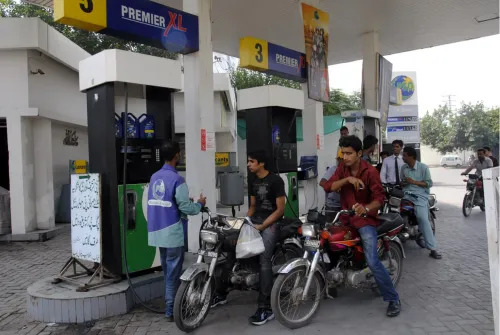
The request comes as Pakistan's economy faces compounding stress. Inflation reached 11.7% in May, driven by a sharp rise in transport costs and perishable food prices — each up approximately 15% — alongside a severe foreign-exchange squeeze and a soaring oil import bill. Economists have warned the country risks slipping into a cycle of weak growth, rising prices, and financial strain, with all these pressures eroding household purchasing power and weighing on broader economic activity.
Pakistan's heavy dependence on imported energy and its fragile balance-of-payments position make it especially vulnerable to external shocks — a structural weakness that the ongoing global supply chain disruptions have exposed further.
What Comes Next
No formal announcement of US approval has been made. If the Exchange Stabilisation Support Facility is granted, it would provide a significant near-term buffer for Pakistan's reserves and could improve its standing with multilateral lenders. Analysts will watch whether the support comes with conditions and how it interacts with Pakistan's existing IMF programme. The outcome of these discussions is expected to shape Pakistan's fiscal trajectory through the remainder of 2025.
Point of View
Even as Islamabad's economic fundamentals remain fragile. The absence of the figure from Pakistan's official readout is telling: it suggests careful calibration of domestic optics against external necessity. What the request does not answer is whether US support would substitute for structural reform or merely delay the reckoning. Pakistan's inflation, energy dependency, and balance-of-payments weakness are not reserve problems — they are policy problems. A liquidity cushion buys time; it does not buy a fix.
NationPress
21 Oct 2026
Frequently Asked Questions
What is the $10 billion Exchange Stabilisation Support Facility Pakistan has requested?
It is a proposed financial backstop through the US Treasury's Exchange Stabilization Fund, under which the US would extend loans or credit lines to strengthen Pakistan's foreign exchange reserves. Finance Minister Muhammad Aurangzeb raised the request in talks with US Treasury Secretary Scott Bessent in Washington.
Has the US approved Pakistan's $10 billion request?
No formal approval has been announced. However, diplomatic sources cited by Dawn said there are 'strong chances' the request will be approved, with the Trump administration reportedly keen to remain engaged with Pakistan.
Why is Pakistan seeking emergency reserve support?
Pakistan's foreign exchange reserves are under pressure from a severe balance-of-payments squeeze, soaring energy import costs, and inflation that hit 11.7% in May 2025. The US-Iran conflict has further disrupted supply chains, worsening the country's external position given its heavy dependence on imported energy.
What did Pakistan's finance ministry say about the Aurangzeb-Bessent meeting?
Pakistan's finance ministry confirmed the meeting in a post on X, stating that Aurangzeb discussed the country's path toward macroeconomic stability, sustainable and export-led growth, and the adverse economic impact of regional security developments.
How does this request fit into Pakistan's broader economic strategy?
Pakistan's economic roadmap centres on improving access to international capital markets, strengthening foreign exchange reserves, and upgrading its sovereign credit ratings. The $10 billion facility, if approved, would provide a near-term buffer and could improve Islamabad's standing with multilateral lenders including the IMF.