Pakistan's LPG crisis: How border closure and failed West Asia diplomacy hurt ordinary citizens
Synopsis
Pakistan's LPG crisis has ripped the cover off a wider policy failure: Islamabad bet on a West Asia mediator role that has not paid off financially or diplomatically, while ordinary citizens pay PKR 700-800 per kilogramme for fuel the regulator prices at PKR 280. The gap between Army Chief Munir's Iran visits and the border that stayed effectively shut tells the whole story.
Key Takeaways
Pakistan's LPG prices jumped from PKR 4,500 to PKR 7,000 for a 12-kg cylinder in some areas after the Pakistan-Iran border was suspended on 17 October .
Iran supplies 50–60% of Pakistan's imported LPG; Qatar's supply has also been suspended due to regional conflict.
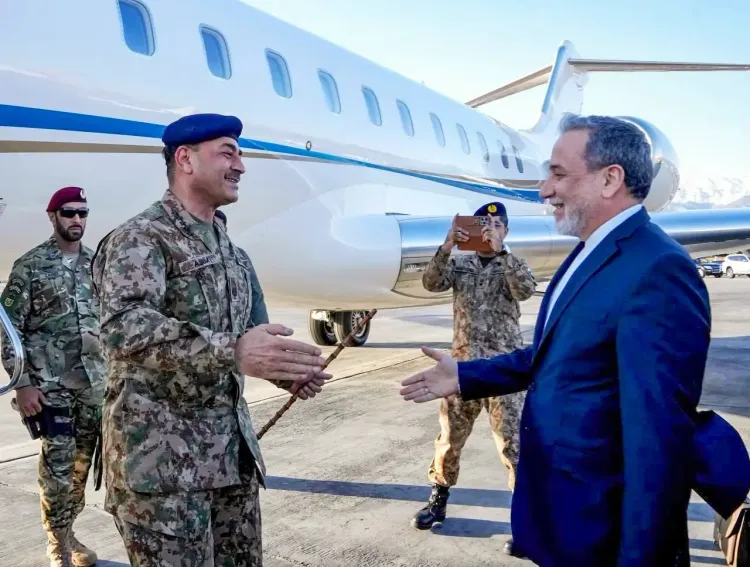
Army Chief Asim Munir visited Iran twice within a week, but his meeting with President Masoud Pezeshkian on 20 October yielded no negotiated border or supply outcome.
Pakistan's bid to position itself as a US-Iran mediator has reportedly stalled, with the main diplomatic channel running through Doha , not Islamabad.
The government says it is exploring sea routes for LPG imports but has given no timeline for relief to affected households.
Pakistan's energy crisis has laid bare the cost of a foreign policy misstep, with ordinary citizens bearing the brunt of a liquefied natural gas (LPG) shortage that analysts link directly to the closure of the Pakistan-Iran border and Islamabad's faltering mediator role in West Asia. The crisis came into sharp focus on 9 November 2026 when analysis citing debates in Pakistan's National Assembly and reporting by Kabul-based Khaama Press detailed the gap between official reassurances and ground reality.
The Energy Arithmetic
Pakistan's Federal Minister for Petroleum, Ali Pervaiz Malik, told the National Assembly that the closure of the Pakistan-Iran border was among the chief reasons for the surge in LPG prices. He acknowledged that 50 to 60 per cent of Pakistan's imported LPG came from Iran, with the remainder sourced from Qatar — supply that has itself been suspended due to the ongoing regional conflict.
The numbers on the ground are stark. Pakistan produces only about a quarter of the LPG it consumes domestically. The official regulator's notified price stood at approximately PKR 280 per kilogramme, yet lawmaker Aliya Kamran told the assembly the fuel was selling for PKR 700 to 800 in remote and northern areas. Traders reported that a 12-kilogramme cylinder jumped from PKR 4,500 to PKR 7,000 within days of the border closure, according to the analysis published by Khaama Press.
The Border Closure Contradiction
On 17 October, Pakistan's Ministry of Commerce suspended traffic at the Gabd-Rimdan and Taftan crossings, citing security and anti-smuggling concerns. The Gabd-Rimdan crossing partially reopened on 24 October, but only consignments documented before the closure were permitted through, and the partial reopening reportedly failed to ease the shortage, citing an editorial in Dawn.
Pakistani lawmaker Naeema Kishwar Khan questioned why trade operations with Iran through the border had been halted — the same closure that ministers blamed for the price hike impacting households without access to piped gas. This internal contradiction within Pakistan's policy narrative drew pointed criticism.
Army Chief's Iran Diplomacy Yields Little
Pakistan's Army Chief General Asim Munir travelled to Iran twice within a single week, with the visits publicly presented as evidence of robust bilateral ties. The Gabd-Rimdan crossing partially reopened four days after the first visit, and Pakistan's military spokesperson asked why Munir would make two visits 'if it is not for same positivity,' according to Khaama Press.
However, Munir's meeting with Iranian President Masoud Pezeshkian on 20 October produced not a negotiated outcome but a public condition: Pezeshkian stated that the US must lift threats and sanctions before any negotiations could proceed, citing Iranian state media. During his second visit on 26 October, Munir met Saudi Defence Minister Prince Khalid bin Salman and Turkish intelligence chief Ibrahim Kalin — the first high-level meeting of signatories to the Mecca Joint Defence Agreement in that configuration. Regional sources cited by The National revealed that Saudi Arabia and its partners asked Iran to restrain the Houthis, while Iranian representatives stressed that Tehran did not have the leverage to compel them. No agreement was announced following the meeting.
Pakistan's Mediator Role Under Scrutiny
Since a US-Iran ceasefire in April, Pakistan had positioned itself as an indispensable channel between the two sides. Critics argue this was 'a financing strategy rather than a diplomatic conviction,' in the words of analyst Ankit Kumar, writing for Khaama Press. According to Kumar, the most serious channel between Washington and Tehran ran through Doha, where Iranian negotiators worked with Qatari mediators — not through Islamabad.
Pakistan reportedly made an unanswered request for US financial assistance, while its defence partner Saudi Arabia was told privately that the Mecca Joint Defence Agreement did not extend to the war being fought against the Houthis. Taken together, critics argue the mediation initiative has failed on its own terms, leaving Pakistan with a gas crisis, strained border relations with Iran, and limited diplomatic leverage.
What Comes Next
The government has said it is making efforts to bring LPG through sea routes to compensate for the land-route shortfall from Iran, though no timeline has been specified. With Qatari supply suspended and Iranian overland supply curtailed, Pakistani households — particularly in areas without piped gas infrastructure — face a prolonged price squeeze. Analysts watching Islamabad's next diplomatic moves suggest the window for a meaningful mediator role is narrowing rapidly as regional negotiations shift away from Pakistani channels.
Point of View
By most analyst accounts, primarily a revenue play — a bid to extract US financial support by presenting itself as a channel to Tehran. That channel has since been bypassed by Doha, the financial support has not materialised, and the Iran border remains functionally closed for new trade. The ordinary Pakistani paying PKR 7,000 for a 12-kg gas cylinder is subsidising a foreign policy gamble that has returned nothing tangible. What mainstream coverage underplays is the institutional contradiction: the army presents the Iran visits as diplomatic success while the Commerce Ministry's own closure order is driving the shortage ministers blame on Iran.
NationPress
9 Nov 2026
Frequently Asked Questions
Why has Pakistan's LPG price surged in late 2026?
Pakistan's LPG prices surged after the government suspended cross-border trade at the Gabd-Rimdan and Taftan crossings with Iran on 17 October, citing security and anti-smuggling concerns. Since Iran supplied 50 to 60 per cent of Pakistan's imported LPG and Qatar's supply has also been suspended due to regional conflict, the shortfall pushed prices in remote areas from PKR 4,500 to PKR 7,000 for a 12-kg cylinder.
What was Pakistan Army Chief Asim Munir's role in the Iran border issue?
General Asim Munir visited Iran twice within a single week, and the Gabd-Rimdan crossing partially reopened four days after his first visit. However, the partial reopening only allowed pre-closure consignments through and failed to ease the LPG shortage, while his meeting with Iranian President Masoud Pezeshkian produced no negotiated outcome.
What is the Mecca Joint Defence Agreement referred to in the reports?
The Mecca Joint Defence Agreement is a pact signed by Saudi Arabia, Pakistan, Turkey, and other partners under which an attack on one signatory is considered an attack on all. During Munir's second Iran visit on 26 October, the first high-level meeting of key signatories — including Saudi Defence Minister Prince Khalid bin Salman and Turkish intelligence chief Ibrahim Kalin — took place in Tehran, reportedly at Munir's proposal.
Has Pakistan's mediation between the US and Iran succeeded?
According to analysts cited by Khaama Press, Pakistan's mediator role has largely failed. The primary Washington-Tehran channel reportedly ran through Doha, where Iranian negotiators worked with Qatari mediators, not through Islamabad. Pakistan's request for US financial support went unanswered, and Iran publicly told Munir that terms for any negotiations were for Washington to meet.
What is the Pakistani government doing to address the LPG shortage?
Federal Minister for Petroleum Ali Pervaiz Malik told the National Assembly that the government is working to bring LPG through sea routes to compensate for the reduction in overland supply from Iran. No specific timeline has been announced, leaving households in areas without piped gas facing a prolonged price squeeze.