Pakistan's mediation between US and Iran operates within China's strategic orbit
Synopsis
A geopolitical analysis argues Pakistan's bid to mediate between the US and Iran is not independent diplomacy — it is Beijing's foreign policy wearing Islamabad's face. With China supplying 80% of Pakistan's arms and underwriting its strategic survival, any message Islamabad carries to Washington or Tehran, the report contends, ultimately serves Chinese interests first.
Key Takeaways
Geopolitical expert Sergio Restelli argues Pakistan 's mediation between the US and Iran operates within China 's strategic orbit, not from a neutral position.
According to SIPRI 2026 data cited in the report, Pakistan's arms imports rose 66 per cent between 2021 and 2025 , with China accounting for 80 per cent of the total.
China 's core interest in West Asia is reportedly stability that protects its energy flows and trade routes — not an Iranian or Pakistani geopolitical win.
Restelli argues Pakistan ceded the Shaksgam Valley in Pakistan-occupied Kashmir to China , marking a foundational asymmetry in the relationship.
The analysis was published in the Times of Israel on the 75th anniversary of China-Pakistan diplomatic relations.
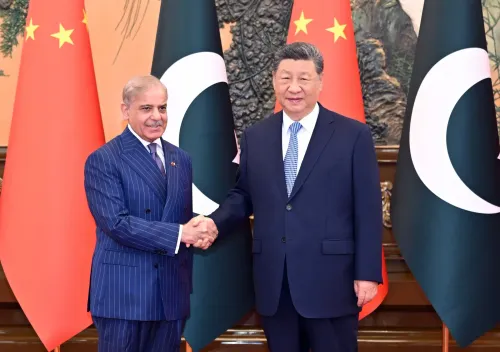
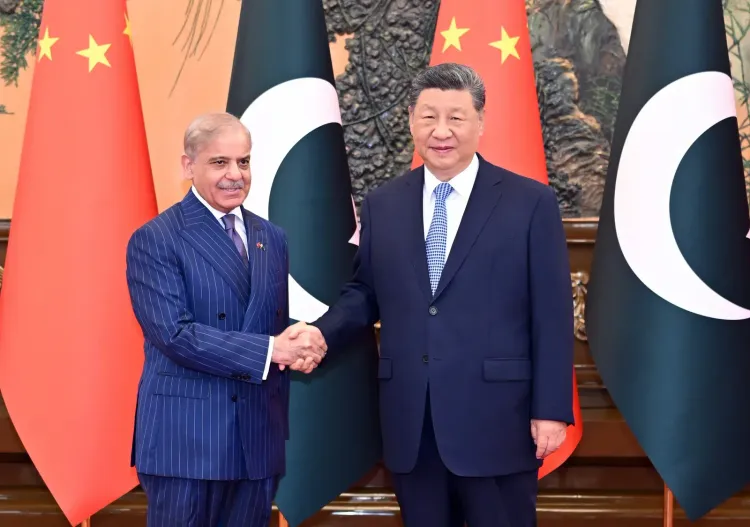
Pakistan's self-styled role as a mediator between the United States and Iran is not rooted in neutrality but is shaped by its deepening strategic dependence on China, according to an analysis by geopolitical expert Sergio Restelli published in the Times of Israel. The report argues that Beijing's interests — not Islamabad's independent judgement — ultimately define the terms of any Pakistani diplomatic intervention in the West Asia conflict.
The Mediation Claim and Its Context
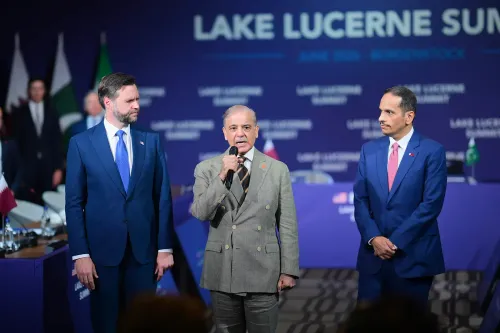
Restelli, an Italian political advisor and author, writes that Pakistan is positioning itself as a broker that can appear useful to Washington, credible to Tehran, acceptable to the Gulf states, and responsible before the wider Muslim world. However, he argues this presentation obscures a structural reality: Islamabad's strategic calculus is inseparable from its relationship with Beijing.
He traces this dependency to territorial concessions, pointing to the Shaksgam Valley in Pakistan-occupied Kashmir — ceded to China — as a foundational marker of the relationship's asymmetry. The analysis situates Pakistan's current diplomatic posture within this longer historical arc.
The Arms Dependency Argument
Citing data from the Stockholm International Peace Research Institute (SIPRI), Restelli notes that Pakistan's arms imports rose by 66 per cent between 2021 and 2025, with China accounting for 80 per cent of the total. He argues this figure is not evidence of diversification but of structural dependency.
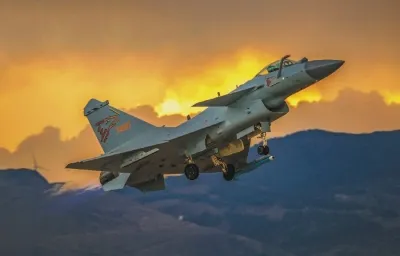
'A country whose military hardware, air defence, aircraft, naval systems and strategic confidence increasingly come from one supplier cannot pretend that its geopolitical judgement is entirely independent of that supplier,' Restelli writes. The breadth of Chinese supply — spanning platforms, systems, and strategic confidence — is presented as evidence that neutrality is structurally unavailable to Pakistan.
What China Wants From the Arrangement
According to Restelli, China's core interest in the West Asia conflict is neither an Iranian victory nor anti-American posturing. Rather, Beijing seeks stability on terms that protect its energy supply chains, restrain US escalation, preserve its ties with Tehran, and prevent a regional war from disrupting Chinese trade routes.
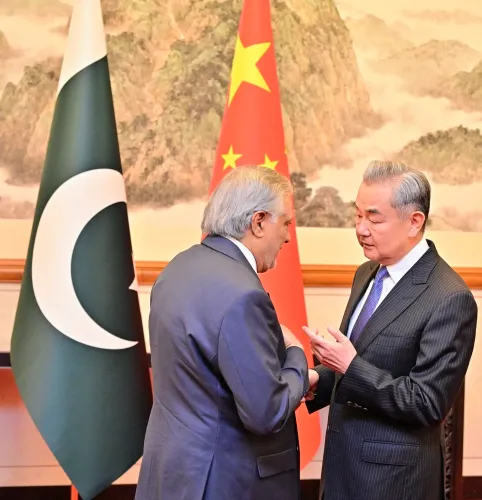
'Pakistan's mediation gives China a useful instrument,' he writes. 'Islamabad can speak where Beijing prefers not to stand too visibly. Pakistan can carry messages, test proposals, reassure Iran, engage Washington and signal to the Gulf, while China remains the larger power in the background.' This framing casts Pakistan less as an independent actor and more as a front-channel for Chinese diplomatic interests.
The Sentiment vs. Strategy Gap
Restelli also addresses the rhetorical scaffolding around the China-Pakistan relationship, which in 2025 marked its 75th anniversary of diplomatic ties. Phrases such as 'all-weather friendship', 'iron brotherhood', 'higher than the Himalayas', and 'deeper than the ocean' are, he argues, emotional language deployed to obscure a colder strategic transaction.
'Behind the theatre lies a colder truth. Pakistan's loyalty lies with China because its strategic survival increasingly depends on China,' he writes. This distinction — between the language of sentiment and the logic of dependency — is central to his critique of Pakistan's credibility as a neutral mediator.
Implications for US-Iran Diplomacy
The analysis raises pointed questions about how Washington and Tehran should weigh Pakistani diplomatic overtures. If Islamabad's mediation ultimately reflects Beijing's preferences, any messages it carries or proposals it floats would need to be assessed through that lens. The report stops short of recommending a specific policy response, but its logic implies that treating Pakistan as a genuinely neutral broker could lead both sides to misread the channel. How the US-Iran nuclear and security negotiations evolve will likely test whether Pakistan's intermediary role holds up under scrutiny.
Point of View
The notion of independent Pakistani diplomatic judgement is analytically strained. Washington, which has historically used Islamabad as a back-channel to adversaries, may be receiving Beijing-filtered signals without fully accounting for the distortion. The deeper question is whether any major power — including the US — is genuinely treating Pakistan as an autonomous actor, or whether all sides already understand the proxy dynamic and are playing along for their own reasons.
NationPress
24 Sept 2026
Frequently Asked Questions
Why is Pakistan's role as a US-Iran mediator being questioned?
According to geopolitical analyst Sergio Restelli, Pakistan cannot be a neutral mediator because its strategic survival depends heavily on China, which supplies 80 per cent of its arms. Since Beijing has its own interests in the US-Iran conflict, any Pakistani mediation is argued to ultimately reflect Chinese preferences rather than independent diplomacy.
What does SIPRI data say about Pakistan's arms imports from China?
SIPRI 2026 data cited in the report shows Pakistan's arms imports rose 66 per cent between 2021 and 2025, with China accounting for 80 per cent of the total. Restelli argues this constitutes structural dependency, not diversification, undermining claims of geopolitical independence.
What is China's interest in the West Asia conflict, according to the report?
China's core interest, according to Restelli, is stability that safeguards its energy supply flows, restrains US escalation, preserves its ties with Tehran, and prevents a regional war from disrupting Chinese trade. It is not invested in an Iranian military victory or anti-American escalation.
How does the Shaksgam Valley relate to Pakistan's China dependence?
Restelli points to Pakistan's cession of the Shaksgam Valley in Pakistan-occupied Kashmir to China as a foundational marker of the asymmetric relationship between the two countries. It illustrates, in his view, that Pakistan's strategic concessions to Beijing predate and underpin its current dependency.
Who is Sergio Restelli and where was this analysis published?
Sergio Restelli is an Italian political advisor, author, and geopolitical expert. His analysis was published in the Times of Israel and examines Pakistan's mediation role in the context of the 75th anniversary of China-Pakistan diplomatic relations.