Palestinian envoy thanks India for not staying silent on Gaza
Synopsis
Palestine's envoy in New Delhi thanked India and Rahul Gandhi for not staying silent on Gaza, and said those who called October 7 a terror attack should also term Gaza a genocide. He stressed historically strong India-Palestine ties and recent Indian backing for Palestinian UNGA resolutions.
Key Takeaways
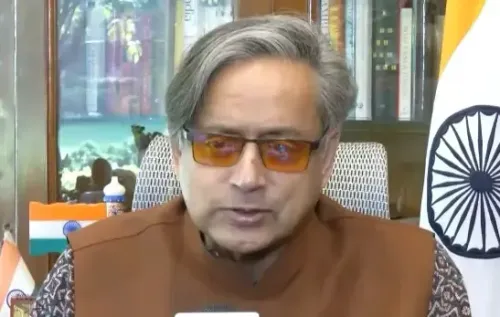
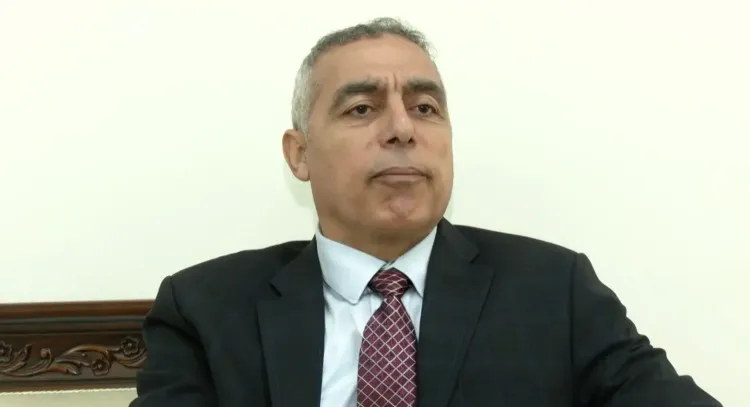
Abu Shawesh , Palestine's Ambassador to India, on Wednesday thanked the Indian government for not remaining silent on Gaza .
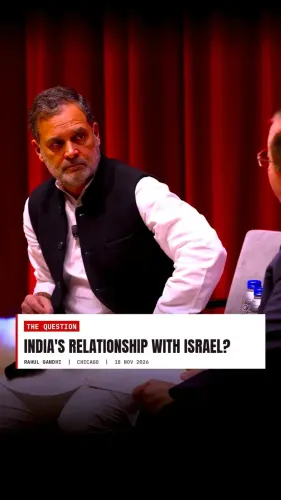
He also thanked the people of India and Leader of Opposition Rahul Gandhi for their public position.
Shawesh urged the world to call Gaza a genocide, as it has called the 7 October attack a terror attack.
He said Gaza has been in the eye of the storm for 1,147 days and alleged daily settler attacks in the West Bank.
He recalled India-Palestine ties spanning more than eight decades and said India recently backed Palestinian resolutions at the UN General Assembly .
He said India-Israel relations, strengthened under Congress more than three decades ago after talks with Yasser Arafat , are not a new issue.
Palestine's Ambassador to India, Abdullah M. Abu Shawesh, on Wednesday thanked the Indian government for not remaining silent on Gaza and described India-Palestine ties as historically strong. Speaking in New Delhi, the envoy also thanked the people of India and Lok Sabha Leader of Opposition Rahul Gandhi for arguing that close ties with Israel should not mean silence on Gaza, while urging the world to call the Gaza campaign a genocide in the same way it has labelled the 7 October attacks as terrorism.
Envoy thanks India and Rahul Gandhi
Reacting to Gandhi's recent comments, Shawesh said this was another very important point. He extended thanks to the Government of India, which he said has not remained silent in Gaza, to the people of India, and to Gandhi for declaring his position. He added that no one should remain silent on what happened in Gaza, but that this is not the end of the issue.
The ambassador also said there was nothing new in Gandhi's remarks, because India already has good ties with Israel and will continue to share good relations with Israel in the future. Recalling how those ties were built, he said India strengthened relations with Israel under the Indian National Congress more than three decades ago, after discussions with Palestinian leader Yasser Arafat.
“When India started or strengthened its relations with Israel, it was under the Congress ruling party three plus decades ago. And it was with the discussion with Yasser Arafat at that time when they called Yasser Arafat and told him at that time that we are going to strengthen our relations with Israel. So, that there is, from my point of view, there is no new issue in his declaration, I mean, Mr. Gandhi declaration,” he said.
Call to term Gaza events a genocide
Shawesh argued that the international community, which has called the 7 October attack a terror attack, should also describe the attacks in Gaza as genocide. He presented this as a factual claim rather than political commentary, citing what he said were findings of the United Nations, an Israeli watchdog and genocide experts.
“Likewise, everyone is calling it October 7th as a terror attack. We would like also those exact people to call what happened in Gaza as a genocide, what happened in Gaza as a real genocide,” he said. He added: “This is not our world. This is not opinion. This is not political commentating; it's a real issue. What happened in Gaza is a genocide. This is according to the United Nations, according to the Israeli watchdog, and according to all experts in the genocide; this is exactly genocide.”
He urged political commentators and leaders across the world not just to tackle Gaza but to declare it an “Israeli genocidal war in Gaza” and to speak about what people have been facing in the West Bank. His principal concern, he said, is unbalanced wording: when someone describes October 7 as a terror attack and then describes the campaign in Gaza merely as violence.
“This is an unbalanced situation and an unbalanced wording that many unfortunately still using it. This is our main concern when it came again to the Palestinian India or Palestinian and international relation worldwide,” he said. These characterisations remain the envoy's own statements.
West Bank and settler violence
Shawesh said Gaza has been in the eye of the storm for 1,147 days, but that events in the West Bank also demand attention. He alleged that Palestinians there endure, at a daily pace, tens of terror attacks at the hands of what he called Israeli Jewish terrorist attackers and Jewish fanatic settlers.
He pointed to comments by Gadi Eisenkot, whom he described as most probably the upcoming Israeli Prime Minister, made less than a week earlier. According to Shawesh, Eisenkot said “clear and loud” that “It is a Jewish terror attack.” The description of Eisenkot as a probable future prime minister is the ambassador's assessment, not a confirmed political outcome.
Historical ties and India's UNGA stance
On bilateral relations, Shawesh said India and Palestine share a historical relationship extending more than eight decades — and, in a further remark, eight centuries — recalling how Baba Farid from India went to Jerusalem, which he called the most holy place for Muslims and Christians worldwide, and established Indian auspices there.
He said the relationship remains good to this day and that, just three or four days earlier, India had strongly supported and backed more than one Palestinian resolution in the United Nations General Assembly. “I believe the relation between India and Palestine likewise it was a good relation, strong relation, it would continue likewise,” he added.
This comes amid a continuing debate in India over how to speak about Gaza while retaining strategic ties with Israel. Notably, the envoy folded a domestic political intervention — Gandhi's remarks — into a diplomatic message that New Delhi has not been silent. How India balances historic Palestine solidarity, its UN voting record and its partnership with Israel will remain the core question in the weeks ahead.
Point of View
Opened under Congress with Yasser Arafat in the loop, are here to stay. By thanking both the Centre and Rahul Gandhi, Shawesh is playing to every side of the Indian debate rather than picking one. The real pressure point is vocabulary: Palestine wants October 7 and Gaza described with matching moral intensity, which no Indian government has fully done. New Delhi's test is whether it can keep a security and technology partnership with Israel without appearing indifferent to Palestinian civilian suffering — and whether UN votes will continue to carry more weight than ambassadorial praise.
NationPress
25 Nov 2026
Frequently Asked Questions
What did the Palestinian ambassador say about India and Gaza?
Palestine's Ambassador to India, Abdullah M. Abu Shawesh, on Wednesday thanked the Indian government, the people of India and Rahul Gandhi for not remaining silent on Gaza. He described India-Palestine ties as historically strong and said they would continue.
How did the envoy respond to Rahul Gandhi's remarks on Israel and Gaza?
Shawesh thanked Gandhi for declaring that good ties with Israel should not mean silence on Gaza, but said there was nothing new in the remark. He noted that India already has good relations with Israel, strengthened under Congress more than three decades ago after discussions with Yasser Arafat.
Why does the Palestinian envoy want Gaza called a genocide?
Shawesh argued that those who call the 7 October attack a terror attack should also call what happened in Gaza a genocide, citing what he said were assessments by the United Nations, an Israeli watchdog and genocide experts. He called it unbalanced wording when Gaza is described merely as violence.
What did the ambassador say about the West Bank?
He said Gaza has been in the eye of the storm for 1,147 days, but that Palestinians in the West Bank face daily attacks by what he called Jewish fanatic settlers. He also cited comments by Gadi Eisenkot, whom he described as a probable future Israeli prime minister.
What did he say about historical India-Palestine ties?
Shawesh said India-Palestine relations extend more than eight decades, recalling Baba Farid's visit to Jerusalem and the establishment of Indian auspices there. He added that India had, three or four days earlier, backed more than one Palestinian resolution at the UN General Assembly.