Pentagon's $450 million bet on Elmet to cut China's 85% tungsten grip
Synopsis
The Pentagon is betting $450 million on a single American company to break China's stranglehold on tungsten — a metal inside the F-35, Trident missiles and nuclear submarines. With Beijing controlling 85% of global supply, Washington is now taking an equity stake in its only fully integrated domestic producer and building North America's first independent ammonium paratungstate plant. The stakes are as much strategic as industrial.
Key Takeaways
The Pentagon announced a $450 million investment in The Elmet Group on 14 September 2026 to expand US tungsten processing.
China controls an estimated 85 per cent of global tungsten supply, which the department identifies as a critical vulnerability.
Elmet supports more than 100 military programmes , including the F-35 , Patriot PAC-3 , Trident D5 and Virginia- and Columbia-class submarines.
Funding begins with an initial $200 million drawdown; the department receives equity and warrants of up to 19.9 per cent of Elmet's common stock.
The investment will establish the only independent ammonium paratungstate production facility in North America .
The Pentagon projects support for approximately 1,200 downstream jobs across manufacturing, engineering and logistics — these are projected, not yet created.
The Pentagon has announced a $450 million investment in The Elmet Group, the only US-owned fully integrated producer of tungsten and molybdenum, to expand domestic production and reduce American dependence on China, which controls an estimated 85 per cent of global tungsten supply. The move, announced on 14 September 2026, is aimed at securing materials critical to the manufacture of missiles, fighter aircraft and submarines.
Why Tungsten Matters for US Defence
Tungsten is prized for its exceptional hardness, density and resistance to extreme heat and wear — properties that make it indispensable across military platforms. The Pentagon identifies its uses in missiles, munitions, aerospace propulsion systems, naval vessels and electronics.
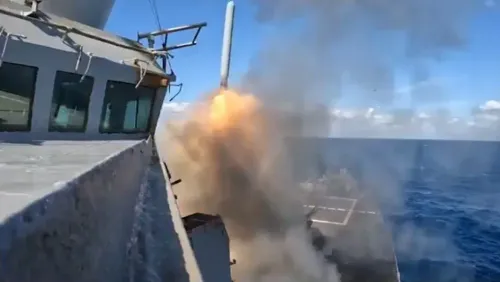
Elmet currently supports more than 100 military programmes, including the F-35 fighter jet, the Patriot PAC-3 air defence system, the Trident D5 ballistic missile, and Virginia- and Columbia-class submarines. This investment is designed to ensure those supply lines remain insulated from geopolitical disruption.
The Ammonium Paratungstate Chokepoint
A central focus of the investment is ammonium paratungstate (APT), a key intermediate compound in tungsten processing. The Pentagon said the funding will establish the only independent APT production facility in North America, plugging what it described as a critical vulnerability in the US industrial base.
George K. Kollitides II, director of the Pentagon's Economic Defense Unit, said the unit was 'created to identify critical industrial chokepoints before adversaries can exploit them and before they become battlefield risk.' He added that the investment would protect a domestic processing capability essential to sustaining military production.
What the Investment Structure Looks Like
Elmet confirmed the $450 million commitment, with an initial $200 million drawdown at closing, followed by further tranches. In return, the Department of Defense will receive preferred equity and warrants representing up to 19.9 per cent of Elmet's common stock on a post-transaction basis. The department will also be entitled to appoint an independent director and a non-voting board observer.
The company said it plans to invest more than $165 million in its manufacturing operations across Maine, Michigan and Ohio, with capacity expansions and facility modernisation targeted at both defence and industrial customers.
Jobs and Economic Impact
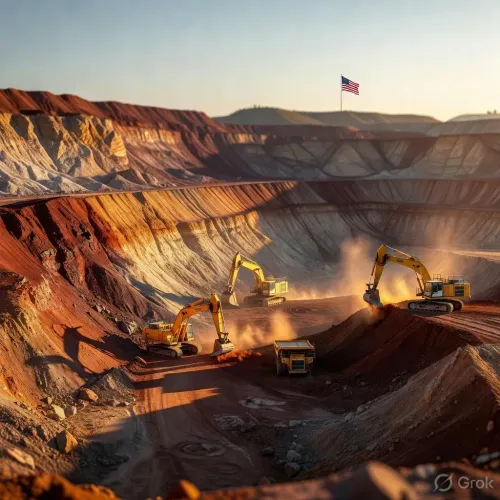
The Pentagon projects job creation in Coldwater, Michigan, and Lewiston, Maine, along with the preservation of manufacturing roles in Euclid, Ohio, and increased demand for mining jobs in Nevada. Separately, the department estimated the investment would support approximately 1,200 downstream jobs across manufacturing, engineering and logistics networks that serve major defence suppliers — though these are projected benefits, not positions already created.
Mike Cadenazzi, assistant secretary for industrial base policy, said the move 'reflects the Department's commitment to rebuilding critical industrial capacity in the United States,' adding that 'expanding domestic tungsten processing will strengthen supply chain resilience, support high-quality manufacturing jobs, and reinforce the production base behind essential defense systems.'
Broader Context: Decoupling from Chinese Critical Minerals
The Elmet investment is the latest in a series of US measures to reduce reliance on Chinese-controlled critical mineral supply chains. This comes amid an intensifying strategic competition between Washington and Beijing, with rare earths and critical materials emerging as a key theatre. China has previously signalled its willingness to restrict exports of such materials in response to US tariffs and technology controls. With tungsten so deeply embedded in advanced weapons systems, supply disruption could, in theory, constrain US military production capacity — a vulnerability Washington is clearly moving to close.
Point of View
Meaning supply disruption is not a trade inconvenience but a potential operational constraint. The equity-and-warrants structure, giving the Pentagon a near-20% stake and board rights, signals that Washington is prepared to become an industrial investor, not just a customer — a significant departure from its typical posture. The harder question is whether a single company, however well-funded, can durably compete against state-backed Chinese producers operating at scale. The ammonium paratungstate plant is the right first move, but the timeline to meaningful self-sufficiency will be measured in years, not months.
NationPress
15 Sept 2026
Frequently Asked Questions
Why is the Pentagon investing $450 million in tungsten production?
The Pentagon is investing $450 million in The Elmet Group to reduce US dependence on China, which controls roughly 85 per cent of global tungsten supply. Tungsten is a critical material used in the F-35 fighter, Patriot PAC-3 missiles, Trident D5 ballistic missiles and Virginia- and Columbia-class submarines, making supply security a direct defence readiness issue.
What is The Elmet Group and why was it chosen?
The Elmet Group is described by the Pentagon as the only US-owned, fully integrated producer of tungsten and molybdenum materials and components. It currently supports more than 100 military programmes, making it the natural anchor for efforts to rebuild domestic critical-mineral processing capacity.
What is ammonium paratungstate and why does it matter?
Ammonium paratungstate (APT) is a key intermediate compound in the tungsten processing chain. The Pentagon identified the absence of an independent North American APT facility as a major chokepoint in the US industrial base; the Elmet investment will establish the only such facility on the continent.
What does the US government get in return for the investment?
The Department of Defense will receive preferred equity and warrants representing up to 19.9 per cent of Elmet's common stock on a post-transaction basis. It will also have the right to appoint an independent director and a non-voting board observer, giving Washington direct oversight of the company's strategic direction.
How many jobs will the Elmet investment create?
The Pentagon projects job creation in Coldwater, Michigan, and Lewiston, Maine, along with preserved manufacturing roles in Euclid, Ohio, and increased mining demand in Nevada. It separately estimated support for around 1,200 downstream jobs across manufacturing, engineering and logistics — though these are projected benefits rather than positions already created.