Peru declares fuel supply emergency over El Nino disruption threat
Synopsis
Peru has extended its El Nino response to the country's energy lifeline — declaring a national fuel supply emergency for up to eight months. With hydrocarbons powering 67% of the national energy mix, the government is racing to protect refineries, storage sites, and distribution networks against floods and landslides before the peak rainfall season hits.
Key Takeaways
Peru declared a national fuel supply chain emergency to protect the hydrocarbon sector from El Nino -linked disruptions.
The emergency covers the entire chain — processing, refining, storage, and marketing — and will remain in force for up to eight months .
Hydrocarbons account for 67% of Peru's national energy mix, making the sector critical to electricity and essential services.
Peru's Supervisory Authority for Energy and Mining Investment is responsible for assessing conditions and directing response measures.
On 3 November , Peru had already declared a 60-day state of emergency across 1,380 districts in 24 departments over El Nino rainfall threats.
The earlier emergency was based on an October 30 risk assessment by Indeci , which warned of intensifying rainfall in the central equatorial Pacific.
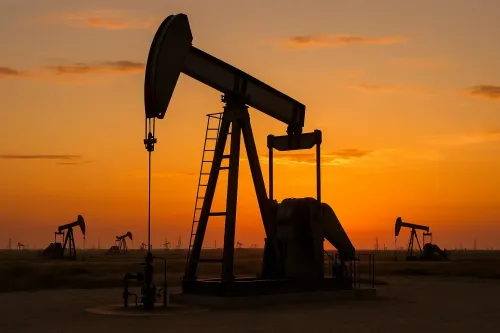
Peru has declared a national emergency in its fuel supply chain to prevent potential disruptions to the country's hydrocarbon sector caused by the El Nino weather phenomenon. The measure, published in the official gazette El Peruano, will remain in force for up to eight months from the day after its publication, according to Peru's Ministry of Energy and Mines.
What the Emergency Declaration Covers
The Ministry of Energy and Mines said the declaration encompasses the entire hydrocarbon supply chain — from processing, refining, and storage through to marketing. 'The declaration covers the entire hydrocarbon supply chain, from processing, refining and storage to marketing, considering that heavy rains, floods, mudslides and landslides could affect the sector's strategic infrastructure, in different regions of the country,' the ministry said in a statement.
The emergency is designed to address disruptions that could impact transportation, production, trade, and essential public services, including electricity supply. Hydrocarbons — comprising crude oil, natural gas, liquid fuels, and liquefied petroleum gas — account for 67% of Peru's national energy mix, underscoring the stakes of any supply interruption.
Who Is Responsible for the Response
Peru's Supervisory Authority for Energy and Mining Investment has been tasked with assessing conditions on the ground and determining measures needed to manage the emergency. The authority will work in coordination with relevant ministries and public and private institutions to adopt what the ministry called 'timely measures' to ensure nationwide fuel availability.
Context: A Broader El Nino Emergency
The fuel supply declaration follows a wider emergency order issued by Peru on 3 November, when the government declared a 60-day state of emergency across 1,380 districts in 24 departments and the Constitutional Province of Callao — covering regions including Amazonas, Ancash, Apurimac, Arequipa, Ayacucho, Cajamarca, Cusco, Huancavelica, Huanuco, Ica, Junin, La Libertad, Lambayeque, Lima, Loreto, Madre de Dios, Moquegua, Pasco, Piura, Puno, San Martin, Tacna, Tumbes, and Ucayali.
That earlier measure was grounded in an October 30 risk assessment by the National Institute of Civil Defence (Indeci), which flagged those districts as facing particularly high exposure to intense rainfall. Indeci warned that the continuation of coastal El Nino conditions — combined with its development in the central equatorial Pacific — could significantly raise the likelihood of extreme weather events, warranting urgent government intervention.
Immediate Actions and What Comes Next
Under the existing emergency decree, regional and local governments are conducting coordinated disaster-response measures with technical support and oversight from Indeci. These include immediate risk-reduction actions, emergency responses, and rehabilitation work aimed at protecting vulnerable communities.
With 67% of Peru's energy mix dependent on hydrocarbons, the fuel supply emergency signals that authorities are treating the El Nino threat as a systemic economic risk — not merely a humanitarian one. The coming months will test whether pre-emptive declarations translate into resilient infrastructure and uninterrupted supply across affected regions.
Point of View
A supply interruption would cascade into electricity shortfalls and production losses well beyond the directly flooded areas. What is less clear is whether the emergency declaration is paired with the capital investment and infrastructure upgrades needed to actually weatherproof critical facilities, or whether it primarily creates a legal shortcut for faster procurement. South American nations have repeatedly declared El Nino emergencies only to find that pre-emptive declarations outran pre-emptive action. Peru's real test will come in the months ahead, when the rains arrive.
NationPress
19 Nov 2026
Frequently Asked Questions
Why has Peru declared a fuel supply emergency?
Peru declared a national emergency in its fuel supply chain to prevent potential disruptions caused by the El Nino weather phenomenon, which is expected to bring heavy rains, floods, mudslides, and landslides. The emergency covers the entire hydrocarbon supply chain and will remain in force for up to eight months.
How much of Peru's energy depends on hydrocarbons?
Hydrocarbons — including crude oil, natural gas, liquid fuels, and liquefied petroleum gas — account for 67% of Peru's national energy mix, according to the Ministry of Energy and Mines. This makes the sector critical to electricity supply and essential public services across the country.
Which areas of Peru are covered by the broader El Nino emergency?
A 60-day state of emergency declared on 3 November covers 1,380 districts across 24 departments and the Constitutional Province of Callao. Affected regions include Amazonas, Ancash, Arequipa, Cusco, Lima, Loreto, Piura, Puno, Tumbes, and others.
Who is responsible for managing Peru's fuel supply emergency?
Peru's Supervisory Authority for Energy and Mining Investment is tasked with assessing the situation and determining the measures needed to address the emergency. Regional and local governments will also conduct coordinated emergency actions with technical support and oversight from the National Institute of Civil Defence (Indeci).
How does this fuel emergency relate to the earlier El Nino emergency?
The fuel supply emergency is a sector-specific follow-up to a broader 60-day national emergency declared on 3 November across 1,380 districts. While the earlier decree focused on disaster risk reduction and community protection, the new declaration specifically targets Peru's hydrocarbon infrastructure to ensure uninterrupted energy supply during the El Nino season.