PoK unrest: Targeted killings, disappearances deepen crisis as protests enter third month
Synopsis
Three months in, PoK's protest movement is facing a calculated campaign of fear — targeted civilian killings, a PKR 1 crore bounty on organisers, and a communications blackout that keeps the true toll hidden. As Turkey's Erdogan raises Kashmir at the UNGA, the situation on the ground in Pakistan's own administered territory tells a starkly different story.
Key Takeaways
Protests in Pakistan-occupied Kashmir (PoK) have continued for nearly three months with no signs of abating.
Officials allege Pakistani security forces are conducting targeted killings of civilians unconnected to the protests to instil fear.
Two motorcyclists were targeted in Rawalakot this week — one killed, one injured; security forces reportedly refused to hand over the deceased's body.
A communications blackout and Pakistani media silence have made it impossible to verify the full toll of deaths, disappearances, and arrests.
An Intelligence Bureau official confirmed a PKR 1 crore bounty was placed on protest organisers even as peace talks were publicly offered.
Protest demands have expanded from basic civic amenities to electoral reforms , following alleged attempts to rig elections in favour of PML-N .
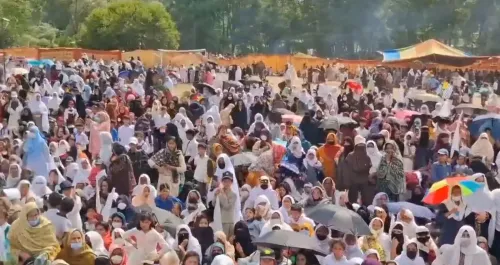
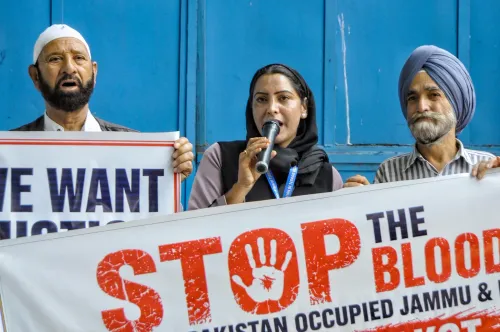
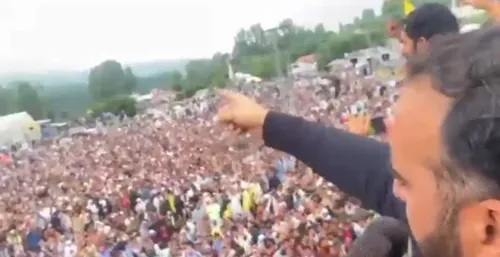
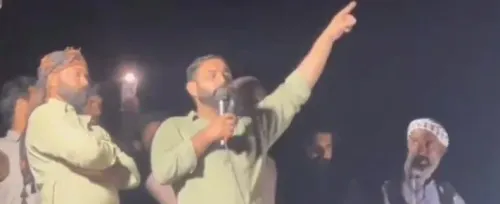
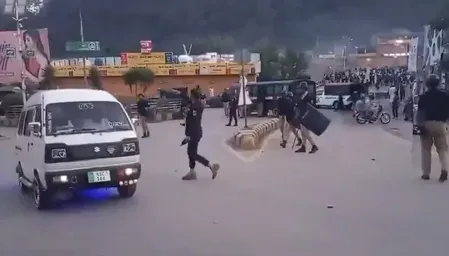
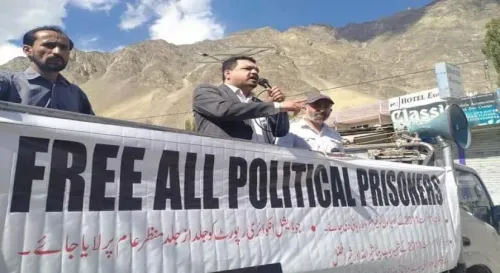
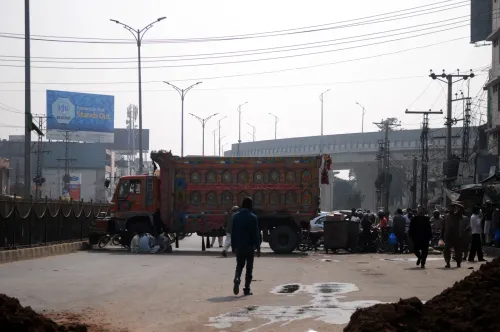
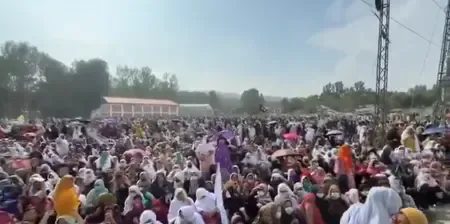
Pakistan-occupied Kashmir (PoK) is witnessing a sharp deterioration in ground conditions, with protests now entering their third consecutive month and reports of enforced disappearances, targeted killings, and a near-total communications blackout raising alarm among officials tracking the situation. Demonstrators have accused Pakistani security forces of resorting to lethal tactics to suppress the agitation, with the latest incidents reported from Rawalakot.
Pattern of Targeted Violence
According to officials, the security forces have shifted tactics from direct dispersal of protesters to what is being described as targeted killings of civilians with no direct connection to the protests. 'The security forces are indulging in targeted killings — they randomly shoot and kill people who are not even connected with the protest. The idea is to instil fear in the minds of the people so that they put pressure on the protesters to withdraw,' officials said.
Earlier this week, two separate incidents were reported from Rawalakot, in which two motorcyclists were targeted. One person died and the other sustained injuries. Pakistani security forces reportedly refused to hand over the body of the deceased, compounding tensions in the area.
Communications Blackout and Media Silence
A complete communications blackout has reportedly been imposed across PoK, making it extremely difficult for verified information to emerge from the region. Pakistani media has largely remained silent on the unfolding situation, which officials say explains why the precise number of enforced disappearances, deaths, and arrests remains unknown to the outside world.
This information vacuum, critics argue, allows the Pakistani establishment to suppress documentation of alleged human rights violations. The blackout follows an established pattern seen in earlier crackdowns on dissent in the region.
Bounty on Protest Organisers, Broken Peace Agreements
An Intelligence Bureau official noted a striking contradiction in the Pakistani government's approach: even as formal peace overtures were made, authorities simultaneously announced a bounty of PKR 1 crore on individuals organising the protests. Protesters who initially trusted the establishment and signed peace agreements have since alleged that several signatories were subsequently killed or went missing.
'On the one hand, they appeal for peace, while on the other, they are carrying out targeted killings of innocent people in the region,' an official said, characterising the Pakistani approach as duplicitous.
From Civic Demands to Electoral Reform
The protests originally erupted over demands for basic civic amenities — reliable water supply, functional roads, and accessible medical facilities. However, the scope of demonstrators' demands has since widened to include electoral reforms, after allegations emerged that the Pakistani establishment was attempting to rig elections in PoK in favour of the Pakistan Muslim League–Nawaz (PML-N).
Officials tracking the crisis believe Pakistan has no genuine intention of resolving the underlying grievances. 'It would do everything it can to suppress dissent through force, even if it means that human rights violations go up manifold,' one official said.
India's Position and the Erdogan Factor
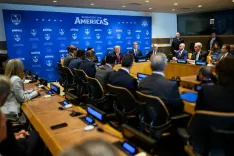
The crisis in PoK has coincided with Turkish President Recep Tayyip Erdogan raising the Kashmir issue at the United Nations General Assembly (UNGA), calling for a peaceful resolution through dialogue within the framework of the UN Charter. India has reiterated its longstanding position: Jammu and Kashmir is an integral part of the country and no outside intervention will be entertained.
Notably, Erdogan's remarks come at a moment when atrocities are reportedly continuing unabated within PoK itself — a region administered by Pakistan, his close strategic ally — drawing attention to what critics describe as a fundamental contradiction in Islamabad's international posturing on Kashmir.
With the communications blackout still in place and reports of targeted killings continuing, independent verification of conditions in PoK remains severely constrained. The trajectory of the crisis will likely depend on whether international human rights bodies can secure access to the region.
Point of View
And the reputational cost for Islamabad will be compounded by the timing of Erdogan's UNGA remarks. More significantly, the expansion of demands from roads and water to electoral reform signals that this is no longer a grievance movement — it is a legitimacy crisis for Pakistan's authority in PoK, and those rarely resolve through force alone.
NationPress
23 Sept 2026
Frequently Asked Questions
Why are there protests in Pakistan-occupied Kashmir?
The protests began nearly three months ago over demands for basic civic amenities including water supply, roads, and medical facilities. They have since expanded to include calls for electoral reform, after demonstrators alleged the Pakistani establishment was attempting to rig local elections in favour of the PML-N.
What are the allegations of targeted killings in PoK?
Officials tracking the situation allege that Pakistani security forces have shifted from directly attacking protesters to killing civilians with no connection to the protests, in order to instil fear and pressure demonstrators to withdraw. Two separate incidents were reported this week in Rawalakot, where two motorcyclists were targeted — one fatally.
What is the communications blackout in PoK?
A near-total communications blackout has reportedly been imposed across PoK, severely restricting the flow of verified information from the region. Pakistani media has also remained largely silent on the crisis, meaning the actual number of deaths, enforced disappearances, and arrests is not publicly known.
What is the PKR 1 crore bounty linked to the PoK protests?
An Intelligence Bureau official stated that even as Pakistani authorities made formal peace overtures to protesters, they simultaneously announced a bounty of PKR 1 crore on those organising the demonstrations. Several protesters who signed peace agreements have since allegedly been killed or gone missing.
How has India responded to the situation in PoK?
India has reiterated its longstanding position that Jammu and Kashmir is an integral part of the country and that no outside intervention on the issue will be accepted. The remarks came in the context of Turkish President Recep Tayyip Erdogan raising the Kashmir issue at the UN General Assembly, calling for a dialogue-based resolution.