Qatar halts all maritime activity amid Iran attacks, Hormuz crisis

Synopsis
Qatar has halted all civilian maritime activity following Iranian attacks on its territory — a dramatic escalation that coincides with Iran's declared closure of the Strait of Hormuz. With a 'severe' mine threat in the traditional shipping lane and US forces backing a southern Omani alternative, the Gulf's most critical energy chokepoint is now effectively a contested waterway.
Key Takeaways
Qatar's Ministry of Transport suspended all maritime navigation and marine activities on 12 July until further notice.
Qatar's Foreign Ministry condemned renewed Iranian attacks on its territory as a 'flagrant violation of sovereignty and international law.' The maritime security threat level in the Strait of Hormuz has been rated 'severe' , with a mine danger area in the traditional Traffic Separation Scheme.
NAVCENT confirmed the southern route along the Omani coast remains open and has been expanded for two-way traffic.
Two alternative Hormuz transit routes now exist: a northern route under Iranian control and a southern route supported by US forces .
Vessels operating under international maritime conventions are exempt from Qatar's suspension order.
Qatar's Ministry of Transport on Sunday, 12 July announced a temporary suspension of all maritime navigation and marine activities as a precautionary measure, citing heightened security concerns linked to renewed Iranian attacks targeting the country and several neighbouring nations. The directive covers all watercraft — from leisure boats and fishing vessels to jet skis — until further notice.
Scope of the Suspension
The ministry's statement specified that the ban applies to owners and operators of all private and recreational maritime vessels. Notably, vessels operating under international maritime conventions are exempt from the suspension. Authorities urged the public to monitor only official channels for updates and to comply fully with the directive.
The measure was taken in coordination with relevant security authorities, underscoring the seriousness with which Doha is treating the evolving threat environment in the Persian Gulf region.
Qatar Condemns Iranian Attacks
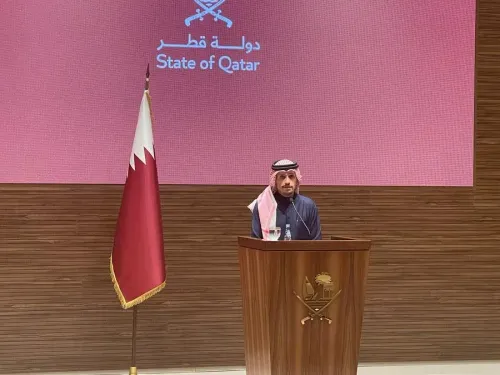
Qatar's Foreign Ministry issued a sharp condemnation of what it described as renewed Iranian attacks on its territory and those of several neighbouring countries. The ministry called the strikes a 'flagrant violation of sovereignty, territorial integrity, and international law' — language that signals a significant diplomatic rupture between Doha and Tehran.
This comes amid a broader escalation following the outbreak of the US-Israel-Iran conflict, which has dramatically destabilised maritime security across the Gulf.
Strait of Hormuz: Closed or Open?
The US-led Joint Maritime Information Centre confirmed on Sunday that despite Iran's announcement of the closure of the Strait of Hormuz, a southern route along the Omani coast remains operational and has been expanded to accommodate two-way traffic.
The advisory, issued by the United Kingdom Maritime Trade Operations, cited intelligence from US Naval Forces Central Command (NAVCENT), which stated that the Strait of Hormuz is an international waterway and 'is not subject to coercion or control by any single nation.'
'Despite Iran's claims that the Strait is closed, US forces are prepared to maintain freedom of navigation and safeguard lawful commerce,' NAVCENT said, adding that the southern route through the Strait remains open.
Mine Threat and Alternative Routes
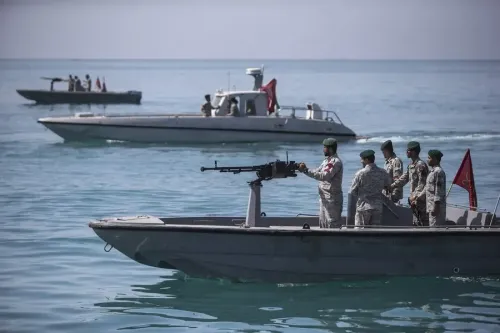
According to the advisory, the maritime security threat level in the Strait of Hormuz has been rated 'severe'. Mariners have been warned to remain alert to a mine danger area within the traditional Traffic Separation Scheme (TSS), which has been rendered unsuitable for navigation due to the mine threat.
Following the signing of a Memorandum of Understanding (MoU) between the United States and Iran, two alternative transit routes have effectively emerged: a northern route under Iranian control and a southern route along the Omani coast, where US forces are providing navigation support and coordination.
Regional Implications
The Strait of Hormuz is one of the world's most critical energy chokepoints, through which a significant share of global oil and liquefied natural gas (LNG) exports transit daily. Any sustained disruption threatens energy supply chains stretching from Asia to Europe. Qatar, as a major LNG exporter, faces direct economic exposure to the crisis.
With the situation still evolving, all eyes are on whether diplomatic channels can de-escalate tensions before the maritime standoff triggers wider economic consequences.
Point of View
The Hormuz standoff lays bare a structural vulnerability: the world's LNG trade runs through a waterway that a single nation can credibly threaten to mine. The US-backed southern route is a workaround, not a solution, and its long-term viability depends on sustained military presence — a commitment Washington may not be able to maintain indefinitely amid competing global pressures.
NationPress
11 Oct 2026
Frequently Asked Questions
Why has Qatar suspended maritime navigation?
Qatar's Ministry of Transport suspended all maritime navigation on 12 July as a precautionary measure following renewed Iranian attacks targeting Qatar and neighbouring countries. The move was coordinated with security authorities and covers all private and recreational watercraft until further notice.
Is the Strait of Hormuz actually closed?
Iran has announced the closure of the Strait of Hormuz, but the US-led Joint Maritime Information Centre says the southern route along the Omani coast remains open and has been expanded for two-way traffic. NAVCENT has stated that US forces are prepared to maintain freedom of navigation in the Strait.
What is the current threat level in the Strait of Hormuz?
The maritime security threat level in the Strait of Hormuz has been rated 'severe' by the United Kingdom Maritime Trade Operations advisory. Mariners have been specifically warned about a mine danger area within the traditional Traffic Separation Scheme.
Which vessels are exempt from Qatar's maritime suspension?
Vessels operating under international maritime conventions are exempt from the suspension order issued by Qatar's Ministry of Transport. The ban applies primarily to private, recreational, and fishing watercraft.
What alternative routes exist through the Strait of Hormuz?
Following an MoU between the United States and Iran, two alternative transit routes have emerged: a northern route controlled by Iran and a southern route along the Omani coast where US forces provide navigation support. The southern route has been expanded to handle two-way maritime traffic.