Quad outcomes unlock new India-Australia cooperation pathways
Synopsis
The Quad's New Delhi summit has done more than issue a communiqué — it has handed India and Australia a structural framework for critical minerals and maritime security that Beijing is already calling 'exclusionary.' With PM Modi's Australia visit on the horizon and Penny Wong logging her 28th in-person meeting with Jaishankar, the bilateral relationship is moving from diplomatic warmth to operational architecture.
Key Takeaways
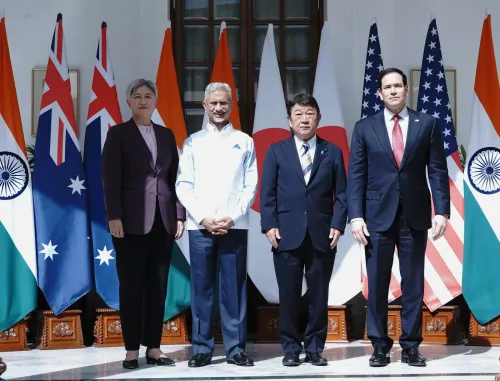
The Quad summit in New Delhi has opened new cooperation pathways for India and Australia , with outcomes closely aligned to their bilateral agenda.
The Quad Critical Minerals Framework formally covers mining, processing, and recycling for the first time, introducing private-sector coordination to counter China's dominance in processing.
The proposed Quad Indo-Pacific Maritime Security Coordination mechanism expands the role of India's IFC-IOR as the central regional maritime awareness node.
Australian Foreign Minister Penny Wong and EAM S.
Jaishankar have held 28 in-person meetings in four years, reflecting the depth of engagement.
The Quad's joint condemnation of terror attacks at Bondi Beach and Pahalgam signalled a convergence of shared security values.
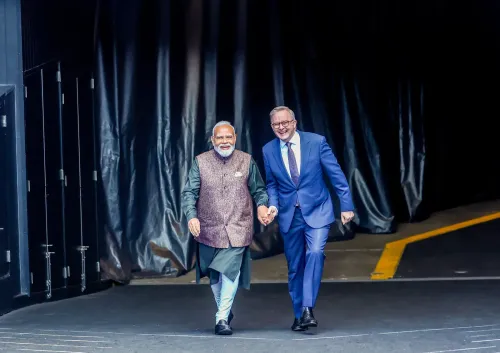
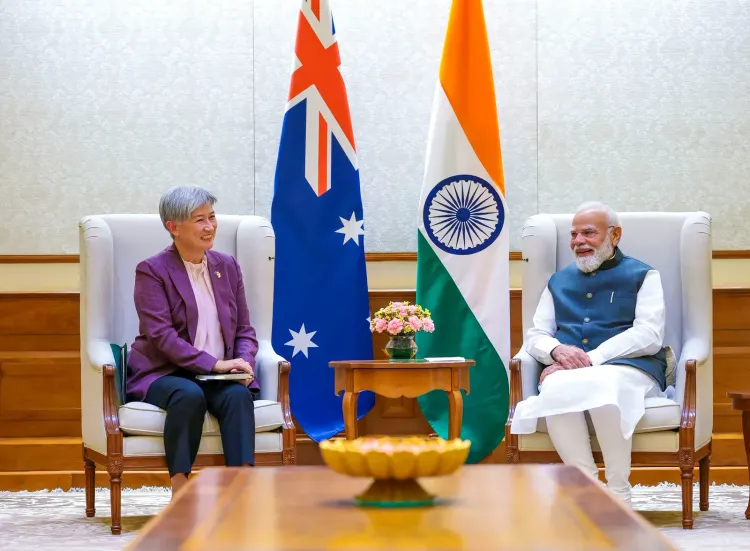
PM Modi's planned visit to Australia is expected to translate these Quad-level frameworks into concrete bilateral commitments.
The outcomes of the Quad summit in New Delhi have opened fresh avenues for deepening bilateral ties between India and Australia, with analysts noting that the meeting's joint agenda aligns closely with the broader India–Australia partnership. According to a report by Australia-based foreign policy publication The Interpreter, the Quad's emerging institutional architecture — designed to outlast individual leaders and electoral cycles — is giving the partnership durable structural footing. This groundwork is now expected to shape the agenda for Prime Minister Narendra Modi's planned visit to Australia.
Joint Condemnation and Diplomatic Momentum
A notable signal of the strengthening bilateral relationship was the Quad's joint condemnation of last year's terror attacks — at Bondi Beach in Australia and Pahalgam in Jammu and Kashmir. The shared response underscored a convergence of strategic and security values between the two democracies. Analysts view it as a marker of how far the relationship has matured beyond trade and diplomacy into shared threat perception.
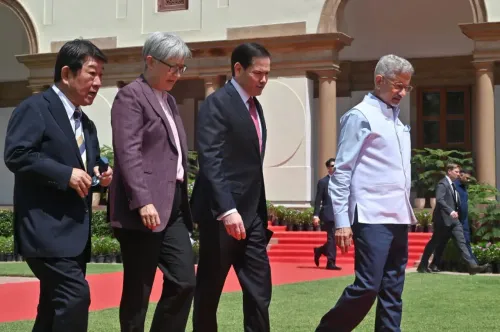
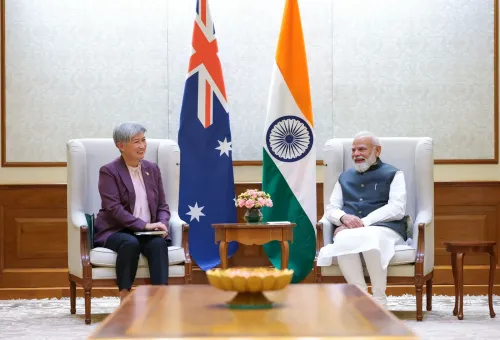
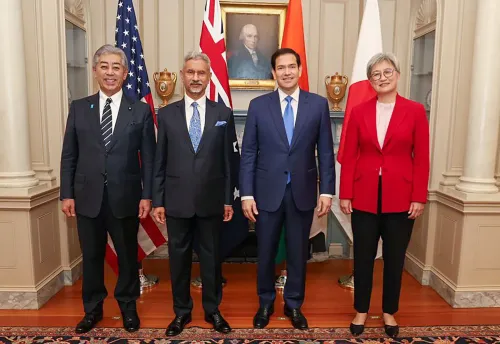
Underscoring the pace of engagement, Australian Foreign Minister Penny Wong noted that her meeting with External Affairs Minister S. Jaishankar in New Delhi this week was their 28th in-person meeting since she assumed office four years ago. 'So we have spent a lot of time together, which reflects the importance of the partnership between our countries, as well as our personal friendship,' Wong stated.
Critical Minerals Framework: The Most Consequential Development
The Quad Critical Minerals Framework — which explicitly covers mining, processing, and recycling — is described in The Interpreter report as 'perhaps the most consequential development for Canberra and New Delhi.' China's suspension of rare earth and semiconductor mineral exports during recent US-China trade tensions gave the framework renewed urgency.
While Australia and India had previously signed critical minerals agreements, identified joint projects, and convened investment forums, the processing stage — where China holds dominant market position — had remained undeveloped. The new framework formally recognises all three stages of the supply chain for the first time and introduces private-sector coordination into the architecture. According to the report, 'that makes it less declaratory and potentially more operational.'
Maritime Security: Expanding India's Coordination Role
Defence cooperation is another domain where Quad outcomes align with bilateral India–Australia priorities. The proposed Quad Indo-Pacific Maritime Security Coordination mechanism builds on existing bilateral efforts by incorporating real-time operational information sharing into the Indo-Pacific Maritime Domain Awareness framework.
Crucially, the mechanism expands the role of India's Information Fusion Centre–Indian Ocean Region (IFC-IOR) as the central coordinating node for regional maritime awareness. The Interpreter noted this 'falls neatly within the proposed Joint Roadmap for Maritime Security Collaboration announced during the India–Australia Defence Policy Talks earlier this year.' Both Australia's National Defence Strategy and India's Maritime Doctrine emphasise bridging operational gaps across the Indian Ocean region.
Beijing's Unease and the Quad's Institutional Shift
China's criticism of the Quad as a 'clique' engaged in 'exclusionary' geopolitics, the report observed, underscores the extent to which the grouping continues to unsettle Beijing. The Quad's deliberate move toward institutionalised cooperation — rather than leader-dependent summitry — is seen as a direct response to concerns about its long-term continuity.
This comes amid a broader recalibration of the Indo-Pacific strategic order, with middle powers like Australia and India taking on larger coordinating roles in regional security architecture. Modi's forthcoming visit to Australia is expected to translate several of these Quad-level frameworks into concrete bilateral commitments.
Point of View
Where China dominates, is the first time the grouping has addressed the supply chain's most strategically vulnerable link. India and Australia had the mining agreements and the investment forums; what they lacked was a multilateral architecture for processing — and that gap has now been formally acknowledged. The expansion of India's IFC-IOR as the central maritime coordination node is equally significant: it positions India not just as a participant in Indo-Pacific security but as its operational hub. Beijing's 'clique' rhetoric is a tell — the Quad is landing where it hurts.
NationPress
15 Oct 2026
Frequently Asked Questions
What were the key outcomes of the Quad summit in New Delhi for India and Australia?
The Quad summit produced two major outcomes relevant to India and Australia: the launch of the Quad Critical Minerals Framework covering mining, processing, and recycling, and the proposed Quad Indo-Pacific Maritime Security Coordination mechanism. Both align closely with the existing India–Australia bilateral agenda and are expected to shape PM Modi's upcoming visit to Australia.
What is the Quad Critical Minerals Framework and why does it matter?
The Quad Critical Minerals Framework is a multilateral agreement that formally covers all three stages of the critical minerals supply chain — mining, processing, and recycling — and introduces private-sector coordination. It matters because China dominates the processing stage, and its recent suspension of rare earth exports during US-China tensions exposed the vulnerability of global supply chains.
How does the Quad maritime security mechanism affect India's role in the Indo-Pacific?
The proposed Quad Indo-Pacific Maritime Security Coordination mechanism expands the role of India's Information Fusion Centre–Indian Ocean Region (IFC-IOR) as the central coordinating node for regional maritime awareness. This positions India as an operational hub for Indo-Pacific security, building on the Joint Roadmap for Maritime Security Collaboration agreed during India–Australia Defence Policy Talks.
How strong is the India-Australia bilateral relationship currently?
The relationship is at a high point by measurable indicators. Australian Foreign Minister Penny Wong and EAM S. Jaishankar have held 28 in-person meetings in four years. The two countries have also jointly condemned terror attacks at Bondi Beach and Pahalgam, signalling convergence on security values beyond trade and diplomacy.
How has China responded to the Quad's growing cooperation?
China has criticised the Quad as a 'clique' engaged in 'exclusionary' geopolitics. According to The Interpreter report, this reaction underscores the extent to which the grouping's growing institutional depth is unsettling Beijing, particularly as the Quad moves toward cooperation frameworks designed to outlast individual leaders and electoral cycles.