Ramaswamy: Liberal Arts Schools Abandoned Classical Liberal Values
Synopsis
Entrepreneur Vivek Ramaswamy argued on May 20, 2026, that liberal arts universities have actively abandoned classical liberal values — individualism, free speech, and open debate — rather than simply becoming partisan. His post intensifies a national debate over campus ideology and federal funding conditions.
Key Takeaways
Ramaswamy posted on May 20, 2026 , distinguishing between universities being 'too liberal' politically and their deeper abandonment of classical liberal values such as free speech and open debate.
The critique echoes arguments that gained visibility during 2023-2024 congressional hearings on campus antisemitism and viewpoint diversity at institutions including Harvard, Penn, and Columbia .
The 2023 Supreme Court ruling ending race-based affirmative action in Students for Fair Admissions v.
Harvard intensified the broader debate over institutional ideology in higher education.
Legislative efforts are ongoing to tie federal student-aid and research grants to campus free-speech protections, a policy push that gained momentum after the 2024 US election .
Indian students enrolled at US liberal arts and research universities are among the stakeholders affected by policy uncertainty around accreditation, funding, and campus climate.
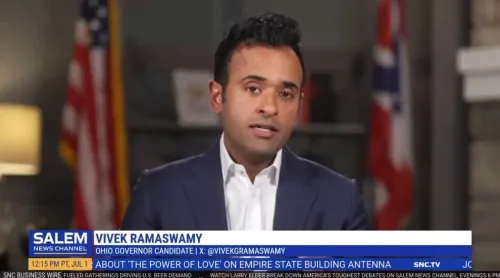
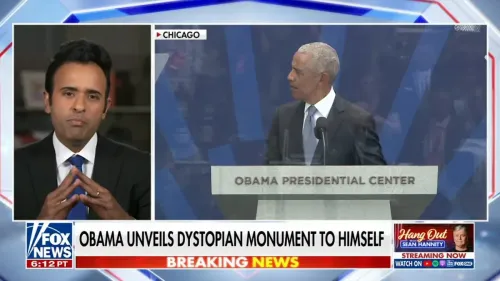
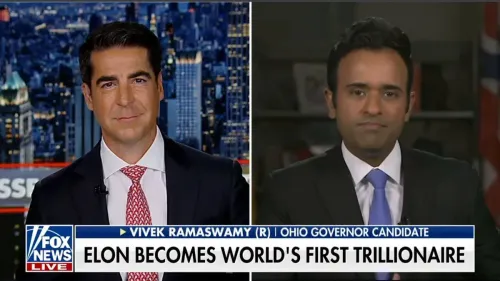
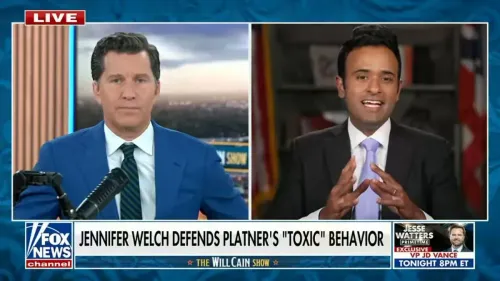
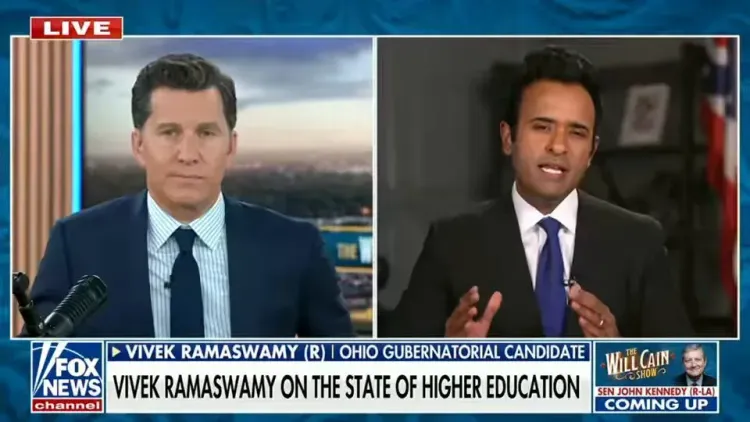
Entrepreneur and former DOGE co-lead Vivek Ramaswamy posted on X on Wednesday, May 20, 2026, arguing that many liberal arts universities have not merely drifted politically but have actively abandoned the foundational values of classical liberalism — namely individualism, free speech, and open debate — that they once claimed to uphold.
Context
In his post, Ramaswamy drew a sharp distinction between a university being 'too liberal' in the partisan sense and a deeper institutional failure. His framing holds that the real crisis is the betrayal of classical liberal ideals — the tradition rooted in John Stuart Mill-era commitments to free inquiry and individual conscience — not simply a shift in political affiliation. The post linked to external content that could not be independently verified at time of publication.
The critique lands at a moment when US higher education remains under sustained public and political scrutiny. Congressional hearings in 2023 and 2024 exposed fault lines at elite institutions over campus speech, viewpoint diversity, and the handling of student protests, drawing national attention to whether universities were living up to their own stated commitments.
Policy Backdrop
The debate over campus ideology intensified after the US Supreme Court's 2023 ruling in Students for Fair Admissions v. Harvard, which ended race-based affirmative action and reignited arguments about merit, institutional bias, and the proper purpose of higher education. Critics across the political spectrum used the ruling as an entry point to question whether elite universities had prioritised social-justice frameworks over the open-inquiry traditions they publicly espouse.
Harvard University, along with Penn and Columbia, faced particular pressure from donors, alumni, and lawmakers during this period. Parallel legislative efforts have sought to condition federal student-aid and research grants on demonstrable campus free-speech protections — a policy lever that gained traction following the 2024 US presidential election.
Stakeholders and Impact
The sharpest impact of this debate falls on university students and faculty, who navigate an environment where the boundaries of acceptable discourse are actively contested. Administrators at flagship research universities face pressure from multiple directions: federal funding conditions on one side and internal faculty governance norms on the other.
For Indian students — a significant share of enrolment at many US liberal arts and research institutions — the broader policy uncertainty around accreditation standards, federal funding, and campus climate has practical implications for visa pathways, scholarship availability, and the academic environment they will enter.
What's Next
Ramaswamy's post adds political weight to ongoing efforts to link federal research dollars and student-aid eligibility to measurable free-speech outcomes on campuses. State-level actions on university governance, already advancing in several Republican-led states, are expected to accelerate. Whether Congress moves to codify free-expression requirements as a condition of federal accreditation remains the central legislative question to watch in the coming months.
Point of View
He attempts to claim the intellectual high ground and recast free-speech advocacy as a defence of liberal tradition rather than a partisan attack. This rhetorical move has become a recurring feature of right-of-centre higher-education criticism in the post-2020 era. The post arrives as concrete policy levers — federal funding conditionality, accreditation reform — are moving from talking points to legislative drafts, giving such statements more than symbolic weight. For observers tracking the trajectory of US institutional reform, Ramaswamy's continued public engagement on this issue signals that the DOGE-era appetite for dismantling entrenched institutional norms has not retreated to government agencies alone.
NationPress
5 Oct 2026
Frequently Asked Questions
What did Vivek Ramaswamy say about liberal arts universities?
Ramaswamy argued on May 20, 2026, that the core problem with many liberal arts universities is not that they became 'too liberal' politically, but that they abandoned classical liberal values — individualism, free speech, and open debate — that they once claimed to champion.
What is classical liberalism and why does it matter in the university debate?
Classical liberalism is a political philosophy rooted in individual rights, free expression, and open inquiry. Critics like Ramaswamy argue that universities historically justified their autonomy on these grounds, making their current speech restrictions a form of institutional self-contradiction.
Which US universities have faced scrutiny over campus free speech?
Harvard University, the University of Pennsylvania, and Columbia University were among the most prominent institutions to face congressional scrutiny in 2023-2024 over campus speech policies, handling of protests, and allegations of ideological conformity.
How could US campus free-speech debates affect Indian students?
Indian students are a major cohort at US research and liberal arts universities. Policy changes linking federal funding or accreditation to free-speech metrics could affect institutional resources, scholarship availability, and the overall academic environment Indian students enter.
What policy changes are being proposed to address campus free speech in the US?
Legislators and the executive branch have explored conditioning federal student-aid and research grants on demonstrable free-speech protections, while several Republican-led states have pursued direct governance reforms at public universities.