Chinese nationals dominate Sri Lanka's illegal call centre racket, 284 arrested

Synopsis
Sri Lanka's illegal call centre crisis has a strikingly national face: 284 of 408 people arrested since 2021 are Chinese nationals, and in the first seven months of 2026 alone, 156 of 201 arrests were Chinese. CID data obtained under RTI reveals an organised transnational syndicate that preys on Chinese citizens from Sri Lankan soil — a jurisdictional loophole that is shielding criminals and threatening the island's security and reputation.
Key Takeaways
The CID's Computer Crime Investigation Division has conducted five major raids on illegal call centres in Sri Lanka since its establishment in 2021 through 31 July 2026 .
A total of 408 people have been arrested, of whom 284 are Chinese nationals .
In the first seven months of 2026 , 156 of 201 arrests — nearly 78% — involved Chinese nationals.
Victims are trafficked into Sri Lanka via Telegram , Facebook , and LinkedIn under false job offers; passports are confiscated and they are forced to run scam operations.
Primary targets of the scams are Chinese citizens residing in China , with Sri Lanka's foreign jurisdiction making it harder for Chinese police to trace perpetrators.
The report warns that without immediate legal and technological intervention, Sri Lanka risks becoming a major hub for international cybercriminals.
Sri Lanka's fast-expanding network of illegal call centres — operating as sophisticated cybercrime hubs — poses a direct threat to the island nation's national security, financial system stability, and international reputation, according to a detailed report that spotlights the dominant role of Chinese nationals in the racket. The findings, published by Ceylon News 24, draw on official data obtained under Sri Lanka's Right to Information (RTI) Act.
Scale of Arrests and Chinese Involvement
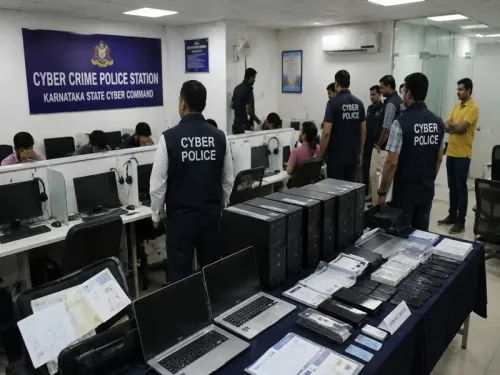
Since its establishment in 2021, the Computer Crime Investigation Division of the Criminal Investigation Department (CID) has conducted five major raids on illegally operated call centres — also referred to as 'Boiler Rooms' — up to 31 July 2026. A total of 408 people have been arrested across these operations, of whom 284 are Chinese nationals.
The pattern has sharpened considerably in 2026. Of the 201 individuals arrested in the first seven months of the year, 156 — nearly 78% — were Chinese nationals, according to the report. This concentration, analysts note, points to a structured and organised participation rather than isolated incidents.
How the Illegal Networks Operate
According to the report, these organised crime gangs deploy highly sophisticated methods to recruit and control their workforce. Foreigners — predominantly Chinese and Vietnamese nationals — are lured into Sri Lanka via online platforms including Telegram, Facebook, and LinkedIn, with promises of high-paying jobs in 'data entry' or 'online marketing'.
Once in the country, victims reportedly have their passports confiscated and are confined in isolated bungalows and hotels, where they are coerced into making fraudulent calls and sending scam messages. The majority of these criminal groups reportedly enter Sri Lanka as tourists before acquiring residential properties to operate their networks.
Notably, while these call centres are physically based in Sri Lanka, their primary targets are reportedly Chinese citizens residing in China. Operating from a foreign jurisdiction makes it significantly harder for Chinese law enforcement to trace the physical locations and server IP addresses of the perpetrators, the report noted.
Threat to Sri Lanka's Reputation and Security
The report warns that the covert spread of these operations carries wide-ranging consequences. Beyond the immediate financial crimes, authorities are concerned about the erosion of Sri Lanka's standing as a legitimate tourist and investment destination.
'Unless authorities act immediately to enforce strict legal and technological measures, Sri Lanka's standing as a tropical paradise will inevitably give way to becoming a major haven for international cybercriminals,' the Ceylon News 24 report cautioned.
This comes amid growing international scrutiny of Southeast and South Asian nations being used as bases for transnational cybercrime syndicates — a pattern also documented in Myanmar, Cambodia, and the Philippines in recent years.
What Happens Next
The report stops short of specifying what legislative or enforcement action Sri Lankan authorities plan to take, but the data released under the RTI Act signals that the CID's Computer Crime Investigation Division is actively escalating its response. Whether bilateral coordination with China will be pursued to dismantle cross-border networks remains to be seen, and observers say the pace of enforcement will determine whether Sri Lanka can credibly contain the threat before its reputational damage deepens.
Point of View
Where Chinese-led syndicates operate on Sri Lankan soil precisely because it puts them beyond the reach of Chinese law enforcement. Sri Lanka's RTI mechanism deserves credit for surfacing these numbers, but data disclosure alone does not dismantle a network. The real gap is bilateral enforcement — and there is no public signal yet that Colombo and Beijing are coordinating. Sri Lanka's economic vulnerabilities, including its recent debt crisis and dependence on Chinese investment, may complicate the political will to act decisively against Chinese-national-dominated criminal networks, even as those same networks undermine its international standing.
NationPress
8 Oct 2026
Frequently Asked Questions
How many Chinese nationals have been arrested in Sri Lanka's illegal call centre raids?
A total of 284 Chinese nationals have been arrested across five major raids on illegal call centres in Sri Lanka since 2021, out of 408 total arrests. In the first seven months of 2026 alone, 156 of 201 people arrested were Chinese nationals, according to CID data obtained under the RTI Act.
How do illegal call centres in Sri Lanka operate?
These networks recruit foreign nationals — predominantly Chinese and Vietnamese — through online platforms like Telegram, Facebook, and LinkedIn, luring them with promises of high-paying jobs. Upon arrival, their passports are reportedly confiscated and they are confined in bungalows and hotels, where they are forced to conduct financial scams and cybercrime operations targeting victims, primarily Chinese citizens in China.
Why is Sri Lanka being used as a base for these cybercrime networks?
Operating from Sri Lanka creates a jurisdictional barrier that makes it significantly harder for Chinese law enforcement to trace the physical locations and server IP addresses of the perpetrators. The report notes that the crime networks primarily target Chinese citizens in China, making Sri Lanka's foreign jurisdiction a deliberate shield for the syndicate.
What threat do these illegal call centres pose to Sri Lanka?
According to the report, the expansion of these operations threatens Sri Lanka's national security, financial system stability, and international reputation. The Ceylon News 24 report warns that without immediate enforcement action, the country risks becoming 'a major haven for international cybercriminals.'
What action has Sri Lanka taken against illegal call centres?
The CID's Computer Crime Investigation Division has carried out five major raids on illegal call centres between its establishment in 2021 and 31 July 2026, resulting in 408 arrests. However, the report does not specify whether broader legislative reforms or bilateral enforcement cooperation with China is planned.