Ahmad Farhad: Rights groups demand release of PoK journalist held since June 20
Synopsis
Ireland-based rights group Front Line Defenders says Pakistani police detained PoK journalist Ahmad Farhad on 20 June in Bagh city — without a warrant — after he covered JAAC protests. It is his second detention in two years and part of what the group calls a systemic crackdown on dissent in Pakistan-occupied Kashmir, backed by internet blackouts and mass arrests under a preventive detention law.
Key Takeaways
Front Line Defenders has demanded the immediate release of journalist Ahmad Farhad and withdrawal of all charges against him.
Farhad was detained on 20 June in Bagh city, PoK while returning from covering JAAC protests in Rawalakot — reportedly without a formal arrest warrant.
He has been held at Bagh city police station and previously faced an abduction that became a formal arrest in 2024 .
Thousands of protesters were reportedly arrested under Section 3 of the Maintenance of Public Order Ordinance , which allows preventive detention with limited judicial review.
Internet blackouts and movement restrictions in PoK have curtailed independent reporting on the scale of rights violations, according to the rights group.
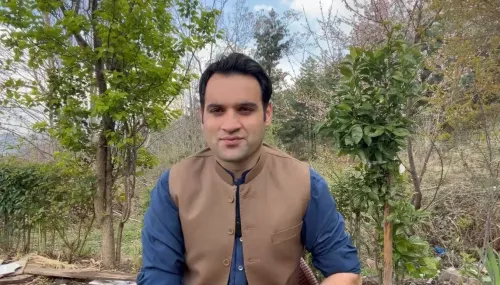
International human rights organisation Front Line Defenders has called on Pakistani authorities to immediately and unconditionally release journalist and human rights defender Ahmad Farhad and drop all charges against him, asserting that he is being targeted for his independent reporting and rights work in Pakistan-occupied Kashmir (PoK). The Ireland-based group issued the demand on 8 July, condemning what it described as a sustained pattern of repression against dissenting voices in the region.
The Arrest and Detention
According to Front Line Defenders, Pakistani police detained Farhad on 20 June in Bagh city, PoK, while he was returning home after covering an ongoing protest by the Joint Awami Action Committee (JAAC) in Rawalakot. He has since been held at the Bagh city police station without, the organisation alleges, any legal grounds or a formal arrest warrant.
A Pattern of Targeted Reprisals
The rights body emphasised that Farhad's detention is not an isolated case. It noted that he has previously faced violent reprisals for his journalism, including what it described as an abduction that was later formalised as an arrest in 2024, as well as criminalisation and stigmatisation by state authorities. Front Line Defenders stated: 'He has faced violent reprisals as a result of his work, including an abduction which later turned into an arrest in 2024, as well as criminalisation and stigmatisation by state authorities.'
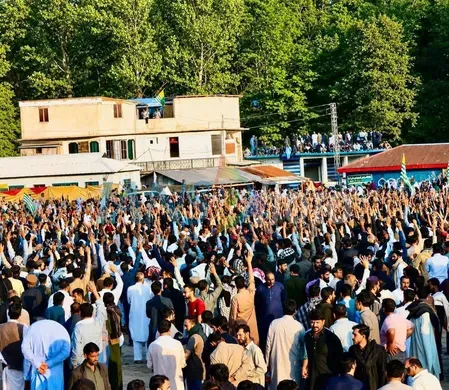
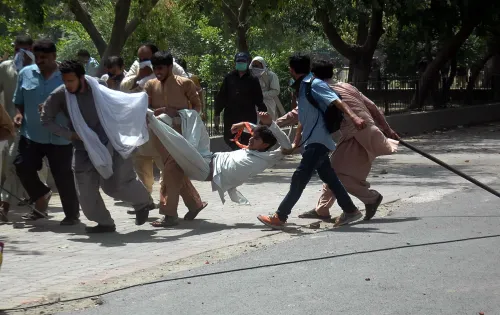
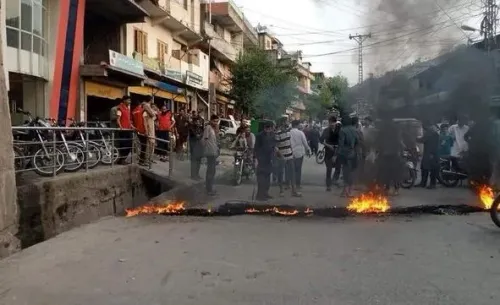
Farhad had been using his media platform to cover the JAAC protest movement in PoK — a campaign that, according to the organisation, has 'faced a disproportionate use of force and repression' by Pakistani authorities. Thousands of protesters were reportedly arrested under Section 3 of the Maintenance of Public Order Ordinance, a provision that permits preventive detention with limited recourse to judicial review.
Broader Crackdown in PoK
Front Line Defenders stressed that the repression in PoK extends well beyond individual cases. The organisation cited internet blackouts and restrictions on movement in the region as tools used to prevent independent reporting and suppress information about the scale of rights violations. 'Pakistan has a record of systemic repression against any form of dissent, including those that peacefully advocate for justice and rights,' it said.
Journalists such as Farhad are described as especially vulnerable because they challenge state-sponsored narratives and report independently from the ground — a function the rights group argues is critical for accountability in the region.
Safety Concerns and What Comes Next
Front Line Defenders expressed grave concern over Farhad's safety while in custody, particularly given his earlier experience of enforced disappearance. The organisation has called for the withdrawal of all charges and for Pakistani authorities to guarantee his physical and psychological integrity.
The case is drawing renewed international attention to the conditions facing human rights defenders and journalists in PoK, a region where independent oversight remains severely restricted. Whether Islamabad responds to international pressure will be closely watched by press freedom advocates globally.
Point of View
Enforced disappearance, or both — and the legal instrument used, Section 3 of the Maintenance of Public Order Ordinance, is specifically designed to bypass judicial oversight. What makes this case significant is not just the individual but the infrastructure of suppression around it: internet blackouts, mass preventive detentions, and restrictions on movement that make independent verification nearly impossible. International condemnation has so far produced little accountability in similar past cases. The real question is whether sustained pressure from credible rights bodies like Front Line Defenders can shift the calculus, or whether PoK remains a black box for press freedom.
NationPress
8 Jul 2026
Frequently Asked Questions
Who is Ahmad Farhad and why was he detained?
Ahmad Farhad is a journalist and human rights defender who reports on social justice issues and rights violations in Pakistan-occupied Kashmir (PoK). He was detained on 20 June in Bagh city, PoK, reportedly without a formal arrest warrant, while returning from covering Joint Awami Action Committee (JAAC) protests in Rawalakot.
Which organisation is demanding his release?
Front Line Defenders, an Ireland-based international human rights organisation, has called on Pakistani authorities to immediately release Farhad and withdraw all charges. The group says he is being targeted for his legitimate reporting and rights work.
What is the JAAC protest movement in PoK?
The Joint Awami Action Committee (JAAC) is a protest movement in Pakistan-occupied Kashmir campaigning for rights and justice. According to Front Line Defenders, the movement has faced disproportionate force from Pakistani authorities, with thousands of protesters reportedly arrested under Section 3 of the Maintenance of Public Order Ordinance.
Has Ahmad Farhad faced reprisals before?
Yes. Front Line Defenders says Farhad was previously subjected to an abduction that was later formalised as an arrest in 2024. He has also faced criminalisation and stigmatisation by state authorities as a result of his journalism.
Why is independent reporting from PoK difficult?
Front Line Defenders cites internet blackouts and restrictions on movement in PoK as deliberate tools used by Pakistani authorities to prevent independent reporting and limit information flow about the extent of rights violations in the region.