Surge in Violence Against Minorities in Pakistan Under Army Chief Asim Munir

Synopsis
A recent report reveals a troubling surge in violence against religious minorities in Pakistan, particularly Ahmadis and Shias, under the leadership of Army Chief Asim Munir. This alarming trend underscores the urgent need for accountability and protection for vulnerable communities.
Key Takeaways
Significant rise in violence against minorities in Pakistan under Asim Munir.
Targeted attacks on Ahmadis and Shias, with reports of lynchings and mob violence.
Authorities' failure to protect vulnerable communities.
International community urged to hold military leadership accountable .
Religious minorities continue to face severe repression .
Kabul, March 11 (NationPress) Under the command of Army Chief Asim Munir, Pakistan is experiencing a significant increase in Sunni radicalization, leading to a troubling rise in violence against religious minorities such as Ahmadis and Shias, as highlighted in a recent report.
According to the Afghan Diaspora Network, the Shia community, particularly the Hazara Shia, and Ahmadis have faced an alarming escalation of violence and lynchings over the past few years. In just November 2024, more than 40 Shia pilgrims were brutally murdered in a single convoy attack in Kurram District. Throughout Punjab and Sindh, extremist mobs have attacked Ahmadi prayer spaces, resulting in the deaths of worshippers.
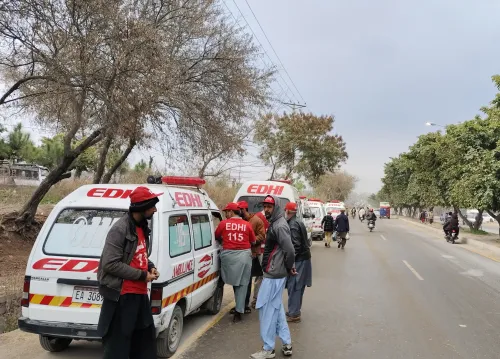
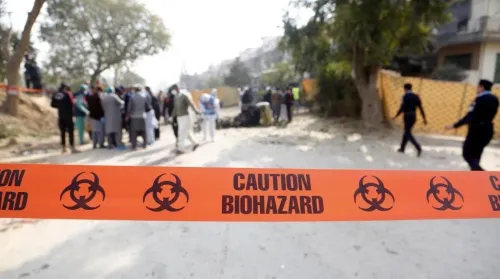
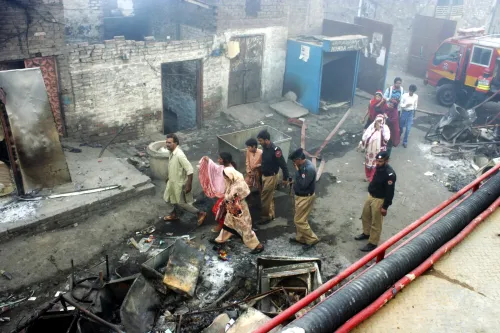
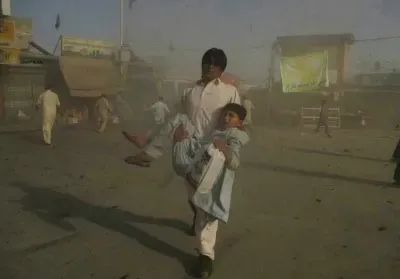
Human rights observers caution that these incidents are part of a coordinated sectarian assault. Earlier this month, a suicide bombing by the Islamic State of Pakistan targeted a well-known Shia mosque in Islamabad, claiming 32 lives. The core group of IS-Pakistan comprises members from anti-Shia Sunni organizations such as the banned Sipah-e-Sahaba (SSP) and Lashkar-i-Jhangvi (LeJ), among others.
Analysts suggest that these radical Sunni groups likely orchestrated the mosque attack, as their presence has become increasingly pronounced. Reports indicate that a significant assembly of the LeJ was taking place near the Shia mosque prior to the attack on February 6.
Amnesty International has pointed out that Pakistani authorities have notably failed to safeguard the Hazara Shia community from ongoing threats and violence.
Provincial governments may issue verbal condemnations, but a tangible protective framework is sorely lacking. Consequently, Shia imambargahs and gatherings throughout Pakistan remain at risk as militant clerics incite Sunni mobs.
Furthermore, Ahmadis, who are officially designated as non-Muslims by Pakistan's constitution, are subject to similar brutal assaults from radical Sunni factions.
Since the beginning of 2025, extremist groups enforcing blasphemy have openly targeted Ahmadis. On April 18, 2025, an Islamist mob of 100-200 attacked an Ahmadi prayer hall in Karachi, dragging out a 47-year-old man and beating him to death with bricks and sticks. Just two months prior, a 46-year-old Ahmadi businessman was lynched by hardliners from Tehreek-e-Labbaik Pakistan (TLP) outside a prayer hall in Karachi's Saddar district.
In another distressing incident, a prominent Ahmadi physician, Sheikh Mahmood, was shot dead at his work in Sargodha on May 16, 2025. Christian Solidarity Worldwide (CSW) has reported that these incidents represent the third and fourth targeted murders of Ahmadis within a single month, indicating a worrying trend of violence.
The report emphasizes the need for the international community to hold Pakistan's military leadership accountable, especially given the civilian government's inability to protect Ahmadis and Shias.
Despite ongoing violence, no effective solutions have emerged, leaving religious minorities vulnerable to oppressive measures from the majority. The blood of innocents, killed simply for their beliefs, continues to tarnish Pakistan’s moral fabric.
Point of View
It is crucial to address the unfolding crisis in Pakistan, where violence against religious minorities has reached alarming levels. The lack of action from authorities necessitates accountability from military leadership to protect vulnerable communities.
NationPress
24 Sept 2026
Frequently Asked Questions
What is causing the rise in violence against minorities in Pakistan?
The rise in violence is attributed to increased Sunni radicalization under Army Chief Asim Munir's leadership, leading to targeted attacks against Ahmadis and Shias.
How have Ahmadis been affected by this violence?
Ahmadis have faced brutal attacks, including lynchings and mob violence, particularly from extremist factions enforcing blasphemy laws.
What actions have been taken by the Pakistani government?
While provincial governments issue rhetorical condemnations, there has been a lack of effective protective measures for minority communities.
What role does the international community play in this situation?
The international community is urged to press for accountability from Pakistan's military leadership, as the civilian government remains powerless.
What specific incidents highlight the violence against Shias?
Incidents include a suicide bombing at a Shia mosque in Islamabad that killed 32 people and multiple lynchings of Shia pilgrims.