Rwanda shuts DRC border in Rubavu over Ebola outbreak; WHO declares emergency
Synopsis
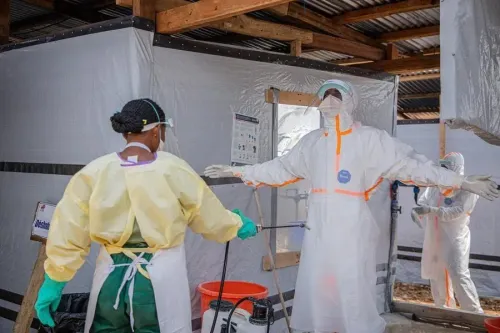
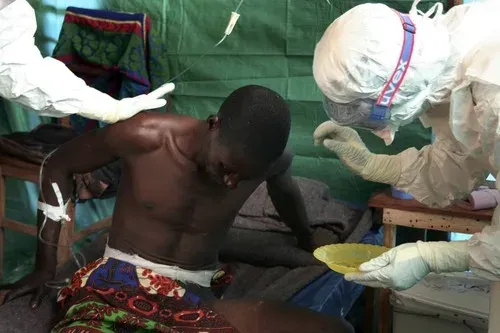
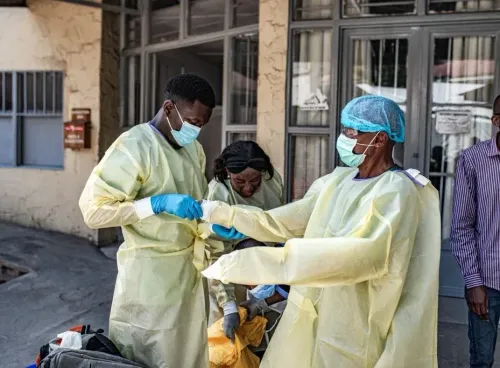
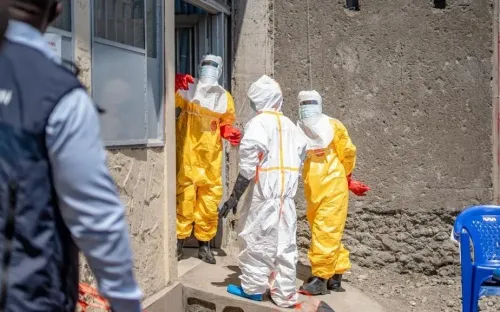
Rwanda has sealed its border with the DRC in Rubavu District indefinitely as the Ebola death toll there climbs to 87 — driven by the Bundibugyo strain, for which no specific vaccine exists. The WHO has now declared a public health emergency of international concern, its highest alert level, raising the stakes for the entire Central African region.
Key Takeaways
Rwanda closed the Goma-Gisenyi border in Rubavu District on 17 May for an indefinite period due to an Ebola outbreak in the DRC .
The death toll from the DRC Ebola outbreak has risen to 87 , according to the Africa CDC .
The outbreak is caused by the Bundibugyo strain , for which no strain-specific vaccine is currently available.
The WHO declared the outbreak — spanning the DRC and Uganda — a public health emergency of international concern (PHEIC) on Sunday .
WHO clarified the outbreak does not meet the criteria for a pandemic emergency .
Limited cross-border movement continues under strict health screening for Rwandan and Congolese nationals.
The Rwanda-DRC border in Rubavu District was shut on Sunday, 17 May after an Ebola outbreak in the Democratic Republic of the Congo (DRC) prompted authorities to act swiftly, with the closure remaining in place for an indefinite period. The World Health Organisation (WHO) on the same day declared the outbreak a public health emergency of international concern (PHEIC) — its highest alert designation.
Borders Closed Indefinitely
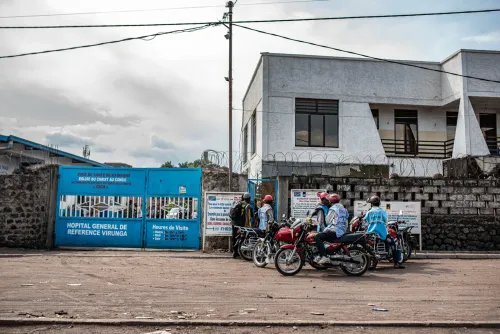
Prosper Mulindwa, Mayor of Rubavu District in Rwanda's Western Province, told local media that the crossing points linking Goma (DRC) and Rubavu-Gisenyi (Rwanda) have been shut as a precautionary measure. “The borders connecting Goma and Gisenyi have been temporarily closed in response to the Ebola outbreak. We will continue engaging with our residents to explain why this decision was made,” Mulindwa said.
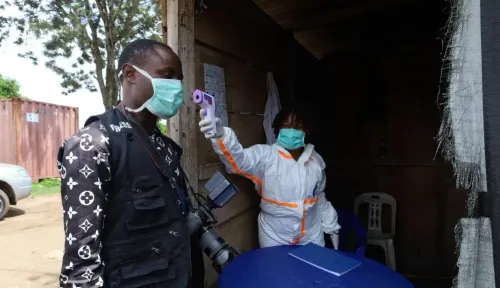
He urged residents to remain patient and cooperative, stressing that the closure was taken to safeguard public health and protect communities from possible infection. Despite the shutdown, health authorities are continuing to screen Rwandan nationals crossing from the DRC, as well as Congolese citizens returning home, who are still being permitted to use the border points under strict health monitoring protocols, according to local media reports.
Death Toll Rises; Bundibugyo Strain With No Specific Vaccine
The death toll from the latest DRC Ebola outbreak has climbed to 87, according to the Africa Centres for Disease Control and Prevention (Africa CDC), which issued a warning on Saturday that the situation carries a high risk of regional spread. The Africa CDC identified the causative agent as the Bundibugyo strain — a variant for which no strain-specific vaccine is currently available, adding a layer of complexity to containment efforts.
This is a critical distinction from previous Ebola outbreaks in the region, where vaccines targeting the more common Zaire strain were deployed with considerable success. The absence of a targeted vaccine for Bundibugyo significantly narrows the tools available to public health responders.
WHO Declares Public Health Emergency of International Concern
The WHO on Sunday formally determined that the Ebola outbreak, which has now spread to both the DRC and Uganda, constitutes a public health emergency of international concern — the same classification previously applied to COVID-19 and the 2022 mpox surge. In a post on social media platform X, the WHO clarified that while the outbreak meets the PHEIC threshold, it does not meet the criteria for a pandemic emergency.
WHO Director-General expressed gratitude to the leadership of the DRC and Uganda for their commitment to take “necessary and vigorous actions” to bring the outbreak under control, and for their transparency in assessing the risk to other member states — a step that allows the global community to initiate preparedness measures.
Regional Context and What Comes Next
The Goma-Gisenyi crossing is one of the busiest land borders in Central Africa, handling significant cross-border trade and daily commuter traffic between the two nations. Its indefinite closure will have economic consequences for communities on both sides, even as officials argue the public health imperative outweighs the disruption.
This comes amid a broader pattern of Ebola flare-ups in the DRC — the country has recorded more Ebola outbreaks than any other nation — but the Bundibugyo strain's emergence and the absence of a targeted vaccine make this episode particularly concerning for regional health authorities. International health agencies are expected to scale up surveillance and preparedness operations across neighbouring countries in the days ahead.
Point of View
But the more alarming detail is the Bundibugyo strain — a variant that has historically received far less vaccine research investment than the Zaire strain. The DRC has managed Ebola before, but always with at least a partial vaccine backstop; this time that backstop is absent. Rwanda’s swift border closure reflects that reality, yet an indefinite shutdown of one of Central Africa’s busiest crossings will exact a real economic toll on border communities who can least afford it. The global health system’s chronic underinvestment in non-Zaire Ebola strains is now a live policy failure, not a hypothetical one.
NationPress
1 Oct 2026
Frequently Asked Questions
Why has Rwanda closed its border with the DRC?
Rwanda closed the border crossing between Goma (DRC) and Rubavu-Gisenyi on 17 May 2025 to prevent the spread of an active Ebola outbreak in the DRC, which has already killed 87 people. The closure was ordered by Rubavu District Mayor Prosper Mulindwa and remains in place for an indefinite period.
What is the Bundibugyo Ebola strain and why is it concerning?
The Bundibugyo strain is a variant of the Ebola virus distinct from the more common Zaire strain. No strain-specific vaccine currently exists for Bundibugyo, making it harder to contain than previous outbreaks where Zaire-targeted vaccines were available.
What does the WHO’s public health emergency declaration mean?
A public health emergency of international concern (PHEIC) is the WHO’s highest alert level, previously used for COVID-19 and the 2022 mpox outbreak. It triggers coordinated international preparedness and response measures, though the WHO has clarified this outbreak does not yet meet the threshold for a pandemic emergency.
Which countries are affected by the current Ebola outbreak?
The outbreak is primarily centred in the DRC but has also reached Uganda, prompting the WHO’s joint PHEIC declaration for both countries. Rwanda has closed its border as a precaution, given its proximity to the DRC’s affected zones.
Can people still cross the Rwanda-DRC border?
Full civilian crossing has been suspended, but health authorities are still screening Rwandan nationals returning from the DRC and Congolese citizens going home under strict health monitoring protocols, according to local media reports.