South Korea election protests: Thousands rally 3rd day over ballot shortages
Synopsis
South Korea's post-election crisis deepened on Sunday as thousands surrounded a Seoul vote-counting facility for a third straight day, demanding a re-run of local polls disrupted by ballot shortages across Songpa and Gangnam. With the NEC chief resigning, the opposition PPP calling for direct presidential talks, and President Lee's Europe trip looming, the country faces a fast-escalating constitutional standoff.
Key Takeaways
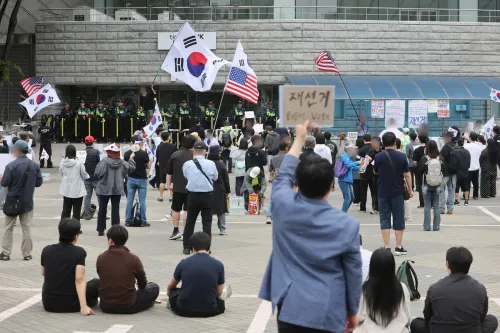
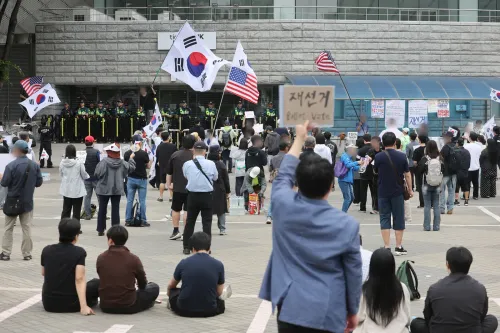
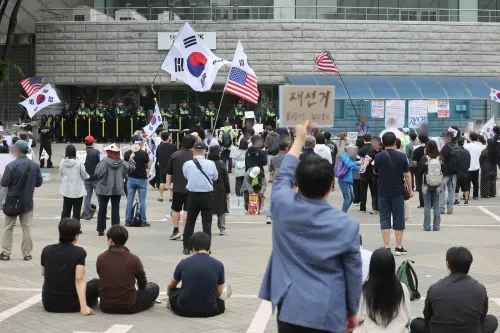
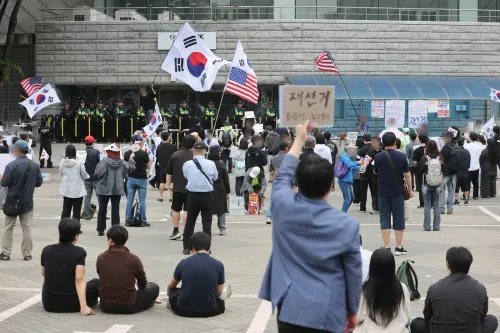
Approximately 3,000 protesters surrounded the SK Olympic Handball Gymnasium in Songpa Ward, Seoul on Sunday, 7 June — the third consecutive day of demonstrations.
Ballot paper shortages were reported at more than a dozen polling stations across Seoul, including Songpa and Gangnam , triggering temporary voting suspensions.
NEC Chairman Roh Tae-ak and NEC Secretary General Heo Cheol-hoon submitted their resignations on Friday .
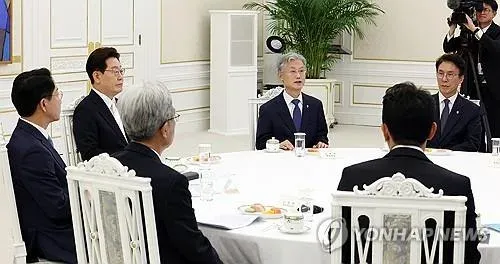
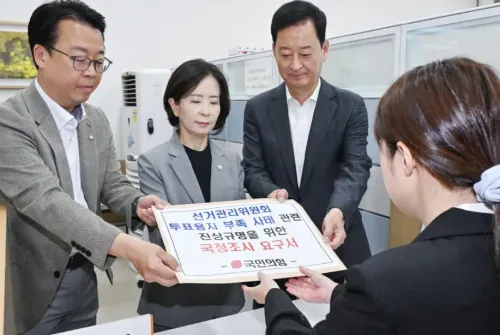
The main opposition People Power Party (PPP) has formally demanded a new election and called for an immediate meeting with President Lee Jae Myung .
President Lee expressed 'immense regret' over the NEC's failures but has not endorsed a fresh election.
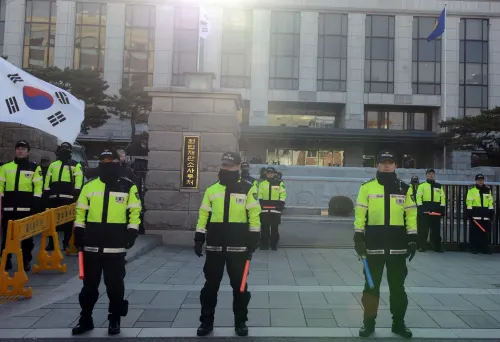
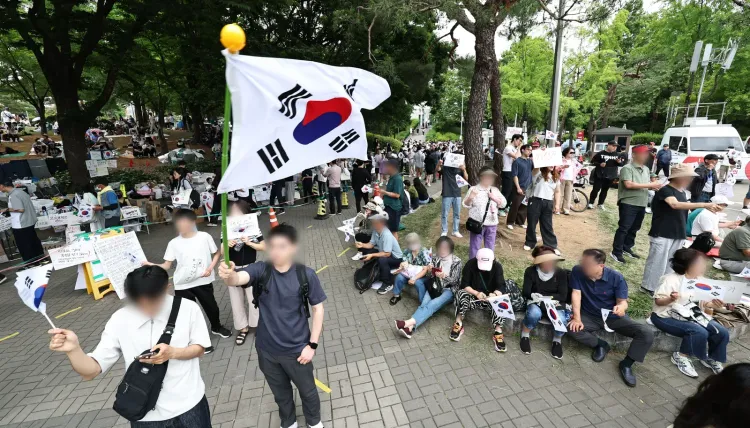
Thousands of demonstrators gathered for a third consecutive day on Sunday, 7 June near a vote-counting facility in eastern Seoul, demanding a fresh election after last week's local polls were marred by widespread ballot paper shortages. The protests, centred around the SK Olympic Handball Gymnasium in Songpa Ward, represent one of South Korea's most sustained post-election demonstrations in recent years.
Scale of the Protests
According to an unofficial police estimate, approximately 3,000 people surrounded the gymnasium as of noon on Sunday. The previous day's crowd was estimated at 30,000, according to police figures. Demonstrators have positioned themselves at each of the eight entrances to the facility, keeping watch over ballot boxes stored inside while chanting slogans demanding a re-run of the elections.
What Triggered the Unrest
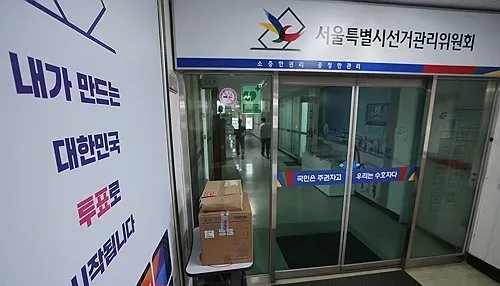
Ballot paper shortages were reported at more than a dozen polling stations across Seoul on Wednesday, including in the Songpa and Gangnam districts, prompting temporary voting suspensions. Some voters reportedly left polling stations without casting their ballots. Critics argue the shortages were not merely administrative failures but evidence of deliberate manipulation — a claim the election authorities have not formally addressed.
An estimated 20 to 30 officials who were reportedly trapped inside the gymnasium managed to leave early Saturday, though the National Election Commission (NEC) has declined to officially confirm those reports.
Election Commission Leadership in Crisis
NEC Chairman Roh Tae-ak and NEC Secretary General Heo Cheol-hoon both offered their resignations on Friday, signalling the depth of the institutional crisis. The NEC has yet to provide a comprehensive public explanation for how shortages of this scale occurred simultaneously across multiple high-profile districts.
Opposition Demands New Election
The main opposition People Power Party (PPP) escalated its response, calling for direct talks with President Lee Jae Myung to discuss the possibility of a fresh election. PPP leader Jang Dong-hyeok addressed reporters at the National Assembly, arguing that institutional remedies fall short of what the moment demands.
"At a time when the public is demanding a new election, it would be impossible to quell the mounting public anger that has spread like wildfire simply through a parliamentary probe, a special counsel probe recommended by the ruling party or replacing a few officials at the National Election Commission," Jang said.
Describing the protests as an 'orderly civil resistance movement,' Jang warned that President Lee would face greater public resistance if he departs on a scheduled trip to Europe this week without first addressing the crisis. "I demand an immediate meeting with President Lee Jae Myung," he said.
President Lee's Response
President Lee Jae Myung last week offered what observers described as a rare criticism of the NEC, expressing "immense regret" over the incident. He urged relevant authorities to deploy all available means to determine the exact cause and pursue accountability where necessary. However, Lee has stopped short of endorsing a new election, leaving the political standoff unresolved as the protests enter their fourth day.
With the PPP intensifying pressure and crowds showing no sign of dispersing, the coming days — and Lee's decision on his Europe trip — are likely to determine whether this crisis deepens into a broader constitutional confrontation.
Point of View
Such as the trapped officials, suggests an institution in damage-control mode rather than accountability mode. Lee's 'immense regret' is calibrated language: enough to distance himself from the NEC, not enough to concede the opposition's core demand. His decision on the Europe trip will be read as a signal of whether he treats this as a managed crisis or a constitutional emergency.
NationPress
22 Oct 2026
Frequently Asked Questions
Why are thousands protesting in Seoul?
Protesters are demanding a new election after ballot paper shortages disrupted local polls across more than a dozen Seoul polling stations, including in Songpa and Gangnam, on Wednesday. Some voters reportedly left without casting ballots, and demonstrators allege the shortages were fraudulent.
Who has resigned over the South Korea election crisis?
National Election Commission (NEC) Chairman Roh Tae-ak and NEC Secretary General Heo Cheol-hoon both offered their resignations on Friday following widespread criticism over the ballot shortages.
What is the People Power Party demanding?
The main opposition People Power Party (PPP) is calling for a fresh election and has demanded an immediate meeting with President Lee Jae Myung to discuss the issue. PPP leader Jang Dong-hyeok warned that neither a parliamentary probe nor replacing NEC officials would be sufficient to address public anger.
What has President Lee Jae Myung said about the protests?
President Lee expressed 'immense regret' over the NEC's handling of the ballot shortages and urged authorities to investigate the cause and pursue accountability. He has not endorsed a new election, and his planned trip to Europe this week has become a flashpoint in the standoff.
How large are the Seoul election protests?
Police estimated a crowd of approximately 30,000 on Saturday, the second day of protests, falling to around 3,000 by noon on Sunday as demonstrators maintained a watch at the eight entrances of the SK Olympic Handball Gymnasium in Songpa Ward.