Pakistan's GSP+ status at risk: EU flags rights abuses, governance gaps
Synopsis
The EU's final GSP+ compliance report before a tougher 2027 framework is a blunt warning to Pakistan: legislative reform without ground-level change is not enough. With EUR 7.5 billion in annual trade access and EUR 732 million in tariff savings on the line, and enforced disappearances in Balochistan up 75 per cent in a single year, Islamabad faces a governance reckoning — not just a trade negotiation.
Key Takeaways
The European Commission published its GSP+ compliance assessment for Pakistan on 16 July 2025 , covering the 2023–2025 monitoring period.
Pakistan's GSP+-eligible exports to the EU totalled EUR 7.5 billion in 2024 , with EUR 732 million in tariff savings — about 9 per cent of its total EU export value.
Independent monitors recorded 1,455 enforced disappearances in Balochistan in 2025 alone — a 75 per cent rise over 2024 — with 1,052 individuals still missing.
Pakistan recorded 344 blasphemy cases in a single recent year — the highest on record — and over 300 falsely accused individuals remained imprisoned as of April 2026 .
A revised, more stringent GSP framework takes effect on 1 January 2027 , requiring Pakistan to formally re-apply under tighter criteria.
Loss of GSP+ status could impose an additional annual tariff burden of EUR 427 million to EUR 854 million on Pakistani exporters, threatening competitiveness against Bangladesh and Sri Lanka .
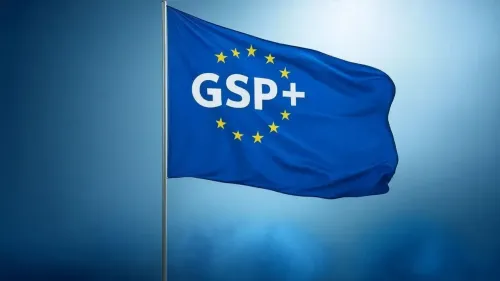
The European Union has placed Pakistan's preferential trade access under intense scrutiny following the release of a damning compliance assessment on 16 July 2025, warning that legislative reform has yet to translate into measurable improvements on the ground for ordinary citizens. The Joint Staff Working Document, jointly published by the European Commission and the EU High Representative for Foreign Affairs and Security Policy, evaluates Pakistan's adherence to 27 international conventions under the Generalised Scheme of Preferences Plus (GSP+) for the 2023–2025 monitoring period — and the findings carry heightened urgency given that a revised, more stringent GSP framework takes effect on 1 January 2027, under which all beneficiaries must re-apply.
What Is at Stake: The Trade Numbers
Pakistan has been the largest beneficiary of the GSP+ arrangement since 2014, and its dependence on the scheme is structurally embedded. Pakistan's GSP+-eligible exports to the EU reached EUR 7.5 billion in 2024, with the country saving an estimated EUR 732 million in tariff exemptions — roughly nine per cent of its total export value to the bloc. The EU absorbs 28 per cent of Pakistan's total exports, with textiles and clothing accounting for between 70 and 76 per cent of that trade. Should Pakistan lose GSP+ status and revert to Most-Favoured-Nation (MFN) tariff rates — typically between 6 and 12 per cent on apparel — the additional annual tariff burden on Pakistani exporters would range from approximately EUR 427 million to EUR 854 million, based on 2024 trade volumes. Rivals such as Bangladesh and Sri Lanka, both retaining GSP+ status, compete directly with Pakistan in EU apparel markets.
Where the EU Acknowledged Progress
The Commission's report is not without recognition of genuine, if partial, reform. It noted legislation to establish a National Commission for Minorities and a further narrowing of capital punishment, with four offences removed from the death penalty. A de facto moratorium on executions has held since December 2019. Pakistan adopted implementing rules under the Anti-Torture Act, passed a Domestic Violence Bill for Islamabad Capital Territory, and secured the country's first conviction for marital rape in Sindh in February 2024 — regarded as a symbolic milestone under the Convention on the Elimination of All Forms of Discrimination Against Women (CEDAW). The National Commission for Human Rights obtained 'A status' accreditation from the Global Alliance of National Human Rights Institutions in 2024. On labour, Pakistan ratified the ILO's 2014 Forced Labour Protocol. In the environmental sphere, it ratified the Kigali Amendment to the Montreal Protocol.
The Catalogue of Failures: Rights, Rule of Law, and Regression
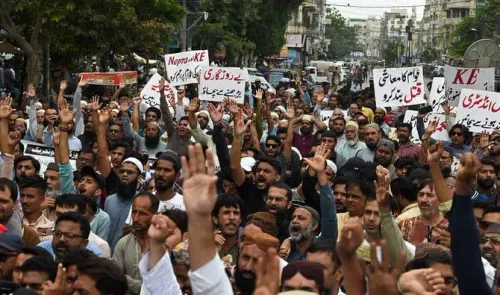
The report is explicit that 'most progress is of legislative and administrative nature and needs to be translated into real improvements on the ground' — diplomatic language that signals deep scepticism about implementation. The findings on enforced disappearances are stark. Independent monitoring groups recorded 1,455 documented cases of enforced disappearance in Balochistan in 2025 alone — a 75 per cent increase over 2024 — with the Frontier Corps named in 889 cases and intelligence agencies in 288. More than 1,052 individuals remain missing; 83 were reportedly killed in custody. Students constituted the largest single group of victims at 295 cases. Fresh allegations continued into mid-2026, with three men from Mastung and Panjgur districts reportedly detained in unexplained circumstances as recently as June 2026.
On blasphemy, Pakistan recorded 344 cases in a single recent year — the highest on record — with a Punjab district court sentencing individuals to death for online blasphemy content as recently as December 2025. The EU report noted that a so-called 'blasphemy business group' entrapped over 800 people through online scams during the reporting period, with more than 300 falsely accused individuals still imprisoned as of April 2026. Ahmadi Muslims continued to face targeted discrimination, including desecration of graves and mosques, in some instances with the alleged acquiescence of local authorities. Freedom of expression 'deteriorated' as amendments to cybercrime, anti-terrorism and blasphemy legislation introduced vague provisions deployable against journalists, human rights defenders and minorities. Recent constitutional amendments were criticised for 'further undermining judicial independence.'
Domestic Reaction and Political Pressure
The report triggered swift domestic reaction in Pakistan. Senior Pakistani journalist Hamid Mir publicly questioned the state of governance in the country, citing the EU Commission's finding that enforced disappearances and extrajudicial killings had increased without accountability for perpetrators. Dawn, Pakistan's leading English-language daily, characterised the assessment as one dominated by concerns over the country's human rights record, even as it recognised legislative measures, and explicitly noted that the EU had urged Islamabad to address 'shortcomings' before the 2027 re-application deadline. The convergence of credible journalistic criticism and mainstream domestic media coverage signals that the report has moved beyond a bureaucratic EU exercise into an active point of domestic political and reputational pressure.
The 2027 Deadline and What Comes Next
The current assessment is the final monitoring report under the existing GSP regulation. From 1 January 2027, a revised and more stringent framework takes effect, under which Pakistan — like all current beneficiaries — must formally re-apply under tighter sustainability and governance criteria. Pakistan's economy is poorly positioned to absorb a preference withdrawal: according to World Bank estimates, 47.2 per cent of its population lived in poverty in 2025, and the country only narrowly avoided sovereign debt default in July 2023. Export growth to major European markets slowed to under one per cent in the current fiscal year despite retained GSP+ status, reflecting how sensitive the sector already is to demand and compliance-cost pressures. Whether Islamabad can convert legislative commitments into verifiable ground-level change before the 2027 deadline will determine not only its trading privileges with Europe, but also whether the underlying promise of the arrangement — development anchored in good governance — is finally realised for its most vulnerable citizens.
Point of View
Establishing commissions, passing bills — while the lived reality for residents of Balochistan, religious minorities, and journalists has, by the EU's own reckoning, worsened. The 2027 GSP re-application deadline is not a soft checkpoint; it is a structural rupture that will require Pakistan to demonstrate measurable outcomes, not legislative intent. The economic asymmetry is striking: a country where nearly half the population lives in poverty is most dependent on a trade arrangement whose continuation is most threatened by the governance failures that perpetuate that poverty. The real question is whether Islamabad's political establishment, which has thus far treated GSP+ as an entitlement, can be moved to act by a deadline that, for once, has genuine financial consequences.
NationPress
29 Jul 2026
Frequently Asked Questions
What is GSP+ and why does it matter for Pakistan?
GSP+ is a European Union trade arrangement that grants full duty-free access to the EU's 27-member single market, contingent on a beneficiary country ratifying and implementing 27 international conventions on human rights, labour rights, and governance. For Pakistan, it underpins EUR 7.5 billion in annual exports and saves exporters EUR 732 million in tariffs — making it the single most important trade privilege the country holds.
What did the EU's 2025 compliance report find about Pakistan?
The report acknowledged legislative progress — including a narrowing of the death penalty and Pakistan's first marital rape conviction — but concluded that most reforms had not translated into ground-level improvements. It flagged worsening enforced disappearances, deteriorating press freedom, entrenched blasphemy misuse, and weakened judicial independence as areas of serious concern.
How bad is the enforced disappearances crisis in Balochistan?
Independent monitoring groups recorded 1,455 documented cases of enforced disappearance in Balochistan in 2025 alone — a 75 per cent increase over 2024. More than 1,052 individuals remain missing, 83 were reportedly killed in custody, and students formed the largest single victim group at 295 cases.
What happens to Pakistan's trade access if it fails to meet the 2027 GSP criteria?
If Pakistan loses GSP+ status and reverts to standard Most-Favoured-Nation tariff rates, its exporters could face an additional annual tariff burden of EUR 427 million to EUR 854 million based on 2024 trade volumes. This would erode price competitiveness against rivals such as Bangladesh and Sri Lanka, which compete directly in EU apparel markets.
When is the 2027 GSP deadline and what does it require?
A revised, more stringent EU GSP framework takes effect on 1 January 2027. Under it, all current beneficiaries — including Pakistan — must formally re-apply and demonstrate compliance with tighter sustainability and governance criteria, moving beyond legislative commitments to verifiable outcomes on the ground.