Viksit Bharat reforms draw Slovak industry investment push, tech tie-ups
Synopsis
Slovakia's top industrialists — spanning defence, railways, IT, and healthcare — have signalled a concrete push into India after meeting PM Modi and Slovak PM Fico in New Delhi. The India-EU Free Trade Agreement was cited as a structural game-changer, suggesting European mid-sized economies are now treating Viksit Bharat not as a slogan but as an investment thesis.
Key Takeaways
Slovak industry leaders met PM Narendra Modi and Slovak PM Robert Fico in New Delhi on 15 June to discuss investment and technology partnerships.
Sectors of interest include railways , defence , automotive , renewable energy , semiconductors , AI , and healthcare .
Companies present included Tatravagonka , ESET , Penta Hospitals International , Matador , and MicroStep-MIS , among others.
Executives welcomed the conclusion of the India-EU Free Trade Agreement as a key enabler for expanded bilateral trade.
The engagement signals growing European corporate confidence in India's Viksit Bharat reform agenda and long-term economic prospects.
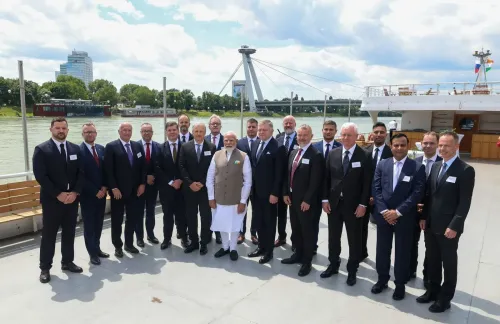
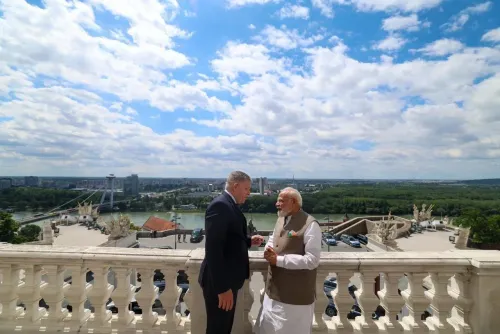
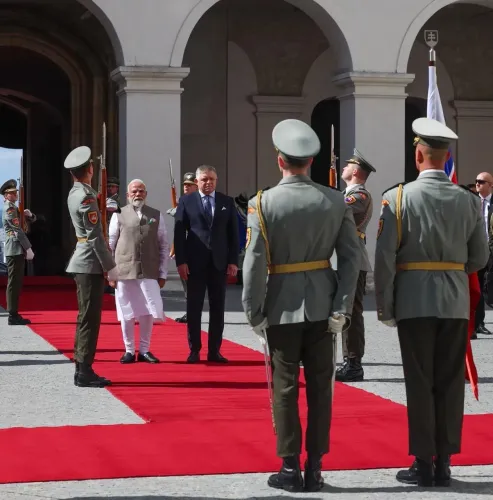
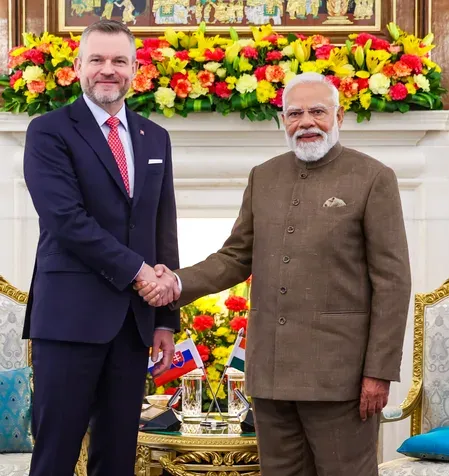
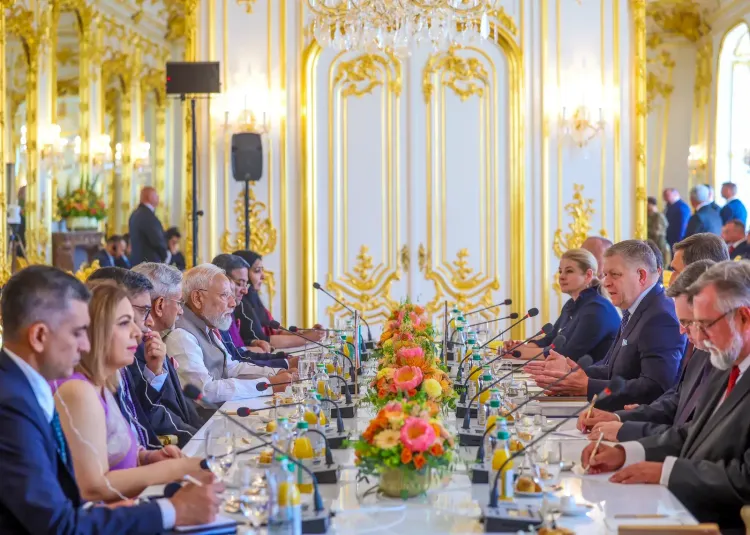
Slovak industry leaders on Monday, 15 June expressed strong confidence in India's economic trajectory and reform agenda, signalling intent to expand investments, forge technology partnerships, and deepen business engagement with Indian enterprises under the Viksit Bharat vision. The sentiment emerged during a structured interaction with Prime Minister Narendra Modi and visiting Slovak Prime Minister Robert Fico alongside senior Slovak business executives in New Delhi.
Key Developments
The meeting brought together executives from sectors spanning railways, defence, automotive manufacturing, energy, information technology, healthcare, and advanced engineering. Prime Minister Modi highlighted India's evolution into a transparent, stable, and investor-friendly economy, citing a series of structural reforms and policy initiatives aimed at improving ease of doing business.
He specifically invited Slovak companies to explore emerging opportunities in infrastructure, defence manufacturing, renewable energy, digital innovation, semiconductors, artificial intelligence, and healthcare — sectors the Centre has identified as priority areas for foreign collaboration under its development blueprint.
What Slovak Industry Said
Industry representatives welcomed India's reform-driven growth story and expressed optimism about the country's long-term economic prospects. They underscored interest in strengthening their presence through increased investments, joint ventures, technology collaborations, and expansion of existing business operations in India.
Participating companies included Tatravagonka, ESET, Grand Power Ltd, Penta Hospitals International, Matador, VUJE, VIPO, MicroStep-MIS, VRM, Eco Investments, and Klub 500 — a cross-section of Slovakia's industrial and technology base.
India-EU Free Trade Agreement in Focus
The executives also welcomed the conclusion of the India-European Union Free Trade Agreement, stating that its implementation would unlock new avenues for trade and investment while further strengthening economic ties between Indian and European businesses. This comes amid a broader push by New Delhi to deepen trade architecture with European partners, with the EU FTA seen as a structural enabler for bilateral commerce at scale.
Broader Context and What's Next
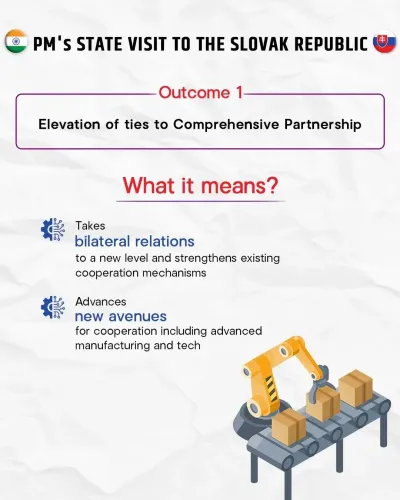
The engagement reflects growing economic cooperation between India and Slovakia, with both sides seeking to leverage complementarities in manufacturing, technology, healthcare, defence, and innovation-driven sectors. Notably, Slovakia — a Central European manufacturing hub and European Union member — presents a gateway for Indian firms seeking access to EU supply chains, particularly in automotive and advanced engineering.
As India continues its push toward becoming a developed nation under the Viksit Bharat framework, the participation of a diverse Slovak corporate delegation signals that European mid-sized economies are increasingly viewing India as a key destination for long-term strategic partnerships. Concrete investment timelines and deal announcements are expected to follow as bilateral working groups take the discussions forward.
Point of View
Cybersecurity, hospitals, defence — is more telling than any single headline investment figure. It suggests that European mid-sized industrial economies are beginning to treat India's reform narrative as durable rather than cyclical. Yet the real measure will be how many of these expressions of interest convert into signed joint ventures and technology transfer agreements. India has hosted many such high-profile business roundtables; the Viksit Bharat credibility test lies in the follow-through, not the optics of the meeting room.
NationPress
15 Sept 2026
Frequently Asked Questions
What is the Viksit Bharat vision that Slovak industry leaders endorsed?
Viksit Bharat is India's policy framework aimed at transforming the country into a developed nation by 2047, driven by structural economic reforms, infrastructure investment, and ease of doing business improvements. Slovak industry leaders expressed confidence in this agenda during their meeting with PM Modi on 15 June in New Delhi.
Which Slovak companies participated in the meeting with PM Modi?
Senior executives from Tatravagonka, ESET, Grand Power Ltd, Penta Hospitals International, Matador, VUJE, VIPO, MicroStep-MIS, VRM, Eco Investments, and Klub 500 participated in the interaction, representing sectors from railways and defence to IT and healthcare.
How does the India-EU Free Trade Agreement affect Slovak investment in India?
The India-EU Free Trade Agreement, whose conclusion was welcomed by Slovak executives, is expected to reduce trade barriers and unlock new avenues for investment and commerce between Indian and European businesses. For Slovak firms, it provides a more predictable regulatory framework for entering the Indian market.
What sectors did PM Modi invite Slovak companies to invest in?
PM Modi specifically highlighted infrastructure, defence manufacturing, renewable energy, digital innovation, semiconductors, artificial intelligence, and healthcare as priority sectors for Slovak investment and technology collaboration in India.
Why is Slovakia significant as an investment partner for India?
Slovakia is a Central European manufacturing hub and EU member state, making it a potential gateway for Indian firms seeking access to European supply chains, particularly in automotive and advanced engineering. The bilateral engagement reflects India's broader strategy of deepening economic ties with European mid-sized economies.