Taiwan will never accept China's rule, says Tibet analogy report
Synopsis
A report in The Tibet Express, citing Khedroob Thondup — nephew of the 14th Dalai Lama — argues Taiwan will never accept Chinese rule because Tibet's fate under the 1951 Agreement proves Beijing's promises of autonomy are worthless. Meanwhile, eight PLAN warships were detected circling Taiwan, underlining that the threat is not hypothetical.
Key Takeaways
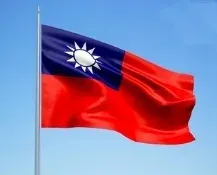
Taiwan will never accept China's rule, according to an analysis in The Tibet Express , citing its democracy, identity, and freedom as non-negotiable.
Khedroob Thondup , nephew of the 14th Dalai Lama , warned that Beijing's promises lead to occupation — as Tibet's experience under the 1951 Agreement demonstrated.
Taiwan is the world's leading semiconductor producer, making its status a matter of global supply-chain security, not just regional politics.
China claims Taiwan as its territory and has not ruled out reunification by force.
Eight PLAN vessels and nine official ships were detected operating around Taiwan as of 6 a.m. on Monday ; Taiwan's armed forces monitored and responded.
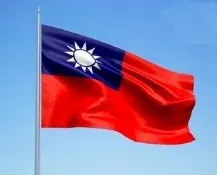
Taiwan will never willingly surrender its independence to China, according to an analysis published by The Tibet Express, which argues that the island's commitment to self-governance is grounded in democracy, national identity, and decades of hard-won freedom. The report draws a pointed parallel with Tibet, warning that Beijing's promises of autonomy have historically led to occupation rather than coexistence.
Why Taiwan Rejects Beijing's Overtures
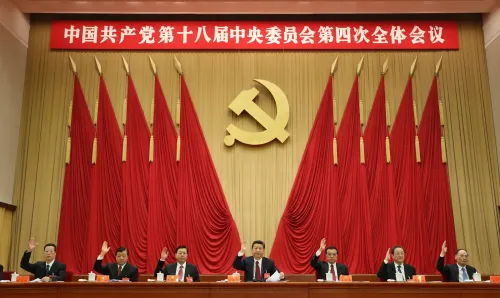
The report asserts that Taiwan is, in practice, an independent state — one that holds free elections, maintains a vibrant civil society, and supports a robust free press. These foundational characteristics, the analysis argues, are fundamentally incompatible with the one-party authoritarianism of the Chinese Communist Party (CCP).
Beyond politics, Taiwan occupies a critical position in the global economy. As the world's leading producer of advanced semiconductors, the island is indispensable to global supply chains, giving it both strategic weight and international stakeholders invested in its stability.
Tibet as a Cautionary Tale
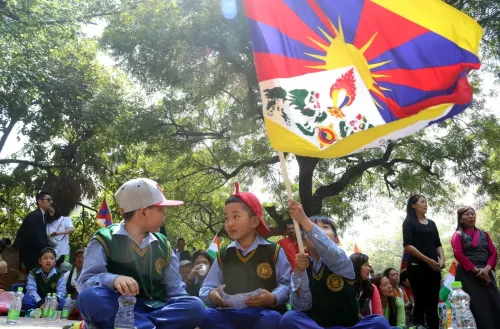
The report invokes Tibet's experience as the clearest evidence of why Taiwan cannot trust Beijing's guarantees. Under the 1951 Agreement, China pledged to respect Tibet's existing political system and religious traditions. Within years, according to the report, those promises were systematically broken — monasteries destroyed, language marginalised, and religious practice subjected to tight state control.
Khedroob Thondup, nephew of the 14th Dalai Lama, is quoted directly in the report: 'Taiwan's independence is not a bargaining position — it is a reality rooted in democracy, identity, and hard-won freedom. Tibet's experience shows what happens when nations trust Beijing's promises: autonomy becomes occupation, culture becomes propaganda, and freedom becomes repression. Taiwan has learned that lesson well. It will never willingly trade its independence for Beijing's embrace, because to do so would mean the end of everything that makes Taiwan free.'
China's Position and Military Posture
China maintains that Taiwan is an inalienable part of its territory and has repeatedly stated that reunification — by force if necessary — remains a core national objective. In recent years, the People's Liberation Army (PLA) has markedly increased the frequency and scale of military exercises in waters and airspace around Taiwan.
On Monday, 6 October 2025, Taiwan's Ministry of National Defence (MND) reported that eight People's Liberation Army Navy (PLAN) vessels and nine official ships were detected operating around the island as of 6 a.m. local time (UTC+8). The ministry confirmed that Taiwan's armed forces monitored the situation and responded accordingly. No PLA aircraft were detected in the same timeframe.
Taiwan's Response and Broader Stakes
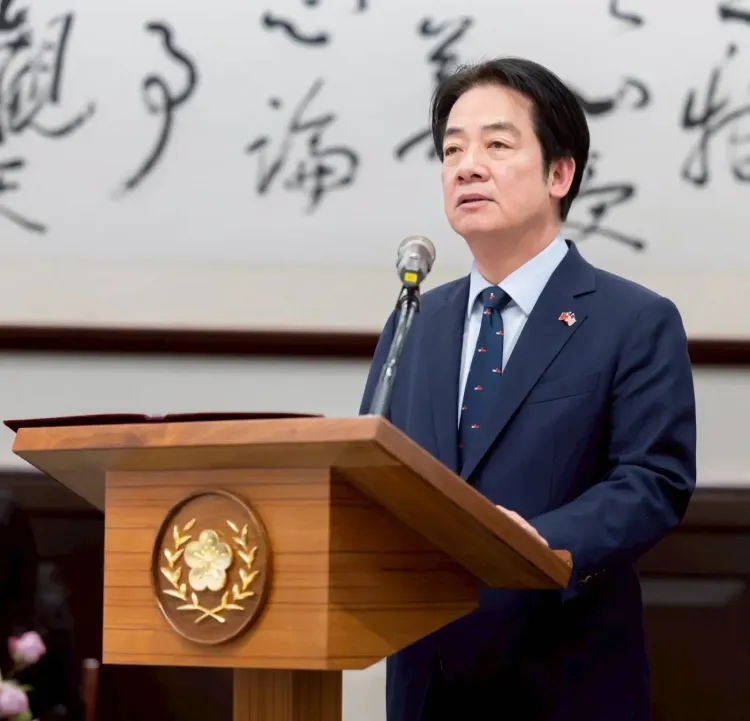
Taiwan, backed by strong domestic public support for maintaining the status quo, continues to assert its sovereignty and respond to Chinese military activity. The island's elected government has repeatedly rejected Beijing's 'one country, two systems' framework — the same model applied in Hong Kong — as insufficient protection for democratic governance.
Analysts note that the debate over Taiwan's status is no longer purely regional; with semiconductors central to the global technology race, any disruption to the island's autonomy carries consequences far beyond the Taiwan Strait. How major powers respond to China's increasing pressure in the coming months will likely shape the trajectory of cross-strait relations for years ahead.
Point of View
Which has its own stake in framing Beijing as an unreliable partner. That said, the factual basis is hard to dispute: Hong Kong's 'one country, two systems' trajectory has only reinforced Taiwan's scepticism. What mainstream coverage underplays is the economic dimension — Taiwan's semiconductor dominance means any forced reunification would be a global supply-chain crisis, not merely a regional political event. The real pressure point is whether Western capitals, whose rhetoric supports Taiwan's democracy, are prepared to back that position with durable policy commitments when Beijing turns up the military heat.
NationPress
5 Oct 2026
Frequently Asked Questions
Why does Taiwan refuse to accept Chinese rule?
Taiwan rejects Chinese rule because its democratic system, free elections, and civil liberties are fundamentally incompatible with CCP authoritarianism, according to the report. Taiwan also points to Tibet's experience, where China's promised autonomy gave way to cultural suppression and religious repression within years of the 1951 Agreement.
What is the Tibet analogy used in the Taiwan debate?
The Tibet analogy refers to the 1951 Agreement under which China promised to respect Tibet's political system and religion — promises the report says were broken within years, with monasteries destroyed and language marginalised. Proponents of Taiwan's independence argue this pattern shows Beijing cannot be trusted to honour any autonomy arrangement.
What did Khedroob Thondup say about Taiwan and Tibet?
Khedroob Thondup, nephew of the 14th Dalai Lama, was quoted in The Tibet Express saying Taiwan's independence is 'not a bargaining position' but a reality rooted in democracy and freedom. He warned that trusting Beijing's promises leads to 'autonomy becoming occupation, culture becoming propaganda, and freedom becoming repression.'
What Chinese military activity was detected around Taiwan recently?
Taiwan's Ministry of National Defence reported that eight PLAN vessels and nine official ships were detected operating around Taiwan as of 6 a.m. local time on Monday. Taiwan's armed forces monitored the situation and responded; no PLA aircraft were detected during the same timeframe.
Why is Taiwan strategically important beyond its political status?
Taiwan is the world's leading producer of advanced semiconductors, making it a critical node in global technology supply chains. Any disruption to its autonomy would have far-reaching consequences for industries and economies worldwide, elevating its status well beyond a purely regional dispute.